 June 2026 in “Revista Ibero-Americana de Humanidades, Ciências e Educação”
 5% topical Minoxidil is the best treatment for female hair loss, improving hair density and thickness.
46 citations
,
June 1990 in “Archives of dermatology” Combining 5% minoxidil and 0.5% anthralin can help regrow hair in some severe alopecia areata patients.
September 2019 in “Zagazig university medical journal” Minoxidil helps hair growth but has side effects.
July 2024 in “Chemical Engineering Journal” A new microneedle system with minoxidil nanoparticles effectively promotes hair regrowth with fewer side effects.
 7 citations
,
January 1990 in “Clinical and Experimental Dermatology”
7 citations
,
January 1990 in “Clinical and Experimental Dermatology” Hair loss gradually happens, and minoxidil helps regrow hair.
 October 2024 in “International Journal of Pharmaceutical Sciences Review and Research”
 A 5% minoxidil spray could effectively treat male baldness with fewer side effects and better patient comfort.
 57 citations
,
July 1987 in “Journal of The American Academy of Dermatology”
57 citations
,
July 1987 in “Journal of The American Academy of Dermatology” Stopping minoxidil treatment resumes balding; continuous use needed for results.
 20 citations
,
September 2015 in “Journal of The European Academy of Dermatology and Venereology”
20 citations
,
September 2015 in “Journal of The European Academy of Dermatology and Venereology” Minoxidil foam promotes hair growth and reduces hair loss safely in men.
38 citations
,
January 1993 in “PubMed” Minoxidil was crucial in advancing scientific research and treatments for hair loss.
 2 citations
,
September 1987 in “International Journal of Dermatology”
2 citations
,
September 1987 in “International Journal of Dermatology” Minoxidil caused hair to grow in unintended areas, like a tail, in a young girl.
 1 citations
,
August 2017
1 citations
,
August 2017 Minoxidil helps stimulate hair growth and enlarge small follicles in common hair loss, but doesn't stop it, and its effects can be boosted when combined with finasteride.
 26 citations
,
August 2018 in “Dermatologic Therapy”
26 citations
,
August 2018 in “Dermatologic Therapy” Minoxidil helps treat pattern hair loss in both men and women.
 40 citations
,
December 2006 in “Journal of The European Academy of Dermatology and Venereology”
40 citations
,
December 2006 in “Journal of The European Academy of Dermatology and Venereology” Minoxidil helps hair regrowth in traction alopecia.
 38 citations
,
October 1988 in “Clinics in Dermatology”
38 citations
,
October 1988 in “Clinics in Dermatology” Minoxidil can help grow hair and make hair follicles bigger, but it can also cause side effects.
 March 2005 in “Journal of The American Academy of Dermatology”
 Two cosmetic lotions improved hair growth and had better cosmetic effects than 2% minoxidil.
 October 2017 in “World Academy of Science, Engineering and Technology, International Journal of Medical and Health Sciences”
 Combination therapy with higher concentrations of minoxidil can lead to rapid hair growth in pattern baldness with no significant side effects.
 24 citations
,
January 1993 in “Dermatologic Clinics”
24 citations
,
January 1993 in “Dermatologic Clinics” Minoxidil effectively treats hair loss, works better for women, and requires consistent use.
 March 2023 in “The Scientific Issues of Ternopil Volodymyr Hnatiuk National Pedagogical University Series pedagogy”
 Both new minoxidil formulations effectively stimulated hair growth.
 November 2024 in “Journal of Drugs in Dermatology”
 Injectable minoxidil is a promising, effective treatment for hair loss.
44 citations
,
January 1997 in “British Journal of Dermatology” Stopping 5% topical minoxidil can reverse unwanted hair growth on the face and limbs.
 January 2025 in “Lasers in Surgery and Medicine”
 Combining fractional CO2 laser with minoxidil is more effective for hair growth in alopecia areata than minoxidil alone.
 September 2022 in “Journal of Investigative Dermatology”
 Patient-reported outcomes better reflect the quality of life impact of alopecia areata than traditional severity scores.
Minoxidil effectively promotes hair growth in seborrheic alopecia.
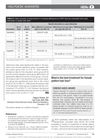 December 2018 in “Evidence-Based Practice”
 Topical minoxidil 1% and 2% are twice as effective as placebo for female pattern hair loss.
 April 2024 in “JAMA dermatology”
 Oral minoxidil is as effective as topical minoxidil for male hair loss but has more side effects like excessive hair growth and headaches.
 January 2026 in “Frontiers in Pharmacology”
 Minoxidil can treat hair loss with topical, oral, and sublingual options, offering personalized choices.
4 citations
,
December 2015 in “MVP journal of medical science” Topical Minoxidil 5% works as well as the combination treatment for hair loss.
 January 2018 in “Elsevier eBooks”
 Minoxidil helps lower severe blood pressure and promotes hair growth but can have serious side effects and must be used continuously.
February 2023 in “Seven Editora eBooks” Oral minoxidil has more side effects but can be more effective than topical minoxidil.
 5 citations
,
April 1999 in “PubMed”
5 citations
,
April 1999 in “PubMed” Two drugs, Minoxidil and Finasteride, can modestly maintain or regrow hair on the scalp's vertex with minimal side effects.