 2 citations
,
September 2021 in “Orphanet Journal of Rare Diseases”
2 citations
,
September 2021 in “Orphanet Journal of Rare Diseases” People with hypohidrotic ectodermal dysplasia are more likely to experience long-term fatigue and hair loss after COVID-19.
January 2011 in “Companion Animal” Dermatophytosis in cats is a contagious skin disease that requires treating the infected cat, other pets, and the environment.
9 citations
,
October 1995 in “Clinical Dysmorphology” The family has a unique form of ectodermal dysplasia similar to Clouston syndrome but with different hair and skin symptoms.
 March 2026 in “Buletin Veteriner Udayana”
 The cat's hair loss and skin issues improved with less stress and more owner attention.
 April 2019 in “The journal of investigative dermatology/Journal of investigative dermatology”
 848 genes related to fat and metabolism are less active in people with Central Centrifugal Cicatricial Alopecia.
 August 2024 in “Indian Journal of Animal Research”
 Clove oil effectively treats cattle dermatophytosis in 7 days.
3 citations
,
May 2012 in “BMC Endocrine Disorders” Early diagnosis and hormone therapy can significantly improve outcomes for post-partum pituitary insufficiency in resource-limited settings.
January 2025 in “Open Veterinary Journal” Supplements improved the dog's hair growth without side effects.

Liver abscesses don't affect stress in beef feedlot steers.
August 2025 in “Veterinary Dermatology” Canine alopecia areata is a chronic condition needing long-term management.
 25 citations
,
September 2015 in “Clinical Endocrinology”
25 citations
,
September 2015 in “Clinical Endocrinology” Using 17-hydroxyprogesterone levels to diagnose nonclassic congenital adrenal hyperplasia can result in many incorrect diagnoses.
April 2019 in “Journal of the Endocrine Society” A rare adrenal tumor in a woman only made DHEA-S, causing hair thinning, and was removed, fixing the hormone level.
Surgery can cause skin cysts in dogs.
 42 citations
,
April 2013 in “Steroids”
42 citations
,
April 2013 in “Steroids” Non-classic congenital adrenal hyperplasia is a common disorder causing symptoms like acne and infertility, and it's managed based on symptoms, not just test results. Treatment can improve fertility and reduce miscarriage risk.
 7 citations
,
July 1999 in “In Practice”
7 citations
,
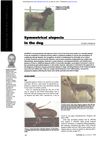
July 1999 in “In Practice” The conclusion is that a systematic approach is key for treating symmetrical alopecia in dogs, but treatment may not always be necessary.
2 citations
,
April 2022 in “Genes” The study found that the hair loss condition in Cesky Fousek dogs is influenced by multiple genes affecting skin and muscle structure, fat metabolism, and immunity.
2 citations
,
December 2016 in “PubMed” Adrenocortical carcinoma is a rare, aggressive adrenal gland cancer with a poor outlook.
5 citations
,
April 2023 in “Life” CCCA affects adolescents too, with genetic and environmental links, requiring careful diagnosis.
April 2018 in “Blackwell's Five‐Minute Veterinary Consult Clinical Companion” The document provides a guideline to help identify skin conditions in small animals based on lesion characteristics.
 1 citations
,
October 2017 in “Animal science journal”
1 citations
,
October 2017 in “Animal science journal” Cyclophosphamide effectively induces cashmere shedding in goats without affecting their overall health.
 November 2022 in “Journal of the Endocrine Society”
 A woman's masculine features were caused by a rare ovarian tumor that produced male hormones.
9 citations
,
December 2012 in “Indian Journal of Dermatology Venereology and Leprology” Two sisters had rare, widespread cysts and complete hair loss, suggesting a genetic link.
 117 citations
,
May 2017 in “Human Reproduction Update”
117 citations
,
May 2017 in “Human Reproduction Update” The update highlights that non-classic congenital adrenal hyperplasia is common in women with excess male hormones, requires specific hormone tests for diagnosis, and has various treatment options depending on age and symptoms.
5 citations
,
January 2017 in “Arquivos Brasileiros de Oftalmologia” A rare genetic disorder causes sparse hair and vision loss due to a CDH3 gene mutation.
 7 citations
,
January 2020 in “Journal of Dermatology”
7 citations
,
January 2020 in “Journal of Dermatology” Cantu syndrome, which causes excessive hair growth and skin issues, is due to a mutation in the ABCC9 gene, and understanding this could help develop new treatments for hair diseases.
November 2019 in “BMC veterinary research” The hair loss in Belgian Blue crossbred calves was caused by a diet issue, not by disease or infection.
 42 citations
,
October 2004 in “Experimental and Clinical Endocrinology & Diabetes”
42 citations
,
October 2004 in “Experimental and Clinical Endocrinology & Diabetes” The main cause of excessive hair growth in Turkish women is Polycystic ovary syndrome, but in about one fifth of cases, the reason for high male hormone levels is unknown.
 December 2022 in “Exploratory animal and medical research”
 The study concluded that Acral lick dermatitis is most common in young male Labrador retrievers, often caused by psychological factors, and leads to skin inflammation and stress-related blood changes.
March 2020 in “The Thai Journal of Veterinary Medicine” A Thai Bangkaew dog with diabetes and pancreatic issues improved with insulin, enzymes, and vitamins.
 January 2017 in “IMC Journal of Medical Science”
 A rare endocrine disorder, APS 1, was diagnosed in a 26-year-old man in Bangladesh.