4 citations
,
April 2024 in “Animals” Copaiba oil and multivitamin emulsion can effectively treat allergic dermatitis in donkeys caused by Culicoides bites.
 6 citations
,
January 2014 in “Clinical hemorheology and microcirculation”
6 citations
,
January 2014 in “Clinical hemorheology and microcirculation” Hereditary elliptocytosis causes elongated red blood cells and can lead to mild or no symptoms.
 1 citations
,
January 2017 in “Pharmaceutica Analytica Acta”
1 citations
,
January 2017 in “Pharmaceutica Analytica Acta” The research confirmed that certain methods are reliable for standardizing Eclipta alba and ensuring its safety and quality in herbal products.
 1 citations
,
January 2019 in “International Journal of ChemTech Research”
1 citations
,
January 2019 in “International Journal of ChemTech Research” Eclipta prostrata has many medicinal benefits, but more research is needed to understand how it works.
 6 citations
,
August 2012 in “The Journal of Pediatrics”
6 citations
,
August 2012 in “The Journal of Pediatrics” A 12-year-old girl was diagnosed with monilethrix, a genetic condition causing fragile, beaded hair that breaks easily, with no effective treatment available.

Selenium can be toxic to animals, causing serious health issues, especially in horses.
 January 2000 in “Time to knit”
 SFE is a better extraction method, and the HPTLC method is effective for analyzing wedelolactone in E. alba.
 May 2023 in “Frontiers in veterinary science”
 A young tapir with a rare skin condition improved after treatment with wound cleaning, cream, and oral medication.
2 citations
,
August 2004 in “Veterinary Dermatology” A dog with a hereditary skin condition causing blisters and hair loss survived for a year.
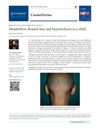 January 2026 in “Cosmoderma”
 A 9-year-old girl has a rare hair disorder causing beaded, sparse hair.
4 citations
,
May 2020 in “The journal of pediatrics/The Journal of pediatrics” A boy with monilethrix has brittle hair that breaks easily due to a genetic condition, which might improve by puberty.
May 2017 in “Journal of the American Academy of Dermatology” Monilethrix is a rare, inherited condition causing fragile hair and hair loss, with no cure but some treatments may help.
 May 2021 in “Boletín latinoamericano y del Caribe de plantas medicinales y aromáticas”
 Microsechium helleri extract has antioxidant, anti-inflammatory, antidiabetic, and heart-protective benefits.
73 citations
,
December 2015 in “Nature Genetics” Mutations in TBX3 cause horses to have more even hair color instead of Dun camouflage.
 January 2013 in “The Pan African medical journal”
 Monilethrix causes short, fragile hair with no specific treatment available.
Sheep can lose wool quickly due to stress, but it doesn't cause itching or pain.
1 citations
,
January 2021 in “Processes” Researchers successfully grew horse skin cells that produce pigment from hair follicle samples.
16 citations
,
October 2013 in “Anais Brasileiros de Dermatologia” Scalp condition healed with prednisone and tacrolimus.
 46 citations
,
August 2019 in “Journal of Ethnopharmacology”
46 citations
,
August 2019 in “Journal of Ethnopharmacology” Eclipta prostrata has many traditional uses and health benefits, but more research is needed to understand how it works and ensure it's safe.
 1 citations
,
January 2020 in “International journal of research in pharmacy and chemistry”
1 citations
,
January 2020 in “International journal of research in pharmacy and chemistry” Eclipta alba has many health benefits and potential for medical and nutritional use.
13 citations
,
September 2017 in “Cytometry Part A” Horse hair follicles could be a new source of stem cells for healing horses.
 December 2024 in “Animals”
 Tithonia diversifolia extract improved digestion but didn't enhance lamb growth.
January 2002 in “Agritrop (Cirad)” The hr gene is linked to hair loss in Valle del Belice sheep.
1 citations
,
January 2012 in “Ancient Science of Life” Eclipta alba extract reduces ulcers and protects the stomach in rats.
 September 2023 in “Stem cell reviews and reports”
 Scientists found a new, less invasive way to get stem cells from horse hair for veterinary medicine.
 2 citations
,
August 2010 in “Journal of Scientific Research”
2 citations
,
August 2010 in “Journal of Scientific Research” The study found specific shape, size, and cellular details of Tridax procumbens leaves that can help identify the plant.
 118 citations
,
July 2005 in “Journal of Ethnopharmacology”
118 citations
,
July 2005 in “Journal of Ethnopharmacology” Eclipta alba extract improved learning, memory, and stress-related ulcers in rats without affecting movement or causing anxiety.
July 2014 in “Planta Medica” Eclipta alba may help with antiaging by improving mitochondrial function.
 June 2024 in “ACTA SCIENTIAE VETERINARIAE”
 qPCR is effective for quickly diagnosing fungal infections in horses.
2 citations
,
October 2013 in “Journal of Veterinary Internal Medicine” Sweat hypersensitivity can cause severe skin issues in horses.