September 2025 in “OPAL (Open@LaTrobe) (La Trobe University)” AR-27 E-Chol siRNA can effectively promote hair regrowth for androgenetic alopecia.
January 2011 in “Anhui nongye kexue” The vector successfully directed specific gene expression in hair follicles.
June 2023 in “Zenodo (CERN European Organization for Nuclear Research)” October 1984 in “Immunology Today”  77 citations
,
April 2004 in “Gene expression patterns”
77 citations
,
April 2004 in “Gene expression patterns” The three estrogen receptor genes are highly expressed in zebrafish neuromasts during development.
 November 2023 in “Journal of cosmetic dermatology”
 The 595-nm pulsed dye laser effectively reduces symptoms of EFFC with minimal side effects.
21 citations
,
June 2004 in “Experimental Dermatology” Ber‐EP4 marks cells related to the secondary hair germ in hair follicles.
1 citations
,
October 2018 in “PubMed” EK significantly improved wound healing and reduced infection in burn wounds.
 18 citations
,
April 2001 in “Bioorganic & Medicinal Chemistry Letters”
18 citations
,
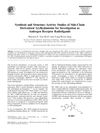
April 2001 in “Bioorganic & Medicinal Chemistry Letters” The nature of the side chain in RU 58841 derivatives greatly affects its AR affinity, with the N-(iodopropenyl) derivative 13 showing the highest AR binding affinity, suggesting its potential for developing high-affinity radioiodinated AR radioligands.
March 2009 in “European Urology Supplements” 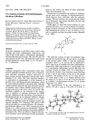 December 1998 in “Acta Crystallographica Section C-crystal Structure Communications”
 A new compound with strong antiandrogenic effects was found, potentially useful for treating conditions like acne and prostate cancer.
2 citations
,
May 2022 in “International journal of molecular sciences” Changes in KRT17 gene activity linked to wool production in Angora rabbits.
57 citations
,
January 1987 in “Journal of Biological Chemistry” Different keratins have unique expression patterns in mouse skin cells.
1 citations
,
May 2020 in “bioRxiv (Cold Spring Harbor Laboratory)” The fer-ts mutation in plants prevents root hair growth at high temperatures.
33 citations
,
August 2000 in “Experimental Cell Research” 1 citations
,
April 2023 in “Preprints.org” SEFFI is a safe and effective anti-aging treatment with few complications.
13 citations
,
June 2017 in “Biochimie open” All five human steroid 5α-reductase enzymes are found in the endoplasmic reticulum.
7 citations
,
February 2011 in “Journal of dermatology” The 736T>A mutation in the LIPH gene is common in Japanese people with autosomal recessive woolly hair.
 4 citations
,
May 2021 in “The journal of investigative dermatology/Journal of investigative dermatology”
4 citations
,
May 2021 in “The journal of investigative dermatology/Journal of investigative dermatology” ELL is crucial for gene transcription related to skin cell growth.
June 2023 in “Zenodo (CERN European Organization for Nuclear Research)” April 2022 in “Reactions Weekly” The curly mutation in SELH/Bc mice affects hair and may help study human genetic disorders.
 2 citations
,
July 2005 in “International Joint Conference on Artificial Intelligence”
2 citations
,
July 2005 in “International Joint Conference on Artificial Intelligence” EREG therapy may help treat hair loss by promoting hair growth.
1 citations
,
October 2010 in “2010 3rd International Conference on Biomedical Engineering and Informatics” The LEF-1 gene in cashmere goats was successfully cloned and analyzed, showing potential for improving cashmere production.
October 2012 in “Sax's Dangerous Properties of Industrial Materials” 1 citations
,
August 2024 in “Animals” KRT85 gene variations can help improve wool traits in sheep through selective breeding.
23 citations
,
October 2008 in “Journal of medicinal chemistry” PF-998425 is a new, effective, and non-phototoxic treatment for skin conditions related to androgens.
January 2004 in “Pharmaceutical biotechnology” Finasteride effectively inhibits the enzyme steroid 5 alpha-reductase II.
January 2007 in “日本看護学会抄録集 成人看護1” Certain amino acids in 5AR1 and 5AR2 are crucial for binding and resistance to Finasteride.
44 citations
,
May 1997 in “Journal of Biological Chemistry” The human keratin 6a gene's specific sequences trigger expression in skin layers after injury.