1 citations
,
May 2020 in “PubMed” Activating autophagy might reverse skin fibrosis.
2 citations
,
March 2024 in “Dermatologic Surgery” The chemical peel improved the appearance of hand spots safely and effectively.
16 citations
,
July 2020 in “Advances in Traditional Medicine” The combined herbal extract formulation promotes hair growth safely without skin irritation.
2 citations
,
October 2010 in “BMB Reports” L-threonate may help prevent balding by blocking a key hair loss factor.
November 2025 in “International Journal of Biological Macromolecules” This eco-friendly hair dye method improves hair health and color durability.
 29 citations
,
December 2017 in “Molecular therapy”
29 citations
,
December 2017 in “Molecular therapy” Enzyme replacement therapy improved multiple symptoms of homocystinuria in mice.
GHK-Cu and propolis may help prevent scalp aging and hair loss.
1 citations
,
December 2019 Selenium is essential for health, but too much or too little can cause problems; blood selenium levels are a good measure of intake.
16 citations
,
January 2018 in “International journal of trichology” Genetics and nutritional deficiencies are key factors in premature graying of hair.
 September 2024 in “Journal of the American Academy of Dermatology”
 Minoxidil helps hair regrowth and has anti-aging effects on hair follicles.
33 citations
,
January 2004 in “Photochemistry and Photobiology” Superoxide dismutase (SOD) can prevent hair graying in mice.
21 citations
,
January 2000 in “Fetal Diagnosis and Therapy” Prenatal diagnosis of trichothiodystrophy is possible in the second trimester using fetal eyebrow biopsy, with sulfur content analysis being more reliable.
 June 2021 in “Asian Journal of Medical Sciences”
 Vitamin B12 deficiency can cause reversible skin darkening.
 42 citations
,
December 2016 in “Cell Death & Differentiation”
42 citations
,
December 2016 in “Cell Death & Differentiation” Damaging mitochondrial DNA in mice speeds up aging due to increased reactive oxygen species, not through the p53/p21 pathway.
10 citations
,
January 1997 in “Dermatology” Two siblings were diagnosed with Trichothiodystrophy, identified by brittle hair and low sulfur content.
 October 2023 in “Cell & bioscience”
 A special gene region controls the re-emergence of a primitive wool type in Merino sheep, improving their wool yield and adaptability.
 1 citations
,
July 2023 in “Nature communications”
1 citations
,
July 2023 in “Nature communications” MOF controls key genes for skin development by regulating mitochondrial and ciliary functions.
5 citations
,
January 2007 in “Immunopharmacology and Immunotoxicology” 17β-Estradiol boosts allergic reactions and slows thymus aging in mice.
 8 citations
,
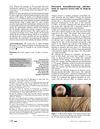
January 2018 in “European journal of dermatology/EJD. European journal of dermatology”
8 citations
,
January 2018 in “European journal of dermatology/EJD. European journal of dermatology” The girl's regrown brown hair had less of certain pigments than her original black hair.
1 citations
,
January 2025 in “Pediatria i Medycyna Rodzinna” Accurate diagnosis and zinc supplements can improve life quality in acrodermatitis enteropathica, even with normal zinc levels.
 71 citations
,
May 2007 in “The FASEB journal”
71 citations
,
May 2007 in “The FASEB journal” Human hair follicles produce and respond to erythropoietin, helping protect against stress.
 June 2026 in “The Russian Archives of Internal Medicine”
 Thallium poisoning can be treated successfully with the right antidote.
32 citations
,
December 2019 in “The Journal of clinical investigation/The journal of clinical investigation” A protein called IL-36γ causes skin side effects from certain cancer treatments when combined with a common skin bacteria.

Improving quercetin absorption reduces aging signs in mice by benefiting gut health.
7 citations
,
September 2019 in “Journal of Investigative Dermatology”  32 citations
,
January 2022 in “International Journal of Molecular Sciences”
32 citations
,
January 2022 in “International Journal of Molecular Sciences” Melatonin, a hormone, can help protect skin from aging by reducing stress, inflammation, and damage, and may also help treat hair loss in women.
 29 citations
,
December 2016 in “The EMBO Journal”
29 citations
,
December 2016 in “The EMBO Journal” Gata6 is important for protecting hair growth cells from DNA damage and keeping normal hair growth.
 February 2008 in “Experimental dermatology”
 Oxidative stress plays a significant role in vitiligo, and both skin and non-skin cells may be involved.
Transglutaminases help form strong hair by linking proteins, and can potentially alter hair properties.
93 citations
,
May 2002 in “Journal of Investigative Dermatology” Overexpressing thrombospondin-1 in mice skin prevents UVB-induced skin damage.