6 citations
,
September 2018 in “ACS applied bio materials” Calcium fatty acid deposits found in human hair can change its appearance and feel.
 September 2019 in “The journal of investigative dermatology/Journal of investigative dermatology”
 Not having enough cystatin M/E protein causes less hair growth and dry skin.
8 citations
,
January 2014 in “Indian Dermatology Online Journal” Trichostasis spinulosa is a common but often unnoticed skin condition involving bundled vellus hairs, especially in people with darker skin or UV exposure.
73 citations
,
January 2016 in “International review of cell and molecular biology” Cornification evolved from keratinization in vertebrates, with differences between mammals and sauropsids.
7 citations
,
January 2012 in “International journal of trichology” Permanent hair removal with lasers may cure itchy black hair bristles on the back.
9 citations
,
February 2016 in “Anatomical Science International” Hair proteins change location and structure as hair cells mature.
July 2024 in “Journal of Investigative Dermatology” Hair follicles are crucial for maintaining skin barrier function.
112 citations
,
August 1984 in “Journal of Investigative Dermatology” 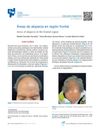 January 2025 in “Revista del Centro Dermatológico Pascua”
 Early diagnosis and treatment can help manage fibrosing alopecia in older women.
January 2020 in “Revista Dermatológica Centro Uraga” Recognizing trichoscopic features is crucial for diagnosing various hair loss conditions.
38 citations
,
December 2006 in “Journal of Investigative Dermatology” Keratin patterns in hair follicles help understand hair growth and potential hair and nail disorders.
 August 2024 in “RCMOS - Revista Científica Multidisciplinar O Saber”
 Barbershops should prioritize safe, responsible scalp care and refer clients to dermatologists when needed.
December 2004 in “Differentiation” 38 citations
,
April 2016 in “The Journal of Pathology” Alkaline ceramidase 1 is crucial for healthy skin and energy balance.
10 citations
,
July 1984 in “British Journal of Dermatology” Epidermal cysts come from the skin, while pilar cysts come from hair follicles.
4 citations
,
January 2006 in “International Journal of Cosmetic Science” The method shows how hair lipids form specific patterns and their roles in hair structure.
17 citations
,
August 2014 in “The Anatomical Record” Scaffoldin helps form hard skin structures in chicken embryos.
36 citations
,
June 1988 in “Australian Journal of Biological Sciences” Mouse epidermal growth factor injections in sheep affected wool growth and skin, but saline did not.
November 2024 in “Elsevier eBooks” 1 citations
,
August 2020 The Shaven mutation in mice affects hair growth and causes a greasy coat due to abnormal lipid content.
May 2026 in “Colloids and Surfaces B Biointerfaces”  April 2017 in “Journal of Investigative Dermatology”
 The hair follicle dermal sheath is essential for hair shedding and needs to communicate with the outer root sheath for normal hair growth cycles.
34 citations
,
June 1992 in “Journal of Cutaneous Pathology” Harlequin ichthyosis involves abnormal skin cell structures and giant mitochondria, affecting skin and hair.

The woman has a scalp condition causing hair loss.
1 citations
,
January 2019 in “Pan African Medical Journal” Keratosis pilaris causes small skin bumps, mainly in women, and treatments offer only temporary relief.
1 citations
,
April 2022 in “Clinical Cosmetic and Investigational Dermatology” Topical treatment improved rare scalp lichen amyloidosis.
14 citations
,
July 2007 in “International Journal of Cosmetic Science” The new 3D imaging method accurately measures hair surface details quickly.
 7 citations
,
November 2014 in “Histochemistry and Cell Biology”
7 citations
,
November 2014 in “Histochemistry and Cell Biology” The we/we wal/wal mice have defects in hair growth and skin layer formation, causing hair loss, useful for understanding alopecia.
29 citations
,
October 2004 in “Differentiation” Multiple mouse desmoglein 1 isoforms have distinct roles in skin and hair development.
December 2004 in “PLoS ONE” The Foxn1(-/-) phenotype disrupts hair growth and affects skin stem cells.