 August 2013 in “Fertility and Sterility”
 PCOS may be influenced by factors in the blood, not just the ovaries.
 December 2012 in “Journal of Dermatological Science”
 Estrogen increases a growth factor in hair cells which might affect hair loss.
 August 2009 in “International Journal of Dermatology”
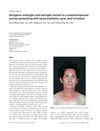
 A postmenopausal woman's facial redness, acne, and excess hair were caused by too much hormone therapy for insomnia, but improved after stopping the treatment.
Estrogen and its receptors play a key role in hair growth, with differences between males and females.
The estrogen receptor pathway controls hair growth cycles and affects skin cell growth.
 June 1995 in “International Journal of Gynecology & Obstetrics”
 The new method showed that endometriotic tissue has lower estrogen receptor levels but similar progesterone levels compared to normal endometrium, with both following a similar cycle.
Estrogens and progesterones can help manage various health issues.
March 2023 in “JAAD case reports” Dutasteride and minoxidil helped regrow hair in a woman with breast cancer.
July 2013 in “e-Jurnal Medika Udayana” Estrogen helps promote hair growth in women with androgenetic alopecia.
January 2011 in “프로그램북(구 초록집)”  January 2026 in “Frontiers in Cellular Neuroscience”
 Neurosteroids like neuro-estrogen and neuro-androgen are crucial for brain function and can improve cognition and protect against aging-related decline.
July 2025 in “Journal of Investigative Dermatology” 76 citations
,
January 2004 in “Journal of Investigative Dermatology” 42 citations
,
July 1982 in “PubMed” Loestrin effectively normalizes testosterone levels and improves PCOS symptoms with minimal side effects.
7 citations
,
October 1974 in “PubMed” Topical estrogens improved hair growth in about half of the patients.
 2 citations
,
December 1994 in “The Journal of clinical endocrinology and metabolism/Journal of clinical endocrinology & metabolism”
2 citations
,
December 1994 in “The Journal of clinical endocrinology and metabolism/Journal of clinical endocrinology & metabolism” The treatment effectively reduced hair growth and was safe for patients with PCOS, but it needs better bleeding control.
1 citations
,
February 2026 in “Journal of the American Academy of Dermatology” May 2013 in “UTUPub (University of Turku)” Including androgens in hormone therapy may lower breast cancer risk.
March 2019 in “Digital Access to Scholarship at Harvard (DASH) (Harvard University)” Soy-based wound dressings can speed up healing and tissue regeneration.
 39 citations
,
August 2004 in “International journal of gynaecology and obstetrics”
39 citations
,
August 2004 in “International journal of gynaecology and obstetrics” Finasteride and CPA-EE2 equally reduce hirsutism, but affect hormone levels differently.
1 citations
,
November 2024 in “Archives of Dermatological Research”  October 2024 in “Archives of Dermatological Research”
 Higher GPER-1 levels are linked to more severe and shorter-duration androgenetic alopecia, suggesting GPER-1 as a potential treatment target.
 July 2021 in “Archives of Dermatological Research”
 Alopecia patients have less GPER-1, which might affect hair loss.
 26 citations
,
February 2009 in “Drug Development Research”
26 citations
,
February 2009 in “Drug Development Research” 17α-estradiol is a safe estrogen that might protect the brain and doesn't cause feminization, needing more research for treating brain diseases.
2 citations
,
January 1985 in “Theriogenology” Hormonal treatments affect cow fertility and early embryo development.
March 2026 in “Research Square” September 2006 in “Data Archiving and Networked Services (DANS)” Understanding testosterone and estradiol levels is crucial for identifying normal and abnormal hormone levels in men, especially as they age.
10 citations
,
February 2017 in “European journal of neuroscience/EJN. European journal of neuroscience” The availability of certain hormones and specific stimulation patterns affect long-term synaptic changes in the male rat brain.
4 citations
,
February 2009 in “Obstetrical & Gynecological Survey” Testosterone patches can modestly improve sexual function in postmenopausal women not on estrogen therapy.
 November 2020 in “Journal of The American Academy of Dermatology”
 Taking vitamin C and vitamin E twice a day can help prevent sunburn and DNA damage from UVB exposure.