 4 citations
,
January 2012 in “International Society of Hair Restoration Surgery”
4 citations
,
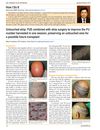
January 2012 in “International Society of Hair Restoration Surgery” Combining FUE and strip surgery increases hair harvested in one session and keeps options open for future transplants.
7 citations
,
November 2020 in “Journal of Tissue Viability” Transplanting a person's own hair can heal chronic wounds in certain skin conditions.
 June 1997 in “The American Journal of Cosmetic Surgery”
 Reharvesting hair from donor sites using punch and strip methods can provide more hair for transplants and improve scar appearance.
2 citations
,
March 2023 in “Aesthetic Plastic Surgery” The new hair transplant method reduces scarring and wastage by combining two techniques.
 3 citations
,
April 2016 in “Dermatologic Surgery”
3 citations
,
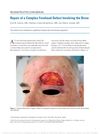
April 2016 in “Dermatologic Surgery” A man's forehead and eyebrow were successfully reconstructed with a skin and hair graft that matched his other eyebrow, without needing frequent trimming.
 June 2017 in “JPRAS Open”
 Hair transplant was successful on a bald area after skin graft surgery.
 1 citations
,
July 1999 in “Plastic and Reconstructive Surgery”
1 citations
,
July 1999 in “Plastic and Reconstructive Surgery” The article discusses how to fix bad results from hair restoration surgery, with different doctors suggesting methods like adding more grafts, moving transplanted hair, or using smaller grafts.
August 1993 in “Journal of Dermatological Science” 1 citations
,
June 2024 in “Plastic & Reconstructive Surgery Global Open” A super thin DIEP flap can effectively reconstruct scalp defects with good skin coverage and contour.
88 citations
,
January 2010 in “Escritura pública” A combined strip and FUE method with careful planning improves hair restoration results.
 19 citations
,
January 2007 in “Journal of medical investigation”
19 citations
,
January 2007 in “Journal of medical investigation” GFP transgenic mice help study cell origins in skin grafts.
 10 citations
,
May 2009 in “Journal of The American Academy of Dermatology”
10 citations
,
May 2009 in “Journal of The American Academy of Dermatology” Technique effectively reconstructs large scalp defects with minimal hair loss and visible scarring.
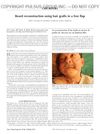 January 2011 in “Plastic Surgery”
 Hair grafts successfully restored a realistic beard and hid scars, satisfying the patient.
 7 citations
,
August 2015 in “Journal der Deutschen Dermatologischen Gesellschaft”
7 citations
,
August 2015 in “Journal der Deutschen Dermatologischen Gesellschaft” Scalp-to-scalp skin grafts quickly heal and hide well under regrown hair, making them good for repairing large scalp defects.
 7 citations
,
January 2017 in “International Journal of Trichology”
7 citations
,
January 2017 in “International Journal of Trichology” Hair transplant can cause hard-to-treat keloids in some patients.
1 citations
,
January 2001 in “Acta Archaeologica Academiae Scientiarum Hungaricae” FUE is a less invasive hair restoration method that avoids visible scars and reduces recovery time.
 13 citations
,
March 1998 in “Journal of Biomedical Materials Research”
13 citations
,
March 1998 in “Journal of Biomedical Materials Research” Island grafts can help study skin regeneration separately from other healing processes.
 6 citations
,
November 2008 in “Hair transplant forum international”
6 citations
,
November 2008 in “Hair transplant forum international” Using a special knife helps improve hairline scars from surgery.
2 citations
,
March 2010 in “Plastic & Reconstructive Surgery” A simple, safe, and cost-effective method using adhesive drapes effectively removes hair from scalp grafts, reducing infection risk.
 January 2017 in “Journal of Plastic Reconstructive and Aesthetic Surgery”
 The authors suggest using scalp hair follicles for beard reconstruction to improve results and reduce surgery time and patient discomfort.
 153 citations
,
August 2002 in “Dermatologic Surgery”
153 citations
,
August 2002 in “Dermatologic Surgery” Follicular Unit Extraction (FUE) is a less invasive hair transplant method with minimal scarring, suitable for about 60% of patients, especially those needing fewer grafts and quicker recovery.
 2 citations
,
December 2019 in “Archives of Craniofacial Surgery”
2 citations
,
December 2019 in “Archives of Craniofacial Surgery” Using a method of stretching skin multiple times can help cover large bald spots on the scalp, but it takes a long time and isn't good for kids.
 41 citations
,
August 2013 in “Facial Plastic Surgery Clinics of North America”
41 citations
,
August 2013 in “Facial Plastic Surgery Clinics of North America” FUE provides minimal scarring and quick recovery in hair transplantation, and surgeons not using it may lag in technology.
March 2007 in “Journal of Plastic Reconstructive & Aesthetic Surgery” A new method was developed to create better skin models for healing and reconstruction.
Scalp reconstruction uses different methods to restore hair and skin, depending on the defect size.
 28 citations
,
July 2011 in “Journal of Plastic Reconstructive and Aesthetic Surgery”
28 citations
,
July 2011 in “Journal of Plastic Reconstructive and Aesthetic Surgery” A patient had skin tissue death at the hair removal site after a hair transplant, which was treated with surgery.
38 citations
,
June 2016 in “Journal of Tissue Engineering and Regenerative Medicine” Microcolumn grafting can effectively regenerate full-thickness, functional skin without scarring.
 7 citations
,
March 2002 in “Aesthetic Surgery Journal”
7 citations
,
March 2002 in “Aesthetic Surgery Journal” In 2002, hair restoration improved by using a different area for grafts and absorbable sutures, leading to less discomfort and better results.
 33 citations
,
January 1991 in “The Journal of Dermatologic Surgery and Oncology”
33 citations
,
January 1991 in “The Journal of Dermatologic Surgery and Oncology” Incisional slit grafting for hair transplantation gives natural-looking results and has a high success rate.
 October 2010 in “Journal of Drugs in Dermatology”
 In 2010, Marco Toscani's team introduced a new scalpel for hair transplants that cuts parallel to hair follicles, reducing hair loss and improving on previous methods.