9 citations
,
December 2015 in “Journal of Dermatological Case Reports” Narrowband UVB therapy significantly improved a child's rare skin condition.
Combining ATRA with TPO-RA effectively stabilizes platelet counts in ITP patients.
November 2025 in “Journal of Investigative Dermatology” KLHL24-mutant stem cells help understand skin and heart disease.
 3 citations
,
January 2019 in “Journal of Dermatology”
3 citations
,
January 2019 in “Journal of Dermatology” The p.P25L mutation in the KRT5 gene causes a rare skin condition that worsens over time and may lead to hair loss starting in young adulthood.
11 citations
,
August 2021 in “Stem Cell Research & Therapy” Pimecrolimus reduces the effectiveness of stem cell therapy for atopic dermatitis.
 20 citations
,
January 2000 in “Dermatologic Clinics”
20 citations
,
January 2000 in “Dermatologic Clinics” New psoriasis treatments are effective but come with side effects and risks.
 April 2017 in “Journal of Investigative Dermatology”
 Triptolide effectively and safely reduces actinic keratosis lesions in mice.
 April 2026 in “Indian Journal of Dermatology”
 PRP and IT are equally effective for treating localized alopecia areata, but PRP causes more pain and bleeding.
8 citations
,
January 2018 in “Journal of Analytical Methods in Chemistry” A new method accurately measures a drug in skin for cancer therapy research.
 61 citations
,
March 2009 in “The Journal of the American Board of Family Medicine”
61 citations
,
March 2009 in “The Journal of the American Board of Family Medicine” Early diagnosis and treatment of discoid lupus erythematosus improve outcomes.
39 citations
,
January 2012 in “Dermatology” Combining high-dose corticosteroids with methotrexate may be effective and safe for severe alopecia areata.
January 2025 in “Archives of Dermatological Research” 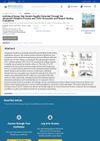 November 2023 in “ACS Applied Polymer Materials”
 The new method extracts keratin from hair faster and better, and the resulting product improves blood clotting and wound healing, with potential for personalized treatments.
 15 citations
,
May 2017 in “JEADV. Journal of the European Academy of Dermatology and Venereology/Journal of the European Academy of Dermatology and Venereology”
15 citations
,
May 2017 in “JEADV. Journal of the European Academy of Dermatology and Venereology/Journal of the European Academy of Dermatology and Venereology” High-dose corticosteroids and methotrexate had a modest effect on severe childhood alopecia, but side effects and relapse were concerns.
 1 citations
,
July 2015 in “British Journal of Dermatology”
1 citations
,
July 2015 in “British Journal of Dermatology” Imiquimod improved skin pigmentation in most patients with xeroderma pigmentosum and may prevent further skin cancer, but some treatments can have side effects.
1 citations
,
November 2022 in “International journal of molecular sciences” Human fetal placental stromal cell injections speed up healing and improve skin and hair recovery after radiation damage.
 February 2009 in “Journal of The American Academy of Dermatology”
 Pulsed dye laser treatment was effective for a skin condition resistant to other treatments.
Combining hydroxychloroquine and pimecrolimus can effectively treat hair loss from discoid lupus.
117 citations
,
February 1996 in “International Journal of Dermatology” A 300 mg monthly pulse of prednisolone effectively and safely treats widespread alopecia areata.
15 citations
,
January 2013 in “Dermatologic Surgery” Epithelial grafting can effectively repigment white hair in vitiligo patients.
11 citations
,
August 2022 in “Journal of Investigative Dermatology” PRP treatment can be effective for hair loss.
April 2017 in “Al-Azhar Medical Journal” PRP is an effective and safe treatment for alopecia areata.
 September 1997 in “JEADV. Journal of the European Academy of Dermatology and Venereology/Journal of the European Academy of Dermatology and Venereology”
 Alopecia patients have a less active liver monoxygenase system, which can be treated with photochemotherapy and system inducers.
 May 2014 in “Journal of The American Academy of Dermatology”
 Psoriasis increases annual healthcare costs by $4,044 per patient, with biologic treatments costing significantly more than phototherapy.
October 2024 in “OBM Transplantation” PRGF can improve acne and scars.
 January 2025 in “ARC Journal of Clinical Case Reports”
 Encapsulated retinol may effectively treat actinic keratosis without side effects.
2 citations
,
January 2021 in “Clinical dermatology review” Modified PRP therapy successfully treated severe alopecia unresponsive to traditional methods.
433 citations
,
April 2015 in “Photomedicine and laser surgery” Photobiomodulation Therapy (PBMT) is recommended as a more inclusive term and shows potential benefits in various treatments.
November 2022 in “Journal of Investigative Dermatology” ILC1-like cells can cause alopecia areata by themselves.