August 2017 in “Otolaryngology” Using a buffering solution and applying Platelet-Rich Plasma improves hair graft survival in hair restoration surgery.

The document concludes that the FOLLYSIS© system improves hair transplant processes and patient monitoring with high accuracy and less skin trauma.
 October 2024 in “TURKDERM”
 Hair transplantation can lead to rare scalp complications, requiring careful follow-up and treatment.
 November 2025 in “Indian Journal of Plastic Surgery”
 The new technique increases hair graft yield and minimizes scarring in hair restoration.
 May 2024 in “Proteome science”
 Bleaching damages hair by reducing the quality of keratin and keratin-associated proteins.
 36 citations
,
February 2018 in “British Journal of Dermatology”
36 citations
,
February 2018 in “British Journal of Dermatology” Sweat glands and hair follicles are structurally connected within a specific layer of skin fat.
 25 citations
,
May 2011 in “Annals of Plastic Surgery”
25 citations
,
May 2011 in “Annals of Plastic Surgery” Nonhead hair transplantation is effective for patients with limited head donor hair, but more research is needed.
 11 citations
,
October 2020 in “Sensors”
11 citations
,
October 2020 in “Sensors” Photoacoustic imaging can accurately assess hair follicle density and orientation for hair transplant planning.
 11 citations
,
August 2010 in “Journal of Dermatology”
11 citations
,
August 2010 in “Journal of Dermatology” Hair transplantation can effectively treat stable eyebrow hair loss in alopecia areata patients.
 10 citations
,
June 2015 in “Seminars in Cutaneous Medicine and Surgery”
10 citations
,
June 2015 in “Seminars in Cutaneous Medicine and Surgery” Hair transplant surgery is an effective way to treat hair loss and looks natural.
 9 citations
,
March 2020 in “Dermatologic Surgery”
9 citations
,
March 2020 in “Dermatologic Surgery” Both Follicular Unit Transplantation (FUT) and Follicular Unit Excision (FUE) are effective hair transplant methods; the best choice depends on the patient's needs and the surgeon's preference.
 8 citations
,
January 2015 in “Scars, burns & healing”
8 citations
,
January 2015 in “Scars, burns & healing” Hair transplantation effectively treats burn scar alopecia, improving self-esteem and confidence.
 6 citations
,
May 2004 in “Facial Plastic Surgery Clinics of North America”
6 citations
,
May 2004 in “Facial Plastic Surgery Clinics of North America” By 2004, Follicular Unit Transplantation (FUT) was the most effective method for surgical hair restoration, while the newer Follicular Unit Extraction (FUE) had more disadvantages and was less recommended.
5 citations
,
July 2023 in “Journal of Autonomous Intelligence” Artificial neural networks can accurately diagnose Alopecia Areata.
Human hair can effectively absorb arsenic from water.
 4 citations
,
November 2006 in “Dermatologic Surgery”
4 citations
,
November 2006 in “Dermatologic Surgery” Transplanted transected hair follicles can survive but grow at unsatisfactory rates and are thinner, suggesting limited potential for unlimited donor hair supply.
 2 citations
,
September 2024 in “Aesthetic Plastic Surgery”
2 citations
,
September 2024 in “Aesthetic Plastic Surgery” Hair transplantation research needs more high-level evidence.
 2 citations
,
July 2018 in “Facial Plastic Surgery”
2 citations
,
July 2018 in “Facial Plastic Surgery” Hair restoration can enhance a facial plastic surgery practice with careful patient selection and detailed follow-up.
 2 citations
,
August 2011 in “Dermatologic Surgery”
2 citations
,
August 2011 in “Dermatologic Surgery” Small micropunches for hair transplants can increase density but may cause more bleeding and longer healing.
 1 citations
,
July 2022 in “Journal of Cosmetic Dermatology”
1 citations
,
July 2022 in “Journal of Cosmetic Dermatology” Inflammatory complications are rare after hair transplants but can happen months later, and checking for skin conditions before surgery is important.
October 2022 in “Hair Transplantation” The ISHRS standardized FUE terminology for global use in hair restoration.
 July 2018 in “Journal of Oral and Maxillofacial Surgery”
 Oral and maxillofacial surgery has advanced with fluoride reducing tooth decay and high-speed handpieces aiding in more aesthetic procedures, leading to changes in practice and training.
 August 2014 in “Plastic Surgery”
 Dr. WP Unger suggested that traditional strip harvesting might be better for hair transplants than Follicular Unit Extraction due to higher hair survival rates and less risk of a patchy look at the donor site.
 October 2010 in “Journal of Drugs in Dermatology”
 In 2010, Marco Toscani's team introduced a new scalpel for hair transplants that cuts parallel to hair follicles, reducing hair loss and improving on previous methods.
 March 2021 in “Dermatological reviews”
 Hair transplant works well, but needs more research for better results.
 January 2022 in “Cellular and Molecular Biology”
 Adding Triamcinolone to the anesthetic can reduce swelling after hair transplants, and using Platelet-Rich Plasma can improve hair thickness and patient satisfaction. The SRD5A2 gene also plays a key role in the success of hair transplants.
 46 citations
,
January 2009 in “Textile Research Journal”
46 citations
,
January 2009 in “Textile Research Journal” Researchers developed a new method to identify animal hair in textiles, which is effective for various fibers and more reliable than previous methods.
 8 citations
,
September 2015 in “Hair transplant forum international”
8 citations
,
September 2015 in “Hair transplant forum international” Doctors reported that Follicular Unit Transplantation (FUT) still gives some of the best hair transplant results.
 4 citations
,
January 2012 in “International Society of Hair Restoration Surgery”
4 citations
,
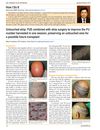
January 2012 in “International Society of Hair Restoration Surgery” Combining FUE and strip surgery increases hair harvested in one session and keeps options open for future transplants.
 November 2024 in “Research for Rural Development/Research for Rural Development (Online)”
 Rosemary essential oil is rich in terpenes and can be effectively extracted and analyzed using environmentally friendly methods, benefiting local economies.