 March 2026 in “Journal of Clinical and Basic Psychosomatics”
 Tianmeng oral liquid may help with insomnia, anxiety, and depression.
 May 2025 in “The Journal of Rheumatology”
 Anti-CD19 therapy may help treat SLE and NMOSD.
 January 2023 in “Research Square (Research Square)”
 Hair cortisol may be a good indicator of recent mood in people with bipolar disorder.
 July 2003 in “Journal of Cutaneous Medicine and Surgery”
 Treating psoriasis with UVB light three times a week is faster than twice a week, and certain medications and lifestyle factors affect psoriasis treatment outcomes.
 January 1977 in “Case Reports in Medicine”
 Steroid cell tumors in the ovary are rare, can produce testosterone causing symptoms, and are mainly treated with surgery.
 39 citations
,
April 2020 in “Clinical, Cosmetic and Investigational Dermatology”
39 citations
,
April 2020 in “Clinical, Cosmetic and Investigational Dermatology” Asian hair is generally straight and thick, with unique disorders and properties, and more research is needed to understand it fully.
 9 citations
,
October 2018 in “Journal of Cosmetic and Laser Therapy”
9 citations
,
October 2018 in “Journal of Cosmetic and Laser Therapy” Using methods like lasers and microneedling with drugs can improve hair regrowth for alopecia, but more research is needed on safety and best practices.
 July 2003 in “Journal of Cutaneous Medicine and Surgery”
 Stopping certain drugs can improve skin conditions, arsenicosis affects over half of a Bangladeshi village, males are more vulnerable, and certain treatments are effective for warts, acne, and psoriasis. Smoking and drinking are linked to psoriasis in men, a cream helps with a type of skin cancer, and low iron levels don't directly cause chronic hair loss in women.
 January 2026 in “Annals of Clinical Endocrinology and Metabolism”
 Restoring NAD⁺ may help with aging and chronic diseases, but more research is needed.
 January 2016 in “Elsevier eBooks”
 Trichoscopy is a key method for dermatologists to quickly and effectively diagnose hair and scalp conditions.
 11 citations
,
February 2004 in “Clinical and Experimental Ophthalmology”
11 citations
,
February 2004 in “Clinical and Experimental Ophthalmology” Taking Propecia might lead to the development of cataracts.
 24 citations
,
March 2018 in “Pigment Cell & Melanoma Research”
24 citations
,
March 2018 in “Pigment Cell & Melanoma Research” The environment around melanocyte stem cells is key for hair regeneration and color, with certain injuries affecting hair color and potential treatments for pigmentation disorders.
 14 citations
,
December 2010 in “Journal of human genetics”
14 citations
,
December 2010 in “Journal of human genetics” A Japanese patient with IFAP syndrome had a severe MBTPS2 gene mutation but showed milder symptoms than previously observed cases.
 January 2026 in “International Journal of Science and Research (IJSR)”
 AI is now essential in Indian aesthetic medicine.
 243 citations
,
September 2016 in “Dermatology and Therapy”
243 citations
,
September 2016 in “Dermatology and Therapy” Dermoscopy is a useful tool for identifying features of skin conditions, but more research is needed to define its role in dermatology.
 139 citations
,
July 1991 in “Journal of The American Academy of Dermatology”
139 citations
,
July 1991 in “Journal of The American Academy of Dermatology” Understanding hair follicle anatomy helps diagnose hair disorders.
 83 citations
,
May 1999 in “International Journal of Dermatology”
83 citations
,
May 1999 in “International Journal of Dermatology” Hair loss that spreads out can often fix itself or be treated by finding and handling the cause.
 78 citations
,
April 1994 in “Archives of dermatology”
78 citations
,
April 1994 in “Archives of dermatology” The study found that Keratosis Pilaris Atrophicans is a genetic skin condition that starts in childhood, involves inflammation and scarring, and current treatments are only somewhat effective.
 33 citations
,
November 2006 in “Survey of Ophthalmology”
33 citations
,
November 2006 in “Survey of Ophthalmology” Madarosis is the loss of eyelashes and eyebrows due to various health issues and requires thorough examination to diagnose and treat the underlying cause.
 12 citations
,
May 1989 in “Postgraduate Medicine”
12 citations
,
May 1989 in “Postgraduate Medicine” The document concludes that hair loss is common and can be treated with medications like minoxidil or surgical options, and it significantly affects people's psychological well-being.
 10 citations
,
February 2015 in “Clinics in Dermatology”
10 citations
,
February 2015 in “Clinics in Dermatology” The document concludes that changes in eyelashes and eyelid skin can indicate various local and systemic diseases.
 10 citations
,
November 1997 in “British Journal of Dermatology”
10 citations
,
November 1997 in “British Journal of Dermatology” A 10-year-old boy had the earliest reported case of hair that became progressively kinkier but eventually returned to normal on its own.
 5 citations
,
September 1986 in “Pediatric Dermatology”
5 citations
,
September 1986 in “Pediatric Dermatology” A family showed a new condition with inherited hair loss and skin changes, possibly due to one genetic disorder.
 3 citations
,
July 2022 in “Dermatologic Therapy”
3 citations
,
July 2022 in “Dermatologic Therapy” Magnesium microneedle patches can safely improve under-eye wrinkles when used every other night for 12 weeks.
 3 citations
,
July 2015 in “Dermatologica Sinica”
3 citations
,
July 2015 in “Dermatologica Sinica” About half of Taiwanese dermatologists use dermoscopy, mainly to improve diagnosis and detect cancer early, but cost and lack of training limit its wider use.
 2 citations
,
January 2020 in “American Journal of Clinical Research and Reviews”
2 citations
,
January 2020 in “American Journal of Clinical Research and Reviews” All skin diseases might start in hair follicles.
 2 citations
,
August 2002 in “Zeitschrift für Hautkrankheiten”
2 citations
,
August 2002 in “Zeitschrift für Hautkrankheiten” Telogen effluvium is a hair loss condition caused by various factors and requires a thorough examination to diagnose and differentiate from other hair loss types.
 1 citations
,
January 2006 in “Elsevier eBooks”
1 citations
,
January 2006 in “Elsevier eBooks” Cats lose fur due to various reasons, including allergies, infections, genetics, hormones, diet, cancer, stress, and some conditions are treatable while others are not.
 April 2025 in “Clinical Dermatology Review”
 Trichoscopy is effective for diagnosing hair and scalp disorders without invasive biopsies.
 July 2019 in “Journal der Deutschen Dermatologischen Gesellschaft”
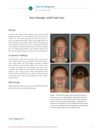
 A mother and daughter have a rare genetic hair loss disorder with no effective treatment.