 22 citations
,
April 2013 in “Dermatologic surgery”
22 citations
,
April 2013 in “Dermatologic surgery” Bimatoprost effectively and safely improves eyebrow appearance.
11 citations
,
January 2012 in “PubMed” Bimatoprost can help grow eyebrow hair.
 7 citations
,
March 2019 in “Dermatologic surgery”
7 citations
,
March 2019 in “Dermatologic surgery” Bimatoprost 0.01% effectively and safely improves eyebrow growth.
 7 citations
,
May 2018 in “Curēus”
7 citations
,
May 2018 in “Curēus” Bimatoprost 0.03% solution effectively promotes eyebrow growth.
4 citations
,
January 2020 in “JOURNAL OF CLINICAL AND DIAGNOSTIC RESEARCH” 2% Minoxidil effectively improves eyebrow hair growth and thickness.
 4 citations
,
September 2019 in “Journal of cosmetic dermatology”
4 citations
,
September 2019 in “Journal of cosmetic dermatology” Topical bimatoprost 0.01% improves eyebrow density and diameter, especially at the tail.
4 citations
,
July 2019 in “Journal of cosmetic dermatology” Both 0.01% and 0.03% bimatoprost safely improve eyebrow fullness, with a patient preference for the 0.03% concentration.
 1 citations
,
July 2023 in “Archives of dermatological research”
1 citations
,
July 2023 in “Archives of dermatological research” Bimatoprost 0.03% is as effective as minoxidil 2% for eyebrow growth.
 11 citations
,
September 2010 in “American Journal of Medical Genetics - Part A”
11 citations
,
September 2010 in “American Journal of Medical Genetics - Part A” A Turkish family with sparse hair and eyebrow loss has a mutation in the U2HR gene linked to Marie Unna hereditary hypotrichosis.

Dr. Min's method for eyebrow and eyelash transplantation is effective, with most hairs regrowing, and proper recovery is crucial for success.
 May 2018 in “European Journal of Dermatology”
 The first Japanese family with Marie Unna hereditary hypotrichosis showed hair condition improvement in a child and highlighted the risk of misdiagnosis.
 32 citations
,
January 2019 in “American Journal of Clinical Dermatology”
32 citations
,
January 2019 in “American Journal of Clinical Dermatology” Minoxidil helps treat eyebrow thinning, monilethrix, early hair loss, and shortens chemo-related hair loss.
 May 2020 in “Hair transplant forum international”
 Younger people and those with existing acne are more likely to get folliculitis after hair restoration surgery, but it doesn't affect the overall good hair growth result.
August 2017 in “Journal of the Dermatology Nurses' Association” Latisse (bimatoprost 0.03%) is widely used in dermatology but the document doesn't give detailed evidence or numbers.
 October 2023 in “Case reports in dermatological medicine”
 A Jordanian family with Clouston syndrome has a common GJB6 gene mutation.
February 2025 in “Actas Dermo-Sifiliográficas” Low-dose oral minoxidil can help improve hair and eyebrow growth in people with frontal fibrosing alopecia.
 2 citations
,
August 2022 in “The journal of investigative dermatology/Journal of investigative dermatology”
2 citations
,
August 2022 in “The journal of investigative dermatology/Journal of investigative dermatology” A specific mutation in the K25 gene causes a rare genetic disorder with curly hair at birth and later hair loss, along with dental issues.
 July 2019 in “Journal der Deutschen Dermatologischen Gesellschaft”
 A mother and daughter have a rare genetic hair loss disorder with no effective treatment.
June 2001 in “European Journal of Dermatology” A 54-year-old woman experienced progressive hair loss starting in adolescence, leading to sparse scalp hair and almost no eyebrows or eyelashes.
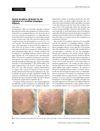 22 citations
,
September 2004 in “Journal of The European Academy of Dermatology and Venereology”
22 citations
,
September 2004 in “Journal of The European Academy of Dermatology and Venereology” Bimatoprost can cause longer, thicker, darker eyelashes and eyebrows.
November 2024 in “Actas Dermo-Sifiliográficas” Low-dose oral minoxidil can improve hair and eyebrow growth in frontal fibrosing alopecia.
 2 citations
,
February 2016 in “British Journal of Dermatology”
2 citations
,
February 2016 in “British Journal of Dermatology” Bimatoprost solution 0.03% is effective for treating sparse eyelashes.
21 citations
,
April 2004 in “Australasian Journal of Dermatology” A 3-year-old girl has a rare condition causing sparse hair and nail issues, with minimal improvement from treatment.
 38 citations
,
July 1998 in “Journal of surgical oncology”
38 citations
,
July 1998 in “Journal of surgical oncology” A woman with breast cancer developed a rare condition causing excessive fine hair growth on her face and body.
 55 citations
,
November 2018 in “American journal of human genetics”
55 citations
,
November 2018 in “American journal of human genetics” Mutations in the LSS gene cause a rare type of hereditary hair loss.
55 citations
,
April 2008 in “Clinical Genetics” A new mutation in the ST14 gene was found in a patient with ARIH syndrome, showing milder symptoms and no tooth issues.
9 citations
,
June 2017 in “American journal of ophthalmology. Case reports” A new mutation in the CDH3 gene causes hair loss and vision problems in a young girl.
 16 citations
,
August 2002 in “Journal of Interferon and Cytokine Research”
16 citations
,
August 2002 in “Journal of Interferon and Cytokine Research” A man developed excessive hair growth after treatment with interferon-alpha and ribavirin for hepatitis C.
 12 citations
,
February 2010 in “Journal of The American Academy of Dermatology”
12 citations
,
February 2010 in “Journal of The American Academy of Dermatology” A cancer drug caused unusual hair growth on a 100-year-old man's scalp and eyelashes.
 4 citations
,
January 2014 in “International Journal of Trichology”
4 citations
,
January 2014 in “International Journal of Trichology” A 12-year-old boy with a rare genetic condition has progressive hair loss with no effective treatment.