2 citations
,
March 2007 in “The journal of investigative dermatology/Journal of investigative dermatology” A new type of hereditary hair loss in a Chinese family is linked to chromosome 2p25.1–2p23.2.
3 citations
,
January 2017 in “Acta Dermato Venereologica” Lipid-antigen stimulation may play a role in folliculotropic mycosis fungoides.
November 2025 in “Figshare” SQSTM1 is linked to increased risk of alopecia areata.
May 2005 in “Faculty Opinions – Post-Publication Peer Review of the Biomedical Literature” Truncated LTBP-1 disrupts TGF-beta signaling, affecting hair growth.
The microenvironment affects the behavior and survival of melanocytes with the GNAQ oncogene in melanoma.
April 2019 in “Journal of Investigative Dermatology” Researchers created a new mouse model for studying scleroderma.
 4 citations
,
February 2025 in “BMC Genomics”
4 citations
,
February 2025 in “BMC Genomics” Black wool in Qira sheep is linked to specific gene mutations, especially in the TYRP1 gene.
July 2025 in “Clinical Case Reports” A new genetic mutation in the TRPS1 gene causes Trichorhinophalangeal Syndrome, leading to specific hair, dental, and bone issues.
 6 citations
,
November 2019 in “The application of clinical genetics”
6 citations
,
November 2019 in “The application of clinical genetics” The study found that a specific genetic variation in the TNFα gene is significantly linked to Alopecia Areata in the Jordanian Arab population.
 78 citations
,
August 2012 in “Human molecular genetics online/Human molecular genetics”
78 citations
,
August 2012 in “Human molecular genetics online/Human molecular genetics” A new gene, JMJD1C, may affect testosterone levels in men.
 3 citations
,
March 2010 in “Dermatologica Sinica”
3 citations
,
March 2010 in “Dermatologica Sinica” A Taiwanese patient had hair loss and skin bumps without the usual gene mutation, suggesting other genetic factors might be involved.
 September 2019 in “Journal of Investigative Dermatology”
 Targeted therapy with Ustekinumab significantly improved a skin condition called ILVEN, which is caused by mutations in the CARD14 gene.
The KRTAP36-1 gene affects wool quality in Chinese Tan lambs.
 1 citations
,
March 2015 in “Journal of the European Academy of Dermatology and Venereology”
1 citations
,
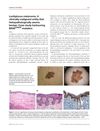
March 2015 in “Journal of the European Academy of Dermatology and Venereology” A clinically suspected melanoma appeared benign under the microscope but was confirmed by specific tests and a rare mutation.
 April 2018 in “Journal of Investigative Dermatology”
 CREB, a protein that can promote cancer traits, is controlled by β-catenin in skin cancer cells.
30 citations
,
August 2005 in “British journal of dermatology/British journal of dermatology, Supplement” A specific gene mutation causes hair loss and potential eye issues, even if vision seems normal.
August 2022 in “International Journal of Molecular Sciences” DNA methylation controls lncRNA2919, which negatively affects hair growth.
29 citations
,
October 2019 in “Journal of dermatological science” Studying premature aging syndromes helps understand human aging and suggests potential treatments.
37 citations
,
December 2020 in “PLANT PHYSIOLOGY” A mutant FERONIA gene affects root hair growth at high temperatures.
 1 citations
,
December 2015 in “Balkan Journal of Medical Genetics”
1 citations
,
December 2015 in “Balkan Journal of Medical Genetics” Genetic screening can help diagnose and manage infertility in Slovenian couples.
13 citations
,
November 2018 in “Animal Genetics” A new gene variant causes curly coats in some dog breeds.
 99 citations
,
August 2009 in “Nature Genetics”
99 citations
,
August 2009 in “Nature Genetics” Removing both Atr and Trp53 genes in adult mice causes severe tissue damage and death due to DNA damage.
5 citations
,
July 2014 in “Molecular Biology Reports” 7 citations
,
June 2017 in “Gene” Overexpression of FGF5s makes Chinese Merino sheep grow longer and heavier wool.
 2 citations
,
March 2024 in “International Journal of experimental research and review”
2 citations
,
March 2024 in “International Journal of experimental research and review” Genetic variations contribute to over 10% of recurrent early pregnancy loss cases.
 April 2023 in “Journal of Investigative Dermatology”
 Mutations in the SHH pathway in certain skin cells can cause skin tumors and abnormal hair growth.
January 2024 in “International journal of molecular sciences” Hoxc13 gene affects wool length in Gansu alpine fine-wool sheep.
6 citations
,
April 2018 in “Transplantation proceedings” A woman experienced severe side effects from a drug due to a specific genetic variation, suggesting genetic testing could prevent such risks.
33 citations
,
February 2012 in “British Journal of Dermatology” Mutations in the p63 gene affect skin adhesion, barrier integrity, and hair growth.
8 citations
,
December 2019 in “Molecular genetics and metabolism reports” Some children in Malaysia with symptoms have either profound or partial biotinidase deficiency, and early testing and treatment are important.