 1 citations
,
August 2022 in “JAAD case reports”
1 citations
,
August 2022 in “JAAD case reports” Tofacitinib and oral minoxidil may help treat Sisaipho alopecia areata.
19 citations
,
November 2012 in “Cell Communication and Signaling” FGF-9 speeds up the early development of certain organs, showing potential for organ regeneration.
 14 citations
,
March 2023 in “Scientific Reports”
14 citations
,
March 2023 in “Scientific Reports” Oxidative stress, not insulin resistance, is significantly related to free androgen index in PCOS.

The DNS FUE technique offers discreet hair transplants with high satisfaction and low damage rates.
14 citations
,
January 2018 in “Skin Appendage Disorders” Upper eyelid hyperpigmentation can help diagnose facial lichen planus pigmentosus in patients with frontal fibrosing alopecia.
 12 citations
,
August 2018 in “Journal of Dermatological Science”
12 citations
,
August 2018 in “Journal of Dermatological Science” Scientists made stem cells that can grow hair by adding three specific factors to them.
 June 2024 in “Indian Dermatology Online Journal”
 Topical tofacitinib is effective and safe for treating alopecia areata.
 222 citations
,
September 2016 in “JCI insight”
222 citations
,
September 2016 in “JCI insight” Tofacitinib is safe and effective for severe alopecia areata, but hair loss may return 2 months after stopping treatment.
6 citations
,
February 2019 in “Journal of dermatology” Favus, a rare fungal infection, has reappeared in Japan.
 March 2023 in “PARIPEX INDIAN JOURNAL OF RESEARCH”
 Tofacitinib helped regrow hair in most patients with severe hair loss.
 November 2023 in “Journal of cosmetic dermatology”
 The 595-nm pulsed dye laser effectively reduces symptoms of EFFC with minimal side effects.
 December 2025 in “Cureus”
 Avoiding friction and using topical treatments can significantly improve rough skin caused by repeated rubbing.
May 2026 in “Inovasi Kesehatan Global” A 7-year-old boy's fungal infection was treated successfully, but some hair loss was permanent.
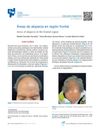 January 2025 in “Revista del Centro Dermatológico Pascua”
 Early diagnosis and treatment can help manage fibrosing alopecia in older women.
 2 citations
,
January 2017 in “Przegla̧d dermatologiczny”
2 citations
,
January 2017 in “Przegla̧d dermatologiczny” Two trichoscopic patterns found in hair loss: diffuse fibrotic and androgenetic alopecia, affecting treatment choice and regrowth chances.
Editing the FGF5 gene in sheep increases fine wool growth.
2 citations
,
April 2022 in “Genes” The study found that the hair loss condition in Cesky Fousek dogs is influenced by multiple genes affecting skin and muscle structure, fat metabolism, and immunity.
 March 2025 in “Drug Development Research”
 The new gel combining minoxidil and tofacitinib effectively treats alopecia areata by promoting hair growth and reducing inflammation.
 11 citations
,
November 2019 in “Journal of the American Academy of Dermatology”
11 citations
,
November 2019 in “Journal of the American Academy of Dermatology” Oral tofacitinib is a promising treatment for beard hair loss in alopecia areata.
 April 2026 in “Human Genome Variation”
 The MBTPS2 gene variant c.970+5G>A is a common mutation causing IFAP syndrome.
 September 2021 in “Revista Interdisciplinar em Saúde”
 Oral isotretinoína effectively stabilizes frontal fibrosing alopecia.
4 citations
,
January 2023 in “Journal of Clinical Investigation” Specific mutations in a receptor cause facial abnormalities and hair loss.
6 citations
,
January 2018 in “Advances in experimental medicine and biology”  November 2025 in “Indian Journal of Plastic Surgery”
 The FUET method improves hair transplant precision and outcomes by combining FUT and FUE techniques under a surgeon's control.
 September 2017 in “Journal of Investigative Dermatology”
 Certain miRNAs might be involved in a hair loss condition called frontal fibrosing alopecia and could possibly help in its diagnosis.
August 2025 in “Biomolecules” Fibroblast growth factors could be a better, safer treatment for hair loss than current options.
23 citations
,
March 2017 in “JAAD case reports” The document suggests a possible link between FAM111B gene mutations and increased cancer risk, particularly pancreatic cancer.
 September 2024 in “Cermin Dunia Kedokteran”
 Improving medical training is key to eradicating frambusia by 2030.
 39 citations
,
January 2019 in “Journal of the American Academy of Dermatology”
39 citations
,
January 2019 in “Journal of the American Academy of Dermatology” Tofacitinib may help treat severe childhood alopecia areata, but risks require careful consideration.