 January 2025 in “Bright Sky Publications eBooks”
 Aesthetic medicine is rapidly advancing with new technologies for safer, personalized, and less invasive treatments.
 January 2025 in “Dialnet (Universidad de la Rioja)”
 ADSC-enriched fat grafting is the best and safest aesthetic treatment, combining effectiveness and ethical confidence.
 October 2024 in “Consilium Medicum”
 Understanding fibroblasts helps improve cosmetic treatments for aging skin.
 August 2024 in “Anatomía Digital”
 La cirugía reconstructiva restaura el cuerpo después de daños, usando avances como impresión 3D, pero enfrenta desafíos y requiere apoyo psicológico y rehabilitación.
 July 2024 in “Journal Of Stem Cell Research”
 Mesenchymal stem cells improve skin appearance and structure in dermatology and aesthetic medicine.

A standardized consent form for PRP injections improves patient trust and legal protection.
 February 2024 in “Curēus”
 Regional nerve blocks are better than ring blocks for pain relief during PRP hair treatment.
 December 2023 in “Frontiers in endocrinology”
 Excess androgens may cause PCOS, not just be a symptom.
 November 2023 in “International Journal of Medical Case Reports and Reviews”
 PRP shows promise in tissue repair but its effectiveness in otolaryngology is still debated.
 October 2023 in “Urologie in der Praxis”
 Primary care providers should understand Geschlechtsinkongruenz to offer better care for transitioning individuals.
 September 2023 in “Fides et Ratio”
 The safety and effectiveness of gender-affirming treatments for children are uncertain, with potential long-term risks like infertility.
 August 2023 in “International journal of medical science and clinical research studies”
 PRP therapy helps heal pediatric surgical wounds faster and with fewer scars but needs more research for safety and cost.
 June 2023 in “Juan Cuevas eBooks”
 Personalized care and evaluation are crucial for successful plastic surgery outcomes.
 June 2023 in “SPIRE - Sciences Po Institutional REpository”
 Extracellular vesicles and androgen receptors may help identify prostate cancer resistance and reduce SARS-CoV-2 infection.
 May 2022 in “Acta scientific dental sciences”
 Platelet concentrates are useful for tissue repair in medicine and dentistry, with L-PRF showing promising results in various treatments.
Platelet-rich plasma is a promising and cost-effective treatment for hair and skin issues in older adults in India.
 November 2020 in “Elsevier eBooks”
 Antiandrogens and androgen inhibitors like spironolactone, finasteride, and dutasteride can treat hair loss and skin conditions, but they have risks and side effects, including potential harm to pregnant women and risks of cancer and heart issues. Herbal remedies also have antiandrogenic effects but lack safety validation.
 July 2020 in “IP International Journal of Maxillofacial Imaging/International journal of maxillofacial imaging/IP International journal of maxillofacial imaging”
 Mesotherapy might be a good and safe way to treat hair loss, refresh skin, and reduce dark spots, with quick treatment times.
 September 2016 in “Springer eBooks”
 Fat-derived stem cells may help treat skin aging and hair loss.
 January 2015 in “Springer eBooks”
 Fat-derived stem cells and their secretions show promise for treating skin aging and hair loss.
 August 2014 in “Plastic Surgery”
 Dr. WP Unger suggested that traditional strip harvesting might be better for hair transplants than Follicular Unit Extraction due to higher hair survival rates and less risk of a patchy look at the donor site.
 May 2014 in “Annals of Plastic Surgery”
 The book is highly praised as an essential resource for plastic surgeons, despite minor gaps.
 April 2014 in “Journal of evolution of medical and dental sciences”
 Women over forty can maintain skin and hair health with lifestyle and dietary changes.

Use the least toxic, most specific treatments for skin diseases, considering side effects and individual patient needs.
 June 2011 in “CRC Press eBooks”
 Low-Level Laser Therapy can stimulate healing and cell function, potentially leading to wider medical use.
 January 2011 in “Side effects of drugs annual”
 Tretinoin gel is safe for sun exposure, but tacalcitol doesn't significantly improve non-segmental vitiligo.
 January 2008 in “Annals of Nutrition and Metabolism”
 Parthenolide promotes hair growth in mice and may influence pathways related to male pattern baldness.

Tacrolimus causes fewer acute rejections than cyclosporin A in kidney transplants but doesn't necessarily improve kidney function after one year; cardiovascular risks and side effects vary between the two drugs.
 February 2004 in “Plastic and Reconstructive Surgery”
 The book is a detailed guide on experimental wound healing methods, useful for researchers but not for clinicians.
 May 2002 in “British Journal of Dermatology”
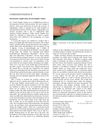
 A pregnant woman's skin condition improved after giving birth, possibly due to high estrogen levels during pregnancy.