 January 2026 in “Archives of Current Medical Research”
 Telogen effluvium is the most common hair loss in women, often linked to low iron, while tight hairstyles and headscarves increase traction alopecia risk.
January 2025 in “Journal of Dermatology & Dermatologic Surgery” Environmental factors can trigger alopecia areata in identical twins.
July 2024 in “Journal of Investigative Dermatology” Scalp cooling may be less effective for women of color on certain chemotherapy treatments.
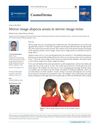
Mirror-image twins can have alopecia areata on opposite sides of their heads.
 November 2023 in “El-Minia Medical Bulletin”
 Sinclair grading effectively identifies female androgenic alopecia patterns, with Grade III most common.
 June 2023 in “British journal of dermatology/British journal of dermatology, Supplement”
 Congenital alopecia areata may have genetic links and topical corticosteroids are an effective treatment.
 January 2023 in “Przegla̧d dermatologiczny”
 There are two main types of alopecia areata with different severity, and diagnosis is made through clinical examination and trichoscopy, influencing treatment choices.
September 2020 in “Annals of Punjab Medical College” Alopecia areata in children is more common in boys, mainly affects the scalp, and is linked to genetics and psoriasis.
 September 2018 in “International Journal of Dermatology”
 Anterolateral leg alopecia is a benign, nonprogressive hair loss condition on the lower legs that is not well understood and may resolve on its own.
 December 2016 in “Springer eBooks”
 A 45-year-old woman with autoimmune diseases experienced patchy hair loss due to alopecia areata, which has no cure but can be treated, with varying success.
 January 2016 in “Journal of The Korean Medical Association”
 The document says how to diagnose and treat hair loss from alopecia areata, but there's no cure and treatments vary.
January 2012 in “China Modern Doctor” Androgenetic alopecia is influenced by age, occupation, education, mental health, genetics, and diet, and psychological treatment is important.
January 2016 in “Indian journal of clinical and experimental dermatology” Early hair loss in young males may not be clearly linked to insulin resistance or metabolic syndrome.
July 2025 in “International Journal of Homoeopathic Sciences” Personalized homeopathic treatment can provide long-term relief for alopecia areata.
275 citations
,
November 2002 in “International Journal of Dermatology” Alopecia areata mainly affects young people and has significant psychological impacts, especially in males.
 120 citations
,
October 2004 in “International journal of radiation oncology, biology, physics”
120 citations
,
October 2004 in “International journal of radiation oncology, biology, physics” Higher doses of cranial irradiation are linked to permanent hair loss.
 109 citations
,
May 2011 in “Dermatologic Therapy”
109 citations
,
May 2011 in “Dermatologic Therapy” Alopecia areata is a type of hair loss that can lead to complete baldness, often associated with other autoimmune conditions, and half of the cases may see hair return within a year.
 35 citations
,
January 2013 in “Indian Journal of Dermatology, Venereology and Leprology”
35 citations
,
January 2013 in “Indian Journal of Dermatology, Venereology and Leprology” Intralesional triamcinolone acetonide is effective for treating patchy hair loss, and dermoscopy helps detect treatment response and side effects early.
 28 citations
,
June 2010 in “European Journal of Cancer”
28 citations
,
June 2010 in “European Journal of Cancer” Baldness at age 40 is not linked to a higher risk of aggressive prostate cancer.
 20 citations
,
September 2016 in “Indian Journal of Dermatology, Venereology and Leprology”
20 citations
,
September 2016 in “Indian Journal of Dermatology, Venereology and Leprology” Platelet-rich plasma treatment significantly increased hair diameter and density, stopped hair fall, and boosted hair growth in men with hair loss, with no reported side effects.
14 citations
,
September 2021 in “Journal of Inflammation Research” Alopecia areata patients, especially women with nail issues or atopic diseases, are at higher risk for other autoimmune diseases.
14 citations
,
February 2013 in “PubMed” Patients treated with long-term intralesional corticosteroids for alopecia areata should be monitored for bone density changes and advised on osteoporosis prevention.
 9 citations
,
June 2000 in “Journal of The American Academy of Dermatology”
9 citations
,
June 2000 in “Journal of The American Academy of Dermatology” Mutation in hairless gene may increase hair loss risk.
7 citations
,
October 2011 in “Faṣlnāmah-i bīmārīhā-yi pūst” Iron and ferritin levels don't affect alopecia areata.
 4 citations
,
March 2016 in “Dermatologic Surgery”
4 citations
,
March 2016 in “Dermatologic Surgery” PRP treatment increased hair density, especially in men and younger patients with AGA.
 3 citations
,
March 2017 in “Case Reports in Dermatology”
3 citations
,
March 2017 in “Case Reports in Dermatology” A woman with lupus improved significantly from scalp hair loss after treatment, highlighting the need to identify psoriatic alopecia in lupus patients to avoid permanent hair loss.
 2 citations
,
June 2000 in “Journal of The American Academy of Dermatology”
2 citations
,
June 2000 in “Journal of The American Academy of Dermatology” Mutation in hairless gene may increase hair loss risk.
1 citations
,
September 2021 in “Journal of Cosmetic Dermatology” Certain gene variations may increase the risk of hair loss in Egyptians.
1 citations
,
September 2021 in “DOAJ (DOAJ: Directory of Open Access Journals)” Alopecia areata patients often have other autoimmune diseases, especially women with nail issues or atopic diseases.
1 citations
,
July 2021 in “Journal of Central South University. Medical sciences” Regular aerobic exercise for over 60 minutes can delay and improve androgenic alopecia symptoms.