1 citations
,
June 2025 in “Journal of Clinical Medicine” Frontal fibrosing alopecia often occurs after menopause, with delayed diagnosis and possible links to certain medications and conditions.
July 2025 in “Journal of Investigative Dermatology” 18 citations
,
January 1988 in “Acta oncologica” Retinol palmitate may reduce cancer relapses in early-stage lung cancer patients.
 26 citations
,
March 2015 in “Phytotherapy Research”
26 citations
,
March 2015 in “Phytotherapy Research” Forsythiaside-A, a natural substance, can protect against hair loss and is more effective than current treatments, potentially making it a good option for hair loss treatment.
 February 2026 in “South Asian Research Journal of Biology and Applied Biosciences”
 Alopecia areata patients have higher hormone levels, suggesting hormonal screening could help in treatment.
 September 2019 in “Journal of Investigative Dermatology”
 Targeted therapy with Ustekinumab significantly improved a skin condition called ILVEN, which is caused by mutations in the CARD14 gene.
19 citations
,
April 2017 in “Synapse” Blocking allopregnanolone production in mice makes them more anxious after stress, but this can be reversed with a drug that mimics allopregnanolone.
 17 citations
,
October 2016 in “Artificial Cells Nanomedicine and Biotechnology”
17 citations
,
October 2016 in “Artificial Cells Nanomedicine and Biotechnology” Using tiny fat particles to deliver arginine to hair follicles could be a new way to treat hair loss.

A rare case of a woman having both lichen planus pigmentosus and classic lichen planopilaris at the same time.
22 citations
,
July 2017 in “Australasian journal of dermatology” Hair transplantation can effectively restore hair in patients with stable lichen planopilaris or frontal fibrosing alopecia.
15 citations
,
July 1998 in “PubMed” Fentanyl accumulates differently in hair from internal use compared to external exposure.
 13 citations
,
March 2020 in “Genes”
13 citations
,
March 2020 in “Genes” Disrupting the FGF5 gene in rabbits leads to longer hair by extending the hair growth phase.

Low-dose oral isotretinoin improved hair loss and facial bumps in patients with a specific type of hair loss.
January 2026 in “ACS Applied Bio Materials” A new treatment using nanoliposomes can improve hair regrowth in androgenetic alopecia.
 February 2024 in “Scientific reports”
 Four genes are potential markers for hair loss condition alopecia areata, linked to a specific type of cell death.
 December 2021 in “Research Square (Research Square)”
 Hair follicle sampling is a feasible method to measure FMRP and FMR1 mRNA levels in children.
 37 citations
,
October 2015 in “Anais Brasileiros de Dermatologia”
37 citations
,
October 2015 in “Anais Brasileiros de Dermatologia” Lichen planopilaris mostly affects women with fair skin and can look different on each person, needing early treatment to prevent hair loss.
 November 2025 in “Reumatismo”
 The choice between belimumab and anifrolumab depends on the specific symptoms of the patient's lupus.
 36 citations
,
November 2005 in “Journal of The American Academy of Dermatology”
36 citations
,
November 2005 in “Journal of The American Academy of Dermatology” Topical latanoprost doesn't effectively regrow hair in severe eyebrow alopecia areata cases.
 31 citations
,
April 2010 in “British journal of dermatology/British journal of dermatology, Supplement”
31 citations
,
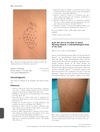
April 2010 in “British journal of dermatology/British journal of dermatology, Supplement” Frontal fibrosing alopecia can cause sudden hair loss on limbs, similar to scalp hair loss.
 3 citations
,
October 2021 in “Journal of Cosmetic Dermatology”
3 citations
,
October 2021 in “Journal of Cosmetic Dermatology” Trichoscopy helps tell apart Frontal Fibrosing Alopecia and Lichen planopilaris by showing different hair and scalp features.
 30 citations
,
December 2019 in “PLoS ONE”
30 citations
,
December 2019 in “PLoS ONE” The new delivery system improved raloxifene's skin absorption and effectiveness against cancer cells.
 June 2023 in “Brazilian Journal of Case Reports”
 Botulinum Toxin Type A delivered through the skin may be a promising treatment for Frontal Fibrosing Alopecia.
1 citations
,
December 2012 in “Journal of dermatological science” Combining ficlatuzumab and gefitinib can cause severe scarring hair loss.
 May 2009 in “Medical and surgical dermatology/Medical & surgical dermatology”
 Hair and nail conditions can stabilize or improve over time, and new treatments show promise.
 20 citations
,
March 2013 in “Journal of Lipid Research”
20 citations
,
March 2013 in “Journal of Lipid Research” The research explains how a human enzyme binds and processes its substrate, which could relate to its role in biological functions and hair loss.
July 2024 in “Journal of Investigative Dermatology” PRP preparation partially activates platelets, causing varied growth factor release.

The RNA AL136131.3 slows down hair growth and speeds up hair loss by affecting sugar breakdown in hair follicles.
 5 citations
,
April 2011 in “Bioorganic & Medicinal Chemistry Letters”
5 citations
,
April 2011 in “Bioorganic & Medicinal Chemistry Letters” New Finasteride conjugate improves prostate treatment and vital signs in rats.
January 2009 in “ScholarlyCommons (University of Pennsylvania)” The P133R mutation in AKR1D1 enzyme causes harmful bile acid buildup, explaining related health issues.