 July 2025 in “Journal of Investigative Dermatology”
 Immune system changes may contribute to female pattern hair loss.
 19 citations
,
May 2007 in “Dermatologic therapy”
19 citations
,
May 2007 in “Dermatologic therapy” The document concludes that various treatments, including laser therapy, are effective for managing pseudofolliculitis barbae, especially in darker skin types.
January 2014 in “Ghent University Academic Bibliography (Ghent University)” FGF18 may influence hair loss in dogs.
99 citations
,
May 2013 in “Familial cancer” People with Birt-Hogg-Dubé syndrome often have lung problems and delayed diagnosis, and better recognition of CT scan signs could improve diagnosis and management.
6 citations
,
March 2024 in “Journal of Clinical Laboratory Analysis” Certain genetic variations in IGF2BP2 and IGFBP3 are linked to a higher risk of PCOS.
1 citations
,
August 2018 in “Journal of the American Academy of Dermatology” A young woman developed facial bumps before hair loss, which is unusual for her condition.
April 2026 in “Journal of Dermatological Treatment” CGF and i-PRF are more effective and safer than PRP for treating female pattern hair loss.
 August 2013 in “Nature Reviews Drug Discovery”
 A protein called FGF9 helps regenerate hair follicles in mice after skin damage, and increasing FGF9 could potentially help human hair growth.
 2 citations
,
January 2013 in “Türkiye klinikleri tıp bilimleri dergisi”
2 citations
,
January 2013 in “Türkiye klinikleri tıp bilimleri dergisi” The study suggests using a score of 11 on the mFG scale to diagnose hirsutism in Turkish women, with adjustments for age, skin type, and family history.
6 citations
,
October 2022 in “International Journal of Molecular Sciences” Male mice with FGF5 mutations grow longer hair than females.
 6 citations
,
January 2017 in “British Journal of Dermatology”
6 citations
,
January 2017 in “British Journal of Dermatology” Frontal fibrosing alopecia is a scarring hair loss condition mainly affecting older women, with no known cause and treatments that may help stabilize hair loss.
 3 citations
,
December 2019 in “Journal of Cosmetic and Laser Therapy”
3 citations
,
December 2019 in “Journal of Cosmetic and Laser Therapy” PRGF treatments increased hair number and thickness in people with hair loss, with more injections leading to better results.
60 citations
,
July 2014 in “Autophagy” The protein FLCN is involved in cellular cleanup and is regulated by ULK1.
February 2026 in “Skin Appendage Disorders” Pseudofolliculitis barbae is linked to higher rates of anxiety and depression.
 July 2024 in “Iranian journal of pathology”
 Frontal fibrosing alopecia mainly affects women over 50, causing hair loss and specific skin changes.
 September 2017 in “Journal of Clinical Dermatology”
 A growth factor cocktail with FGF9 and microneedling effectively increases hair density and diameter in hair loss patients.
November 2021 in “CRC Press eBooks” Female androgenic alopecia causes hair thinning in women, especially after menopause, and affects their mental well-being.
 4 citations
,
June 1998 in “The Journal of Clinical Endocrinology & Metabolism”
4 citations
,
June 1998 in “The Journal of Clinical Endocrinology & Metabolism” KGF and its receptor are found in enlarged prostate tissue and KGF strongly increases cell growth.
 20 citations
,
September 2015 in “Protein expression and purification”
20 citations
,
September 2015 in “Protein expression and purification” Scientists made safflower seeds produce a human growth factor that could help with hair growth and wound healing.
 March 2026 in “bioRxiv (Cold Spring Harbor Laboratory)”
 The Enriched-GF method efficiently produces high-yield growth factors for tissue repair.
 January 2025 in “Indian Journal of Dermatology”
 Frontal fibrosing alopecia is a challenging hair loss condition with no known cause or definitive treatment.
9 citations
,
January 2023 in “Journal of Clinical Medicine” The FFA-QLI is a reliable tool for assessing quality of life in women with severe Frontal Fibrosing Alopecia.
Early diagnosis and treatment of frontal fibrosing alopecia are crucial to prevent permanent hair loss.
4 citations
,
May 2023 in “Cells” Baricitinib and its combination with lonafarnib improve fat cell formation in certain genetic disorders.
 3 citations
,
January 2007 in “Nishinihon hifuka/Nishi Nihon hifuka”
3 citations
,
January 2007 in “Nishinihon hifuka/Nishi Nihon hifuka” Great Burnet extract may prevent hair loss by extending the hair growth phase.
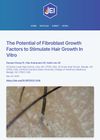
Some fibroblast growth factors may promote hair growth similarly to minoxidil and could potentially treat hair loss.
 July 2018 in “Elsevier eBooks”
 Frontal Fibrosing Alopecia is a type of hair loss affecting mostly older women, with no agreed best treatment.
7 citations
,
November 1997 in “Reproduction Fertility and Development” Epidermal growth factor disrupts hair and gland formation in bandicoots.
 179 citations
,
December 2004 in “Journal of The American Academy of Dermatology”
179 citations
,
December 2004 in “Journal of The American Academy of Dermatology” Some postmenopausal women with frontal fibrosing alopecia stopped losing hair with finasteride treatment, hinting at a possible hormonal cause.
 15 citations
,
May 2003 in “The Laryngoscope”
15 citations
,
May 2003 in “The Laryngoscope” FGF-1 causes spiral ganglion neurites to branch more.