 155 citations
,
September 2008 in “British journal of dermatology/British journal of dermatology, Supplement”
155 citations
,
September 2008 in “British journal of dermatology/British journal of dermatology, Supplement” FFA is more common in postmenopausal women, can affect younger women, and may stabilize over time.

Hair loss can be caused by hormones, illness, autoimmune disorders, or vitamin deficiencies, and treatments vary depending on the type.
 25 citations
,
March 2013 in “British Journal of Dermatology”
25 citations
,
March 2013 in “British Journal of Dermatology” Woman has discoid lupus, frontal fibrosing, and androgenetic alopecia.
July 2025 in “Cell & Bioscience” Specific immune cells and pathways contribute to hair follicle inflammation and hair loss, suggesting potential treatments for lichen planopilaris.
15 citations
,
February 2006 in “Journal of Investigative Dermatology” More research is needed to understand and treat cicatricial alopecias.
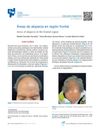 January 2025 in “Revista del Centro Dermatológico Pascua”
 Early diagnosis and treatment can help manage fibrosing alopecia in older women.
46 citations
,
October 2018 in “JCI insight” CD8+ T cells are involved in alopecia areata and may cause disease relapse.
114 citations
,
August 2002 in “Journal of Investigative Dermatology” Alopecia areata is caused by an immune response, and targeting immune cells might help treat it.
 January 2025 in “International Journal of Advanced Biochemistry Research”
 Three Persian cats with mange were successfully treated with Ivermectin injections.
January 2022 in “Clinical Cases in Dermatology” Hypothyroidism can cause hair loss, which is often reversible with treatment.
July 2024 in “Journal of Controlled Release” Nanostructured lipid carriers effectively deliver tofacitinib to hair follicles, reversing hair loss in alopecia areata.
 February 2026 in “Ciencia Latina Revista Científica Multidisciplinar”
 Early recognition and thyroid evaluation are crucial for managing diffuse alopecia areata linked to autoimmune thyroid disease.
1 citations
,
May 2025 in “Clinical Reviews in Allergy & Immunology”  19 citations
,
September 2002 in “Acta dermato-venereologica”
19 citations
,
September 2002 in “Acta dermato-venereologica” Topical tacrolimus did not regrow hair in alopecia universalis patients.
 43 citations
,
March 2019 in “JAMA Dermatology”
43 citations
,
March 2019 in “JAMA Dermatology” Hair regrowth treatments had modest benefits for patients with long-term hair loss after chemotherapy.
 29 citations
,
June 2013 in “Journal of the Saudi Society of Dermatology & Dermatologic Surgery”
29 citations
,
June 2013 in “Journal of the Saudi Society of Dermatology & Dermatologic Surgery” Alopecia areata is an autoimmune hair loss condition treated with corticosteroids, and histologic confirmation is the best diagnosis method.
32 citations
,
August 2016 in “Science Signaling” Alopecia areata patients show unique protein activity patterns, suggesting imbalanced signaling pathways.
May 2024 in “Indian Journal of Pharmacology” Tofacitinib effectively regrew scalp hair in an 11-year-old girl with alopecia areata.
 2 citations
,
July 2020 in “Giornale italiano di dermatologia e venereologia”
2 citations
,
July 2020 in “Giornale italiano di dermatologia e venereologia” A woman with frontal fibrosing alopecia experienced unusual hair growth after using a specific topical lotion.
 20 citations
,
November 2005 in “Journal of Investigative Dermatology Symposium Proceedings”
20 citations
,
November 2005 in “Journal of Investigative Dermatology Symposium Proceedings” IFN-γ and IL-2 are important for T cell activation in hair loss in mice.
June 2020 in “The journal of investigative dermatology/Journal of investigative dermatology” Hair follicle bumps with stem cells might contribute to permanent hair loss by getting disconnected due to scarring.
67 citations
,
July 2011 in “Clinical, cosmetic and investigational dermatology” The document suggests a personalized treatment plan for alopecia areata based on the patient's age and hair loss severity, using a range of therapies ranked by effectiveness and safety.
 6 citations
,
March 2011 in “Experimental Dermatology”
6 citations
,
March 2011 in “Experimental Dermatology” Too much or too little selenium in the diet can cause hair loss and graying in mice.
5 citations
,
November 2003 in “Biomedical Papers of the Faculty of Medicine of Palacký University, Olomouc Czech Republic” The exact causes of baldness are not fully understood, limiting treatment options.
July 2024 in “Journal of Investigative Dermatology” ITK inhibitors may effectively treat alopecia areata.
 16 citations
,
March 2000 in “Clinical Biochemistry”
16 citations
,
March 2000 in “Clinical Biochemistry” Women with hair loss had higher levels of certain hormones, suggesting a link to a condition like PCOS.
 8 citations
,
June 2012 in “Australasian Journal of Dermatology”
8 citations
,
June 2012 in “Australasian Journal of Dermatology” A rare form of alopecia causes hair thinning without bald spots and may be more common than thought, responding well to steroid treatment.
 7 citations
,
January 2013 in “Journal of Investigative Dermatology”
7 citations
,
January 2013 in “Journal of Investigative Dermatology” Vitamin A may influence hair loss conditions like alopecia, but more research is needed to understand how.