113 citations
,
June 2010 in “Biological Chemistry” Cathepsin L deficiency causes large, abnormal cell structures and health issues in mice.
4 citations
,
December 2015 in “Redalyc (Universidad Autónoma del Estado de México)” A cat with sebaceous adenitis improved after treatment with shampoo, ciclosporin, and fatty acids.
 October 2025 in “Buletin Veteriner Udayana”
 Early diagnosis and treatment of Notoedres cati in cats is crucial for recovery and preventing reinfestation.

A genetic mutation in the EDA gene causes hypohidrotic ectodermal dysplasia in cats.
 June 2025 in “ARSHI Veterinary Letters”
 The cat's skin condition improved and hair regrew after antifungal treatment.
A red fox with skin lesions was cured of a fungal infection after treatment.
 July 2024 in “Advancements in Life Sciences”
 Fungal infections are the most common skin disease in cats, especially white ones.
 1 citations
,
January 2023 in “Advances in animal and veterinary sciences”
1 citations
,
January 2023 in “Advances in animal and veterinary sciences” Most cats with dermatophytosis had fungal infections, mainly caused by M. canis.
 June 2023 in “Indian Journal of Canine Practice”
 The cat fully recovered from skin issues after treatment with medication and shampoo.
6 citations
,
March 2005 in “Journal of the American Academy of Dermatology” Follicular dystrophy in immunocompromised patients may be linked to medication or viral factors and can improve with treatment changes.
 March 2025 in “Buletin Veteriner Udayana”
 The cat's scabies and pneumonia improved significantly with treatment.
 September 2024 in “Journal of Parasite Science”
 Dermatophytosis in cats was most common in young, male Persian cats, with symptoms like hair loss and crusts.
December 2024 in “Veterinary Dermatology” A sugar glider had a rare skin cancer that worsened despite treatment, highlighting the need for thorough checks in exotic pets.
 18 citations
,
July 2001 in “Australian veterinary journal”
18 citations
,
July 2001 in “Australian veterinary journal” A cat with skin bumps and itching had high blood fats and skin infections, which improved with diet and medication changes.
 3 citations
,
May 2019 in “BMJ case reports”
3 citations
,
May 2019 in “BMJ case reports” A boy with severe immune deficiency and Epstein-Barr virus died from high-grade B-cell lymphoma.
 22 citations
,
December 2003 in “Veterinary clinical pathology”
22 citations
,
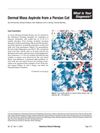
December 2003 in “Veterinary clinical pathology” The Persian cat has a skin infection caused by a fungus, treatable with antifungal medication.
47 citations
,
June 2013 in “Biology of blood and marrow transplantation” Mice with human fetal thymic tissue and stem cells developed symptoms similar to chronic graft-versus-host disease.
2 citations
,
June 2008 in “University of Zagreb University Computing Centre (SRCE)” The cat's skin condition improved after stopping drugs and using iodine, confirming it was sterile neutrophilic dermatitis.
 1 citations
,
May 2025 in “The Journal of Rheumatology”
1 citations
,
May 2025 in “The Journal of Rheumatology” Careful monitoring is crucial to prevent JC virus reactivation in lupus patients treated with rituximab.
 17 citations
,
January 2011 in “The Korean Journal of Hepatology”
17 citations
,
January 2011 in “The Korean Journal of Hepatology” Vogt-Koyanagi-Harada disease can develop during interferon therapy for chronic hepatitis C.
 December 2021 in “Molecular genetics and genomics”
 Cats with abnormal hair had DSG4 gene changes causing hair problems.
A rare genetic mutation causes severe immune issues, hair loss, and nail problems.
3 citations
,
May 2009 in “Journal of Pediatric Gastroenterology and Nutrition” Consider infectious diseases like visceral leishmaniasis before diagnosing autoimmune hepatitis.
57 citations
,
August 2002 in “American Journal Of Pathology” Cathepsin L deficiency causes hair and skin issues in mice.
April 2019 in “Journal of parasitic diseases” A Persian cat and its owner fully recovered from Cheyletiellosis after treatment.
55 citations
,
November 2010 in “Journal of Allergy and Clinical Immunology” The L412F variant of TLR3 is linked to skin infections, more viral infections, and autoimmune issues.
1 citations
,
January 2024 in “Microorganisms” Mice with a virus similar to COVID-19 had skin damage, but a special treatment helped repair it.
5 citations
,
June 2012 in “Journal of Investigative Dermatology” A new mouse model for vitiligo helps study immune responses and potential treatments.
1 citations
,
April 2024 in “Pathogens” A pet ferret had a serious infection from Mycobacterium xenopi, which can spread to humans.
2 citations
,
March 2016 in “International Journal of Dermatology” Kikuchi–Fujimoto disease can cause scarring alopecia and should be considered in diagnosis.