 20 citations
,
January 1979 in “JAMA”
20 citations
,
January 1979 in “JAMA” Fiber implantation for baldness is not recommended because it causes many problems and doesn't work well.
The KRT84 gene is linked to better wool quality in Gansu Alpine Fine-wool sheep.
 1 citations
,
June 2023 in “Journal of applied crystallography”
1 citations
,
June 2023 in “Journal of applied crystallography” The technique showed that human hair has two main parts, with 68% being rigid and the rest flexible, and water swelling affects its structure.
40 citations
,
January 2022 in “Frontiers in Chemistry” The patch speeds up deep wound healing.
 December 2023 in “Journal of molecular structure”
 Hair treatments and dehydration affect hair's lipid and protein behavior, influencing its flexibility and appearance.
 July 2026 in “Frontiers in Bioengineering and Biotechnology”
 Echinacea-functionalized membranes improve wound healing and hair growth while preventing infections.
 2 citations
,
March 2019 in “PubMed”
2 citations
,
March 2019 in “PubMed” Biofibre hair implants may improve the quality of life for people with hair loss.
 26 citations
,
April 2019 in “Genes”
26 citations
,
April 2019 in “Genes” lncRNA XLOC_008679 and gene KRT35 affect cashmere fineness in goats.
21 citations
,
December 2017 in “bioRxiv (Cold Spring Harbor Laboratory)” Fibroblast behavior is key for skin structure and healing.
 45 citations
,
December 2006 in “Biopolymers”
45 citations
,
December 2006 in “Biopolymers” Permanent waving weakens hair by altering its protein structure.
 December 2023 in “Materials Today Sustainability”
 Scientists made glow-in-the-dark dots from human hair that can detect iron, prevent counterfeiting, and reveal fingerprints.
43 citations
,
July 1994 in “Journal of Cell Science” Cross-linked proteins help maintain the structure of hair, feathers, and hagfish teeth.
 30 citations
,
June 2024 in “Scientific Reports”
30 citations
,
June 2024 in “Scientific Reports” The hydrogel shows promise for wound healing due to its strong mechanical, antimicrobial, and antioxidant properties.
October 2021 in “Authorea (Authorea)” New hair perming method using tyrosine is gentler and can be done with a blow-dryer.
 20 citations
,
March 2020 in “International Journal of Biological Macromolecules”
20 citations
,
March 2020 in “International Journal of Biological Macromolecules” Lower acetylation makes chitin nanofibers thinner and more suitable for various uses.
 84 citations
,
April 2013 in “Applied Microbiology and Biotechnology”
84 citations
,
April 2013 in “Applied Microbiology and Biotechnology” Mannosylerythritol lipids are good for skin and hair care products.
1 citations
,
September 2024 in “International Journal of Cosmetic Science” Bleaching hair increases pore size and changes pore structure.
 10 citations
,
October 2016 in “Journal of Biomolecular NMR”
10 citations
,
October 2016 in “Journal of Biomolecular NMR” Solid-state NMR can effectively study keratin structure and treatment effects in fur.
 April 2011 in “한국생물공학회 학술대회”
 Lotion with fucoidan from brown seaweed improved skin and reduced allergy symptoms in mice with dermatitis.
4 citations
,
January 2021 in “Acta Dermato Venereologica” Titanium nanoparticles may trigger frontal fibrosing alopecia, so avoid products with them.
 28 citations
,
December 2010 in “Langmuir”
28 citations
,
December 2010 in “Langmuir” Hair fibers interact through classical forces, which are influenced by treatments and products, important for hair care and other applications.
 November 2024 in “Journal of Scientific Agriculture”
 Silk proteins are great for cosmetics because they protect and improve skin and hair while being eco-friendly.
Folate salts penetrate skin well and improve wound healing, suggesting potential for skin treatments.
Melatonin increased the activity of a hair growth gene in Cashmere goats.
 26 citations
,
September 2018 in “Colloids and Surfaces B: Biointerfaces”
26 citations
,
September 2018 in “Colloids and Surfaces B: Biointerfaces” A new liposome treatment helps heal deep burns on mice by improving hair regrowth and reducing scarring.
 46 citations
,
January 2015 in “Journal of The American Academy of Dermatology”
46 citations
,
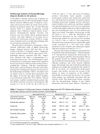
January 2015 in “Journal of The American Academy of Dermatology” Trichoscopy helps diagnose and assess the severity of Frontal Fibrosing Alopecia.
 August 2025 in “Journal of Applied Pharmaceutical Research”
 F4 and F6 hair gels showed promise for improving hair care but need more testing.
9 citations
,
December 2018 in “Journal of Natural Fibers” Magra sheep's wool luster is linked to specific keratin gene expression and protein variations.
1 citations
,
October 2010 in “2010 3rd International Conference on Biomedical Engineering and Informatics” The LEF-1 gene in cashmere goats was successfully cloned and analyzed, showing potential for improving cashmere production.
KRTAP6 genes affect wool quality in sheep.