Accurate diagnosis of hair loss types is crucial for effective treatment.
 December 2023 in “EPRA international journal of multidisciplinary research”
 Alopecia areata causes sudden hair loss, has genetic links, and can be managed but not cured.
 November 2023 in “The journal of investigative dermatology/Journal of investigative dermatology”
 OR-101 shows promise for treating alopecia areata by improving hair growth.
 January 2023 in “Skin appendage disorders”
 A woman's hair grew back after treatment for a rare hair loss caused by proton therapy.
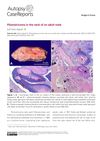 January 2022 in “Autopsy and Case Reports”
 A man had a non-cancerous neck tumor related to hair follicles removed with no return of the tumor.
May 2021 in “DOAJ (DOAJ: Directory of Open Access Journals)” New technologies may improve topical treatments for hair loss.
September 2020 in “International journal of current pharmaceutical research” Tea tree oil cream effectively reduces hair growth.
 April 2018 in “The journal of investigative dermatology/Journal of investigative dermatology”
 miR-486 may help prevent hair loss in alopecia areata.
The hair lotion from Ganoderma lucidum extract effectively promotes hair growth and reduces hair loss.
 April 2017 in “Australasian Journal of Dermatology”
 Most patients with Lichen planopilaris improved with acitretin, but treatments often didn't work well; preventing infection in skin surgery is important, and bupivacaine might be a better anesthetic.
 May 2016 in “Research opinions in animal & veterinary sciences”
 Maternal aspartame consumption during pregnancy leads to skin damage and higher apoptosis in newborn rat offspring.
 September 2013 in “Hair transplant forum international”
 The document says doctors should identify and treat Frontal fibrosing alopecia medically before considering surgery, as treatments often don't work well.
Melatonin reduces BMP2 gene expression in goat hair follicles during the resting period.
January 2009 in “한방재활의학과학회지” Saengbal-eum-2 promotes hair growth and reduces inflammation in mice.
December 2025 in “Zagazig University Medical Journal” PDO threads may help regrow hair and increase thickness in hair loss.
November 2025 in “Portuguese National Funding Agency for Science, Research and Technology (RCAAP Project by FCT)” Hair loss from cervical cancer treatment needs better prevention and management.
 November 2021 in “CRC Press eBooks”
 Anagen effluvium is a reversible condition causing sudden hair loss, often due to chemotherapy or head radiation.
 March 2021 in “Bioscientia medicina”
 Androgen affects oil production and hair growth in the skin.
July 2020 in “Zenodo (CERN European Organization for Nuclear Research)” HairFortin may help reduce hair loss and promote regrowth.
Certain herbs can help reduce hair loss.
 September 1998 in “Journal of the European Academy of Dermatology and Venereology”
 Autoimmune and inflammatory processes are involved in both scarring and non-scarring types of hair loss.
December 1976 in “PubMed” Androgens affect skin conditions like acne and hirsutism, treatable with hormone therapy and other methods.
 January 2022 in “International Journal of Health Science”
 Topical products, especially specific shampoos, are effective in treating androgenetic alopecia by delivering active ingredients to hair follicles and improving hair quality.
 December 2012 in “Faculty Opinions – Post-Publication Peer Review of the Biomedical Literature”
 There are several promising treatments for hair loss, including dutasteride, latanoprost, ketoconazole shampoo, anti-androgens, laser/light treatment, and platelet-rich plasma, but more research is needed.
 May 2024 in “Food bioscience”
 Wood sterol may help reduce hair loss caused by a high-fat diet.
3 citations
,
October 2019 in “CRC Press eBooks” Isotretinoin effectively treats severe acne but can cause significant side effects like dry skin and hair loss.
 8 citations
,
January 1989 in “Annual Reports in Medicinal Chemistry”
8 citations
,
January 1989 in “Annual Reports in Medicinal Chemistry” Hair loss from alopecia areata and androgenetic alopecia can be treated, but more effective and safer treatments are needed.
 September 2024 in “Health Sciences”
 Androgenic alopecia can be treated with minoxidil, finasteride, and hormonal therapy.
Minoxidil and finasteride are the only FDA-approved treatments for hair loss caused by genetic and hormonal factors, but their effectiveness is often doubted, indicating a need for new treatments.
 23 citations
,
April 1991 in “Journal of The American Academy of Dermatology”
23 citations
,
April 1991 in “Journal of The American Academy of Dermatology” Minoxidil solution can cause skin irritation and allergies in some users.