
Higher TGF-β signaling may increase skin cancer risk in organ transplant recipients.
 January 2023 in “Annali di stomatologia”
 PRP helps heal and repair tissues in medicine but needs more research for better use.
 January 2023 in “Open Life Sciences”
 VEGFR-2 activation is likely involved in hair follicle growth, survival, and development.
 January 2023 in “Discovery immunology”
 T cells and bacteria in the gut and skin help maintain health and protect against disease.
 January 2023 in “Åbo Akademi University Research Portal”
 Vimentin is crucial for wound healing, cell growth, and managing immune responses.
Vitamin D is crucial for skin health and managing skin diseases.
 October 2020 in “International journal of Ayurvedic medicine”
 Leech therapy and Ayurvedic treatment can effectively regrow hair in recent Alopecia areata cases.
 May 2020 in “Research Square (Research Square)”
 Researchers found four key stages of cell development that are important for hair growth and shedding in cashmere goats.
 February 2020 in “Scholars international journal of traditional and complementary medicine”
 Ayurveda treats hair problems like hair loss and dandruff by balancing body elements and using natural remedies like Indian Gooseberry and false Daisy.
 November 2019 in “Harper's Textbook of Pediatric Dermatology”
 Understanding normal hair growth and loss in children is key to diagnosing and treating hair disorders.
 December 2018 in “IntechOpen eBooks”
 Neurohormones help control skin health and could treat skin disorders.
 October 2018 in “InTech eBooks”
 The gene Foxn1 is important for hair growth, and understanding it may lead to new alopecia treatments.
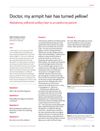
A 15-year-old boy's smelly, yellow armpit hair improved with clindamycin treatment.
 May 2018 in “Journal of Investigative Dermatology”
 Activating Wnt in skin cells controls the number of hair follicles by directing cell movement and fate.
 April 2018 in “Journal of Investigative Dermatology”
 DNMT3A is crucial for healthy skin and hair growth.
 January 2018 in “Stem cell biology and regenerative medicine”
 The nucleus is key in controlling skin growth and repair by coordinating signals, gene regulators, and epigenetic changes.
 April 2017 in “International journal of research in Ayurveda and pharmacy”
 Ayurvedic methods can help reduce the harmful effects of chemicals in cosmetics.
 April 2017 in “The journal of investigative dermatology/Journal of investigative dermatology”
 Astrotactin2 affects hair follicle orientation and skin cell polarity.
 January 2017 in “Springer eBooks”
 The document concludes that Cutaneous Lupus Erythematosus has different forms, is influenced by genetic and environmental factors, and can be treated with various medications, but more targeted therapies are needed.
 January 2017 in “Springer eBooks”
 The document concludes that scalp health is influenced by complex factors affecting sebaceous glands, including hormones, aging, and various substances.
 January 2017 in “Elsevier eBooks”
 Antioxidants may help improve mitochondrial health and could be used to treat diseases related to cell damage.
 January 2016 in “Springer eBooks”
 New materials and methods could improve skin healing and reduce scarring.
 January 2016 in “Elsevier eBooks”
 Trichoscopy is a key method for dermatologists to quickly and effectively diagnose hair and scalp conditions.
 March 2015 in “Polish Journal of Public Health”
 Blood vessel patterns in skin diseases relate to certain blood markers in systemic sclerosis but not in psoriasis or psoriatic arthritis, and may indicate circulation issues in alopecia.
 January 2015 in “Durham e-Theses (Durham University)”
 Adipose tissue changes in obesity can trigger stress in fat cells.
 January 2014 in “Journal of Investigative Dermatology”
 Proteins like aPKC and PDGF-AA, substances like adenosine and ATP, and adipose-derived stem cells all play important roles in hair growth and health, and could potentially be used to treat hair loss and skin conditions.
 September 2013 in “Experimental Dermatology”
 The document concluded that stem cells are crucial for skin repair, regeneration, and may help in developing advanced skin substitutes.
 January 2011 in “Springer eBooks”
 Eating a balanced diet with the right vitamins and minerals is important for healthy hair, but too many supplements can be harmful.
 January 2010 in “Elsevier eBooks”
 The document concludes that different types of hair loss have specific treatments, and early diagnosis is crucial for preventing permanent hair loss.
 January 2009 in “Springer eBooks”
 The document concludes that treating skin conditions should include psychological care and a multidisciplinary approach is essential for effective management.