 April 2026 in “Inflammopharmacology”
 Punica granatum leaf extract may help treat skin fibrosis by reducing inflammation and oxidative stress.
 April 2026 in “Journal of Pharmaceutical Investigation”
 Nanotechnology could improve treatment for scars and atopic dermatitis by targeting skin issues more effectively.
 March 2026 in “Calcified Tissue International”
 The EDA pathway plays a key role in bone development by interacting with other signaling pathways.
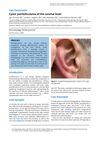 March 2026 in “Dermatology Online Journal”
 Cystic panfolliculoma is a rare, harmless tumor that can be confused with other skin tumors.
 February 2026 in “International Journal on Science and Technology”
 Vitex negundo may help treat PCOD, but more human studies are needed.
 February 2026 in “Journal of Integrative Neuroscience”
 NGF-modified hair follicle stem cells may help treat Alzheimer's by improving brain function and reducing harmful proteins.
 January 2026 in “International Journal of Science and Research (IJSR)”
 Unani medicine and modern dermatology both offer treatments for ichthyosis, a condition causing dry, scaly skin.
 January 2026 in “Microsystems & Nanoengineering”
 Research on silica-based nanobiomaterials for tissue regeneration is rapidly growing, with China leading in volume and the U.S. excelling in impact.
 January 2026 in “Nano-Micro Letters”
 4D scaffolds made with melt electrowriting can change shape for use in medicine.
 December 2025 in “Lviv clinical bulletin”
 PRP therapy may help with ovarian issues and fertility, but more research is needed.
 December 2025 in “The Journal of Basic and Applied Zoology”
 Red Sokoto goat fetuses develop firmer, pigmented skin with hair follicles as they grow.
 December 2025 in “International Journal of Pharmacology”
 iPSC-derived artificial platelets show promise for consistent and effective regenerative therapies.
 December 2025 in “Nature Communications”
 Skin organoids can model tuberculosis infection and help test treatments.
 October 2025 in “Journal of Translational Medicine”
 Combining biomaterials and cell pathways can improve hair follicle regeneration.
 September 2025 in “Journal of Pakistan Association of Dermatologists”
 Adding Biotin to PRP doesn't improve hair regrowth.
 September 2025 in “International Journal of Advanced Academic Studies”
 Combining Anu Taila Nasya and Gokshura Lepa may help reduce hair loss and promote regrowth.
 June 2025 in “Journal of Endocrinological Investigation”
 Adrenal disorders often cause high blood pressure in young people.
 January 2025 in “Dermatology Review”
 Acitretin may cause salivary gland inflammation.
 January 2025 in “Fitoterapia”
 Signaling pathways are key targets for developing effective drugs.
 October 2024 in “SPIRE - Sciences Po Institutional REpository”
 Glypicans help hair follicle stem cells differentiate by interacting with specific receptors, influencing hair growth.
 June 2024 in “International Journal of Research in Ayurveda and Pharmacy”
 Ayurveda suggests a healthy lifestyle and specific treatments can help prevent and treat hair problems.
 April 2024 in “Journal of cancer research and clinical oncology”
 Tissue-derived extracellular vesicles are crucial for cancer diagnosis, prognosis, and treatment.
 January 2024 in “PloS one”
 Rat hair-follicle stem cells can become heart cells with specific supplements.
 January 2024 in “Asthma Allergy Immunology”
 Innate lymphoid cells help us understand and manage allergic diseases better.
 December 2023 in “International Journal of Research in Ayurveda and Pharmacy”
 Ayurvedic remedies may boost immunity and balance in cancer treatment but need more research.
 December 2023 in “Journal of nutritional science and vitaminology”
 A zinc-deficient diet stunted growth and affected organs in mice, with C57BL/6J mice showing more severe symptoms.
 December 2023 in “Communications biology”
 Targeting the HEDGEHOG-GLI1 pathway could help treat keloids.
 November 2023 in “Linköping University medical dissertations”
 Keratinocytes and adipose-derived stem cells can effectively heal difficult skin wounds.
 September 2023 in “Stem cell reviews and reports”
 Scientists found a new, less invasive way to get stem cells from horse hair for veterinary medicine.
 September 2023 in “bioRxiv (Cold Spring Harbor Laboratory)”
 Freezing gamma-irradiated amniotic fluid may help hair growth and speed up the growth phase.