5 citations
,
March 2023 in “Journal of Cosmetic Dermatology” Plantago asiatica L. extract can promote hair growth by enhancing the anagen phase.
4 citations
,
May 2022 in “International journal of molecular sciences” Heat-killed Enterococcus faecalis EF-2001 may promote hair growth and transition hair follicles to the growth phase.
 4 citations
,
April 2018 in “Biotechnology Letters”
4 citations
,
April 2018 in “Biotechnology Letters” Human growth factor 20 can boost mouse whisker growth.
3 citations
,
December 2024 in “Journal of Animal Physiology and Animal Nutrition” FGF20 is essential for hair follicle stem cell growth and development in fine-wool sheep.
3 citations
,
August 2023 in “Genes” The document concludes that various signaling pathways and genetic factors are crucial for chicken feather development, affecting poultry quality.
 2 citations
,
February 2022 in “Human Gene Therapy”
2 citations
,
February 2022 in “Human Gene Therapy” Increasing miR-149 reduces hair follicle stem cell growth and hair development by affecting certain cell growth pathways.
2 citations
,
November 2019 in “FEBS open bio” Combining specific inducers helps dermal papilla cells regain hair-forming ability.
Compound 6 is a promising candidate for better wound healing.
July 2024 in “Journal of Investigative Dermatology” Topical thyroid hormones may boost hair growth.
October 2022 in “Experimental Dermatology” New technologies show promise for better hair regeneration and treatments.
January 2022 in “Stem cell biology and regenerative medicine” iPSCs could help develop treatments for hair loss.
176 citations
,
June 2019 in “Cells” Different fibroblasts play key roles in skin healing and scarring.
22 citations
,
September 2022 in “Journal of Animal Science” The PI3K-AKT pathway and FGF21 influence hair type in Inner Mongolia cashmere goats.
 8 citations
,
July 2019 in “Cell Proliferation”
8 citations
,
July 2019 in “Cell Proliferation” Researchers found a way to turn skin cells into cells that can grow new hair.
5 citations
,
April 2022 in “Genes” miR-129-5p affects hair growth by targeting the HOXC13 gene.
5 citations
,
September 2018 in “Journal of Investigative Dermatology” Keratinocyte cytokines and genetic variations influence the development of moles and skin pigmentation.
2 citations
,
September 2018 in “bioRxiv (Cold Spring Harbor Laboratory)” Hair follicle niches are specified before they form and depend on progenitor cells.
 1 citations
,
October 2022 in “Research Square (Research Square)”
1 citations
,
October 2022 in “Research Square (Research Square)” Melatonin helps improve Cashmere goat hair quality by promoting hair follicle growth through a specific cell signaling pathway.
1 citations
,
April 2008 in “Pigment Cell & Melanoma Research” Foxn1 is essential for hair pigmentation by directing pigment transfer to hair cells.
 December 2025 in “Frontiers in Veterinary Science”
 Key genes like KRT27 and IGF-2 are crucial for hair follicle development in Qianhua Mutton Merino sheep.
January 2025 in “Archives of Dermatological Research” Moracin M helps hair grow by activating specific pathways and improving blood vessel formation.
 November 2024 in “Research Square (Research Square)”
 Moracin M boosts hair growth by activating key pathways and promoting cell growth.
 July 2022 in “Journal of Investigative Dermatology”
 High platelet numbers in PRP may not be essential for hair growth, and certain growth factors could negatively affect treatment outcomes for hair loss.
 January 2022 in “Journal of St. Marianna University”
 Substances from human hair cells can affect hair loss-related genes, potentially leading to new treatments for baldness.
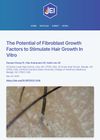
Some fibroblast growth factors may promote hair growth similarly to minoxidil and could potentially treat hair loss.

Researchers improved mouse skin cell culture methods and created a similar immortal cell line, but need to clarify their methods and benefits.
 April 2016 in “The journal of investigative dermatology/Journal of investigative dermatology”
 M2 macrophages help hair regrowth in wounds by making growth factors.
 October 2015 in “Regenerative Medicine”
 Two growth factors, PDGF and FGF2, can potentially be used together to grow enough cells for a hair loss treatment, but their exact function on human cells needs further confirmation.
September 2014 in “Genes and Cells” Genetically modified umbilical cord blood cells improved skin wound healing in rats.
 January 2014 in “Genes and Cells”
 Genetically modified cells improved skin wound healing in rats.