 3 citations
,
October 2021 in “Postepy Dermatologii I Alergologii”
3 citations
,
October 2021 in “Postepy Dermatologii I Alergologii” Checking the chin, thighs, upper lip, or lower abdomen is enough to predict hirsutism.
 17 citations
,
June 2016 in “Australasian Journal of Dermatology”
17 citations
,
June 2016 in “Australasian Journal of Dermatology” Treatment with dutasteride, minoxidil, and artificial hair transplantation improved appearance but caused folliculitis.
 16 citations
,
February 2010 in “Journal of the European Academy of Dermatology and Venereology”
16 citations
,
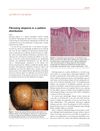
February 2010 in “Journal of the European Academy of Dermatology and Venereology” Fibrosing alopecia in a pattern distribution is a unique hair loss condition that may respond to antiandrogen therapy.
April 2024 in “Journal of clinical medicine” Effective treatment guidelines for frontal fibrosing alopecia are still unclear.

Female pattern hair loss and polycystic ovary syndrome are often linked.

Lichen planopilaris and frontal fibrosing alopecia are likely the same disease with different clinical appearances.
January 1982 in “Clinical Cosmetic and Investigational Dermatology” Familial dyskeratotic comedones are a rare, inherited skin condition that is hard to treat but may improve slightly with topical retinoids and urea cream.
 12 citations
,
January 2017 in “Skin appendage disorders”
12 citations
,
January 2017 in “Skin appendage disorders” Two patients with skin lupus were mistakenly thought to have a different scalp condition but improved with lupus treatment.
28 citations
,
June 1995 in “The Journal of Dermatology” The flaky skin mouse mutation is a natural model for studying human psoriasis.
May 2023 in “The Journal of Sexual Medicine” Flibanserin may help improve sexual symptoms in various conditions beyond its approved use.
January 2015 in “프로그램북(구 초록집)” 2.5 mg/day finasteride effectively treats female pattern hair loss.
 9 citations
,
January 2020 in “Skin appendage disorders”
9 citations
,
January 2020 in “Skin appendage disorders” Hair loss from conditions like LPP and FFA can potentially be reversed with the right treatment.
1 citations
,
December 2012 in “Journal of dermatological science” Combining ficlatuzumab and gefitinib can cause severe scarring hair loss.
22 citations
,
December 2011 in “British journal of dermatology/British journal of dermatology, Supplement” Over 40% of women have unwanted facial hair, which can affect their self-image, and should be managed with personalized treatment and support.
 316 citations
,
June 2004 in “The journal of investigative dermatology/Journal of investigative dermatology”
316 citations
,
June 2004 in “The journal of investigative dermatology/Journal of investigative dermatology” Microspheres about 1.5 micrometers in size can best penetrate hair follicles, potentially reaching important stem cells.
 September 2023 in “Journal of Cosmetic Dermatology”
 Finasteride was more effective than hydroxychloroquine in treating frontal fibrosing alopecia.
 3 citations
,
September 2019 in “Skin appendage disorders”
3 citations
,
September 2019 in “Skin appendage disorders” Women with Frontal Fibrosing Alopecia have more wrinkles near their ears than similar aged women without the condition.
January 2026 in “Dermatologic Therapy” Folliculotropic Mycosis Fungoides requires stage-based treatment, with early stages using skin therapies and advanced stages needing aggressive treatments.

A hair transplant using hair from the back of the head and pubic area was successful in creating a feminine hairline for a male-to-female transgender person.
 1 citations
,
January 2023 in “Journal of Clinical Medicine”
1 citations
,
January 2023 in “Journal of Clinical Medicine” A new hair restoration technology was found to effectively increase hair thickness, density, and growth, while reducing hair loss and improving scalp health, with no side effects.
1 citations
,
August 2023 in “Journal of Investigative Dermatology” Farudodstat may help treat alopecia areata by protecting hair follicles.
 13 citations
,
January 2019 in “Skin appendage disorders”
13 citations
,
January 2019 in “Skin appendage disorders” FAPD is a possible diagnosis for hair loss in patients of color and requires multiple evaluations for accurate diagnosis.
September 2023 in “Journal of the American Academy of Dermatology” Oral difelikefalin significantly reduces itch in notalgia paresthetica.
5 citations
,
April 2021 in “Journal of Academic Research in Medicine” FAI is a reliable marker for identifying and monitoring hyperandrogenism in obese adolescent females with PCOS.
 January 2020 in “Clinical Case Reports and Reviews”
 Lupus and frontal fibrosing alopecia may share a common cause.
July 2024 in “Clinical Case Reports” Recognizing rare hair loss patterns in young females can improve understanding and treatment.
25 citations
,
April 2008 in “Clinical and experimental dermatology” EFFC might be common but underreported.
 30 citations
,
January 2020 in “Journal of The American Academy of Dermatology”
30 citations
,
January 2020 in “Journal of The American Academy of Dermatology” Fibrosing alopecia in a pattern distribution is a hair loss condition often confused with other types, requiring early treatment but usually not resulting in significant hair regrowth.
7 citations
,
September 2013 in “Familial cancer” Birt–Hogg–Dubé syndrome is a rare genetic condition causing skin lesions, lung cysts, and a higher chance of kidney cancer.
3 citations
,
February 2022 in “Journal of Dermatological Science” Early onset female hair loss is linked to lower hair density, scalp issues, and certain genetic factors.