62 citations
,
December 2008 in “Journal of structural biology” Hair curvature in Japanese people is linked to specific cell types and filament arrangements in the hair cortex.
 7 citations
,
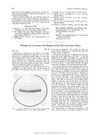
October 1963 in “Textile Research Journal”
7 citations
,
October 1963 in “Textile Research Journal” Merino wool fibers change shape with moisture, while human hair shape stays the same.
3 citations
,
December 2021 in “Proteins” Wool fiber curliness is linked to the presence of certain proteins and K38.
4 citations
,
July 2024 in “Animals” The KRTAP19-5 gene affects wool curvature in Chinese Tan sheep, with Variant B reducing curvature.
 3 citations
,
March 2019 in “Tekstil Ve Konfeksiyon”
3 citations
,
March 2019 in “Tekstil Ve Konfeksiyon” Anatolian native goat down-hair is similar to cashmere and can be used for high-quality textiles.
 4 citations
,
June 2021 in “Scientific Reports”
4 citations
,
June 2021 in “Scientific Reports” Hair fiber shape and curvature are not significantly linked when ancestry is considered.
32 citations
,
March 2016 in “American Journal of Physical Anthropology” African hair is curled, Asian hair is thick, European hair is lighter, and chemical methods help identify hair color differences.
 7 citations
,
July 2004 in “International Journal of Cosmetic Science”
7 citations
,
July 2004 in “International Journal of Cosmetic Science” Different hair types from various ethnic groups affect hair shine due to characteristics like thickness and shape.
 January 2006 in “Seibutsu Butsuri”
 Curly and straight hair differ in how their internal fibers are arranged.
 42 citations
,
January 2017 in “Genes”
42 citations
,
January 2017 in “Genes” The gene KAP22-1 affects wool yield and fiber shape in sheep.
2 citations
,
September 2008 in “International Journal of Cosmetic Science” Brushing causes more long hair breaks than combing, especially with bleached or wet hair.
27 citations
,
March 2018 in “Journal of Experimental Biology” Wool fibre curvature is due to longer orthocortical cells compared to paracortical cells.
 21 citations
,
July 2010 in “International Journal of Cosmetic Science”
21 citations
,
July 2010 in “International Journal of Cosmetic Science” Older people's hair becomes less shiny because it gets more uneven and curved.
January 2022 in “Surgical & Cosmetic Dermatology” Isotretinoin can rarely cause hair to grow curly.
 5 citations
,
June 2016 in “Twin research and human genetics”
5 citations
,
June 2016 in “Twin research and human genetics” Hair diameter and curvature are mostly determined by genetics.
85 citations
,
October 2007 in “International Journal of Dermatology” Curly hair shape is due to uneven growth patterns in the hair follicle.
8 citations
,
December 2017 in “Small Ruminant Research” Variation in the TCHH gene affects wool curliness in sheep.
September 2025 in “Animals” The KRTAP22-2 gene in sheep does not significantly affect wool traits.
13 citations
,
October 2008 in “PubMed” Japanese women's curved hair has an uneven internal structure and varying amino acid composition.
2 citations
,
January 2011 Relaxers straighten African hair by breaking down its helical structure using strong bases.
July 2009 in “International Journal of Cosmetic Science” Japanese women's curved hair has an uneven internal structure and varied amino acid composition.
65 citations
,
May 2006 in “Journal of Structural Biology” Hair curliness is due to uneven distribution of different cortices within the hair fiber.
1 citations
,
January 2025 in “International Journal of Cosmetic Science” Age-related hair curvature increases due to internal structural changes from grooming.
29 citations
,
September 2017 in “Genes” Selecting specific KRTAP26-1 gene variants can improve wool quality in sheep.

Variant G of the KRTAP20-1 gene improves wool curliness in Chinese Tan sheep.

The KRTAP36-1 gene affects wool quality in Chinese Tan lambs.
 November 2025 in “BMC Genomics”
 Genetic differences in sheep affect wool type, with fat and immune genes influencing hair traits.
55 citations
,
December 2021 in “BMC Veterinary Research” Certain genes in Iranian sheep are linked to wool production and heat adaptation.
 August 2020 in “Textile research journal”
 The model helps understand how wool fiber structure affects its strength and flexibility.
 35 citations
,
April 2014 in “Journal of proteomics”
35 citations
,
April 2014 in “Journal of proteomics” Feed restriction in sheep leads to finer wool fibers but may reduce wool quality.