 42 citations
,
January 2009 in “Colloids and Surfaces B: Biointerfaces”
42 citations
,
January 2009 in “Colloids and Surfaces B: Biointerfaces” A certain surfactant sticks to human hair, making it change from water-repelling to water-attracting, which could help in hair conditioning.
 10 citations
,
November 1984 in “Journal of Colloid and Interface Science”
10 citations
,
November 1984 in “Journal of Colloid and Interface Science” The study found that the Marangoni effect causes the uneven wetting of surfactant-coated hair due to the surfactant moving into the water.
Water and fatty acids affect hair's surface differently based on hair damage, and models can help understand hair-cosmetic interactions.
 2 citations
,
January 2004 in “PubMed”
2 citations
,
January 2004 in “PubMed” Conditioners with PQ-10 soften the flat part of hair cuticles but harden the edges.
March 2026 in “Journal of the mechanical behavior of biomedical materials/Journal of mechanical behavior of biomedical materials” Bleaching and UV exposure significantly damage hair.
January 2006 in “Journal of Liaoning University of Petroleum & Chemical Technology” 2 citations
,
January 1990  1 citations
,
April 2023 in “Langmuir”
1 citations
,
April 2023 in “Langmuir” Damaged hair allows water to penetrate more easily, and fatty acids from shampoos can deposit on hair surfaces.
January 2013 in “Wool textile journal” January 2008 in “Chinese Journal of Spectroscopy Laboratory” Cysteine formation on hair indicates damage, best detected at pH 4.5.
 7 citations
,
January 1981 in “Springer eBooks”
7 citations
,
January 1981 in “Springer eBooks” Certain small molecules and polymers can change hair's physical properties and how it feels by affecting the bonds within the hair.
May 2026 in “International Journal of Cosmetic Science” UV radiation damages hair similar to bleaching, but double bleaching causes more severe protein degradation.
 36 citations
,
October 2014 in “Langmuir”
36 citations
,
October 2014 in “Langmuir” Bleaching hair removes its protective top layer and exposes more hydrophilic groups, changing its chemical surface and affecting how it interacts with products.
January 2010 in “EPub Bayreuth (University of Bayreuth)” Polyquaternium-87 reduces hair friction the most among tested polymers.

Understanding hair surface properties is key for effective hair care products.
30 citations
,
January 1994 in “Micron” Mature hair surfaces are formed by keratinized cells with developed layers, not just modified plasma membranes.
 28 citations
,
December 2010 in “Langmuir”
28 citations
,
December 2010 in “Langmuir” Hair fibers interact through classical forces, which are influenced by treatments and products, important for hair care and other applications.
 August 2007 in “Microscopy and Microanalysis”
 Hair fibers break by cuticle cell slipping, shape changing, cuticle fraying, and surface cracking when stretched under specific conditions.
 April 2023 in “Han'gug miyong haghoeji/Journal of the Korean society of cosmetology”
 Direct heat perms cause more damage to hair than softening heat perms.
 52 citations
,
August 1978 in “Journal of Applied Polymer Science”
52 citations
,
August 1978 in “Journal of Applied Polymer Science” Human hair's ability to get wet is complex and can change with treatments, damage, and environment.
 43 citations
,
September 2001 in “Scanning”
43 citations
,
September 2001 in “Scanning” Hair treatments like bleaching increase friction by exposing tiny pores on the hair surface.
 1 citations
,
December 1972 in “Journal of Colloid and Interface Science”
1 citations
,
December 1972 in “Journal of Colloid and Interface Science” Ethanol spreads well on hair at low humidity but less so at higher humidity due to water condensation.
 161 citations
,
July 2003 in “ACM Transactions on Graphics”
161 citations
,
July 2003 in “ACM Transactions on Graphics” Researchers developed a new model for more realistic computer graphics rendering of hair by considering how light scatters on hair fibers.
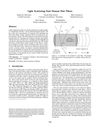
Researchers developed a new model for more realistic computer graphics of hair by considering how light scatters on hair fibers.
 7 citations
,
July 2004 in “International Journal of Cosmetic Science”
7 citations
,
July 2004 in “International Journal of Cosmetic Science” Different hair types from various ethnic groups affect hair shine due to characteristics like thickness and shape.
 3 citations
,
September 2020 in “Journal of cosmetic dermatology”
3 citations
,
September 2020 in “Journal of cosmetic dermatology” Coconut oil makes hair stronger and more flexible than mineral oil.
 September 2024 in “Heliyon”
 Repeated hair dyeing significantly damages hair.
 July 2024 in “Revista Científica de Estética e Cosmetologia”
 The babassu fiber exfoliating product for hair loss should be stored in a cool place to stay effective.
September 2025 in “International Journal of Cosmetic Science” A balanced mix of cationic guar gum and anionic surfactants improves hair conditioning and protection.

Hair coloring and bleaching can permanently break down hair protein and temporarily change its properties.