 May 2025 in “Journal of medical and dental science research.”
 i-PRF and A-PRF are promising treatments for hair regrowth in androgenetic alopecia.
 225 citations
,
April 2018 in “Journal of Investigative Dermatology”
225 citations
,
April 2018 in “Journal of Investigative Dermatology” Two main types of fibroblasts with unique functions and additional subtypes were identified in human skin.
7 citations
,
June 2017 in “Gene” Overexpression of FGF5s makes Chinese Merino sheep grow longer and heavier wool.
66 citations
,
June 2004 in “Biophysical Journal” Hard α-keratin in hair has a unique, nonordered structure, different from other fibers.
 November 2023 in “BMC genomics”
 The study concluded that the arachidonic acid pathway and the protein KRT79 play a role in determining the fineness of cashmere.
50 citations
,
September 2012 in “Developmental Biology” Sprouty and FGF balance is crucial for normal feather shape and size.
 103 citations
,
June 2018 in “International Journal of Molecular Sciences”
103 citations
,
June 2018 in “International Journal of Molecular Sciences” FGF signaling is a promising target for developing treatments for wounds, metabolic diseases, and cancer.
March 2026 in “International Journal of Biological Macromolecules” Recombinant Filaggrin-2 microneedles effectively promote hair growth and repair in hair loss.
 March 2024 in “Frontiers in genetics”
 Different types of fibroblasts play specific roles in wound healing and cancer, which could help improve treatments.
19 citations
,
November 2017 in “General and comparative endocrinology” BMP2 and BMPR-IA may stop hair growth while Noggin may encourage it in yak skin.
 January 2019 in “Springer Reference Medizin”
 Follicle Stimulating Hormone is important for fertility.
 June 2020 in “Journal of Investigative Dermatology”
 Tiny particles from skin cells can help activate hair growth.
3 citations
,
August 2025 in “Cell” Fibroblast bioelectric signaling can promote hair growth and may help treat hair loss.
 June 2025 in “Journal of medical and dental science research.”
 i-PRF and A-PRF show promise in promoting hair regrowth and improving scalp health in androgenetic alopecia.
January 2003 in “Jiefangjun yixue zazhi” Growth factors in skin increase with age, aiding development and healing.
 November 2024 in “The Journal of Cell Biology”
 Basement membrane changes are crucial for hair follicle development.
Genes and metabolites affect cashmere fiber thickness, which can improve cashmere quality.
Hair bulb cells can create skin-like tissues for potential skin repair.
 August 2023 in “Cell Proliferation”
 Human cells in plasma-derived gels can potentially mimic hair follicle environments, improving hair regeneration therapies.
June 2010 in “European Journal of Cancer Supplements” Senescent fibroblasts can help start tumors in normal skin cells.
7 citations
,
January 1986 in “Prenatal Diagnosis” Fetal skin biopsy can help diagnose protein-related disorders before birth.

Key genes and pathways influence cashmere production in goats.
January 2001 in “Chinese Journal of Reparative and Reconstructive Surgery” EGF aids skin development and healing, while bFGF absence in embryos may allow scar-free healing.
November 2025 in “Clinical and Translational Medicine” DNAJB9 cfRNA could help diagnose and treat female hair loss.
 5 citations
,
September 2019 in “ACS Applied Bio Materials”
5 citations
,
September 2019 in “ACS Applied Bio Materials” The hydrogel with bioactive factors improves skin healing and regeneration.
 16 citations
,
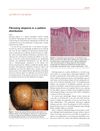
February 2010 in “Journal of the European Academy of Dermatology and Venereology”
16 citations
,
February 2010 in “Journal of the European Academy of Dermatology and Venereology” Fibrosing alopecia in a pattern distribution is a unique hair loss condition that may respond to antiandrogen therapy.
47 citations
,
June 2017 in “The FEBS journal” Disabling the FGF5 gene in sheep leads to longer wool.
 December 2025 in “Frontiers in Veterinary Science”
 Key genes like KRT27 and IGF-2 are crucial for hair follicle development in Qianhua Mutton Merino sheep.
December 2016 in “Anales del sistema sanitario de Navarra” Frontal fibrosing alopecia is increasing, especially in postmenopausal women, and treatment with finasteride can improve it.