January 2016 in “Indian dermatology online journal” Frontal fibrosing alopecia causes hair loss at the front hairline, and no effective treatment exists.
 March 2023 in “Journal of Cosmetic Dermatology”
 A woman's progressive hair loss was correctly diagnosed as a rare condition called fibrosing alopecia in a pattern distribution after initially being mistaken for a more common type.
 1 citations
,
May 2025 in “The Journal of Rheumatology”
1 citations
,
May 2025 in “The Journal of Rheumatology” A fungus ball in the lung can cause coughing up blood in SLE patients.
 October 2023 in “Clinical case reports”
 A woman's male-pattern facial hair growth was caused by a rare malignant ovarian tumor that was difficult to diagnose and treat.
16 citations
,
May 2017 in “Journal of Clinical Ultrasound” A rare finger tumor was imaged, showing a unique pattern not seen before.
33 citations
,
September 2020 in “Current Rheumatology Reports” Targeting adipocyte-to-mesenchymal transition could help treat fibrosis.
 36 citations
,
December 2017 in “Journal of the American Academy of Dermatology”
36 citations
,
December 2017 in “Journal of the American Academy of Dermatology” Most patients with frontal fibrosing alopecia stabilized with treatment, especially younger ones, using intralesional corticosteroids and tacrolimus.
 December 2021 in “Research Square (Research Square)”
 S100A4 and NMIIA promote tumor growth in glioblastoma by enhancing blood vessel functions.
 20 citations
,
August 2022 in “Frontiers in Immunology”
20 citations
,
August 2022 in “Frontiers in Immunology” Fibroblasts are important in healing diabetic wounds, but high sugar levels can harm their function and slow down the healing process.
 1 citations
,
March 2010 in “Internal medicine journal”
1 citations
,
March 2010 in “Internal medicine journal” A 72-year-old man with sudden taste issues and hair growth was diagnosed with a severe stomach cancer and died within 5 months.
June 2024 in “Dermatopathology” A rare type of skin cancer on the scalp can be mistaken for hair loss, causing delayed diagnosis and severe damage.
29 citations
,
February 2010 in “British Journal of Dermatology” Snail1 may contribute to fibrosis in frontal fibrosing alopecia in postmenopausal women.
 November 2022 in “Journal of Investigative Dermatology”
 Some people with schwannomatosis have a new type of mutation in the LZTR1 gene.
 May 2021 in “Journal of the Endocrine Society”
 A rare ovarian cancer with a good outlook was found in a woman with unusual hair growth and abdominal symptoms.
2 citations
,
February 2018 Raman spectroscopy can help identify cancerous skin tissue during surgery.
 68 citations
,
March 2018 in “Biomaterials”
68 citations
,
March 2018 in “Biomaterials” Large-scale fibronectin nanofibers help heal wounds and repair tissue in a skin model of a mouse.
8 citations
,
January 2006 in “Dermatology Online Journal” The girl's skin condition is benign but challenging to treat due to its size and location.
 June 2023 in “Clinical Case Reports”
 Complete surgical removal and regular check-ups are essential for treating a rare skin cancer, and hair transplant can help fix scars from cancer surgery.
 May 2024 in “International Seven Journal of Multidisciplinary”
 More research is needed to better understand and treat Fibrosing Frontal Alopecia.
4 citations
,
January 2019 in “Journal of cutaneous pathology” The mTOR pathway may be involved in the development of hair follicle tumors, with higher activity in malignant tumors.
1 citations
,
January 2022 in “Indian dermatology online journal” Fine needle aspiration with rapid on-site evaluation is useful for diagnosing pilomatrixoma.
 March 2018 in “Dermatología Argentina”
 The study found that the average age of women diagnosed with Frontal Fibrosing Alopecia in Argentina is higher than in other countries, but their symptoms are similar.
 December 2021 in “International journal of research - granthaalayah”
 A young woman had a rare, usually non-cancerous tumor on her face that was initially mistaken for a different condition.
 33 citations
,
January 2010 in “Case reports in dermatology”
33 citations
,
January 2010 in “Case reports in dermatology” Dermoscopy helps diagnose frontal fibrosing alopecia by distinguishing it from other hair loss conditions.
 August 2025 in “Ophthalmic Plastic and Reconstructive Surgery”
 Selumetinib significantly reduced tumor size and improved vision in a child with neurofibromatosis type 1.
 6 citations
,
June 2019 in “International Journal of Dermatology”
6 citations
,
June 2019 in “International Journal of Dermatology” Frontal fibrosing alopecia has occurred in two related male families.
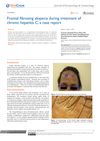 September 2017 in “Journal of Dermatology & Cosmetology”
 Hepatitis C treatment may cause frontal fibrosing alopecia.
 57 citations
,
January 2003 in “Clinical and experimental dermatology”
57 citations
,
January 2003 in “Clinical and experimental dermatology” Postmenopausal frontal fibrosing alopecia is a type of hair loss in postmenopausal women that may stop on its own but has no effective treatment.
 June 2024 in “Journal of Clinical Oncology”
 The combination of TACE and Donafenib is effective and tolerable for treating unresectable liver cancer.
January 2026 in “Dermatologic Therapy” Folliculotropic Mycosis Fungoides requires stage-based treatment, with early stages using skin therapies and advanced stages needing aggressive treatments.