Genetic factors might cause fibrosing alopecia linked to hair shaft abnormalities.
2 citations
,
January 2023 in “Skin Appendage Disorders” Frontal fibrosing alopecia may run in families.
2 citations
,
January 2021 in “Journal of The American Academy of Dermatology” A simple scalp scraping can effectively distinguish fibrosing alopecia from androgenetic alopecia with seborrheic dermatitis.
2 citations
,
January 2019 in “Skin appendage disorders” Early diagnosis and quick treatment improve life quality for FFA patients.
 1 citations
,
September 2021 in “The Journal of Dermatology”
1 citations
,
September 2021 in “The Journal of Dermatology” Japanese cases of fibrosing alopecia show a unique age and hair loss pattern, possibly due to racial differences.
 1 citations
,
January 2010 in “Springer eBooks”
1 citations
,
January 2010 in “Springer eBooks” Hair loss in androgenetic alopecia may be due to ongoing tiny inflammation and tissue changes around hair follicles.
June 2026 in “Clinical and Experimental Dermatology” Stabilization of fibrosing alopecia may not mean effective disease control.
June 2026 in “British Journal of Dermatology” Photodynamic therapy for actinic keratosis can cause permanent hair loss.
 February 2026 in “Frontiers in Medicine”
 Fibrosing alopecia starts earlier in Latin American men and often looks like common male pattern baldness.
October 2025 in “Clinical and Experimental Dermatology” Fibrosing alopecia can be stabilized or improved with anti-inflammatory treatments and hair growth agents.
 May 2025 in “Journal of Clinical Images and Medical Case Reports”
 Hair transplants can trigger a rare scarring hair loss that is hard to treat.
 March 2025 in “Forum Dermatologicum”
 Trichoscopy is crucial for accurately diagnosing fibrosing alopecia in pattern distribution.
 March 2025 in “International Journal of Trichology”
 FAPD in children may not depend on androgens and should be treated with anti-inflammatory measures and minoxidil.
February 2025 in “Archives of Dermatological Research” Fibrosing alopecia can be diagnosed without typical signs of lichen planopilaris.
 May 2024 in “International Seven Journal of Multidisciplinary”
 More research is needed to better understand and treat Fibrosing Frontal Alopecia.
 September 2023 in “International Journal of Dermatology”
 Younger people are at a higher risk for Fibrosing Alopecia in a Pattern Distribution than previously thought, with common symptoms and possible involvement of mast cells in its development.
 April 2023 in “Journal of Investigative Dermatology”
 The study suggests fibrosing alopecia in a pattern distribution has distinct features and may vary by race.
 September 2021 in “CRC Press eBooks”
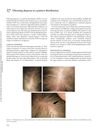
 Fibrosing alopecia in a pattern distribution is a type of hair loss that may often be overlooked, especially in men.
 April 2012 in “Informa Healthcare eBooks”
 Fibrosing alopecia in a pattern distribution is a unique hair loss condition with inflammation and scarring, resembling but distinct from common balding.
 5 citations
,
June 2019 in “Dermatopathology”
5 citations
,
June 2019 in “Dermatopathology” Histopathology is not reliable for detecting early fibrosis in traction alopecia or for showing how severe it is.
Combining anti-androgenic, anti-inflammatory, and anti-fibrotic treatments may improve hair loss outcomes.
 February 2021 in “Journal of The American Academy of Dermatology”
 Fibrosis in the bulge area of hair follicles can cause hair thinning in male pattern baldness, and drugs that inhibit fibrosis might help reverse this.
 13 citations
,
April 2022 in “Anais brasileiros de dermatologia/Anais Brasileiros de Dermatologia”
13 citations
,
April 2022 in “Anais brasileiros de dermatologia/Anais Brasileiros de Dermatologia” The document concludes that more research is needed to find effective treatments for Lichen planopilaris and Frontal fibrosing alopecia.
 September 2024 in “Journal of the American Academy of Dermatology”
 Phenoxyethanol in hair growth products may be linked to frontal fibrosing alopecia.
 January 2022 in “Дерматологія та венерологія”
 Frontal fibrosing alopecia causes hair loss along the frontal hairline, mainly in postmenopausal women, and needs better treatments.
 July 2018 in “Elsevier eBooks”
 Frontal Fibrosing Alopecia is a type of hair loss affecting mostly older women, with no agreed best treatment.
 57 citations
,
January 2003 in “Clinical and experimental dermatology”
57 citations
,
January 2003 in “Clinical and experimental dermatology” Postmenopausal frontal fibrosing alopecia is a type of hair loss in postmenopausal women that may stop on its own but has no effective treatment.
 53 citations
,
May 2010 in “Dermatologic Surgery”
53 citations
,
May 2010 in “Dermatologic Surgery” Hair transplantation may not work for Frontal Fibrosing Alopecia as transplanted hair was lost when the disease came back.
 49 citations
,
January 2003 in “Clinical and Experimental Dermatology”
49 citations
,
January 2003 in “Clinical and Experimental Dermatology” The document concludes that post-menopausal frontal fibrosing alopecia is a poorly understood condition that does not respond well to common treatments.
 39 citations
,
July 2015 in “British Journal of Dermatology”
39 citations
,
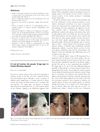
July 2015 in “British Journal of Dermatology” The pseudo 'fringe sign' can also appear in frontal fibrosing alopecia, not just in traction alopecia, showing that this condition may be more common than thought.