 19 citations
,
March 2012 in “Clinical Endocrinology”
19 citations
,
March 2012 in “Clinical Endocrinology” FAI values above 6.4 may suggest high androgen levels and increased metabolic risks in Chinese women of reproductive age.
1 citations
,
December 2024 in “Archives of Iranian Medicine” Tofacitinib may help treat Lichen Planopilaris, but more research is needed.
 April 2018 in “Journal of Investigative Dermatology”
 Stabilizing HIF1A in hair follicles increases glycolysis, which may help reduce oxidative stress and support hair growth.
September 2015 in “American journal of biomedicine” 4 citations
,
March 2023 in “Cancer Innovation” Flexible bioelectronics show promise in non-invasive cancer detection and treatment but need improvements in stability and effectiveness.
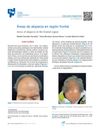 January 2025 in “Revista del Centro Dermatológico Pascua”
 Early diagnosis and treatment can help manage fibrosing alopecia in older women.
 March 2024 in “Advanced science”
 A new hydrogel made from human cells improves wound healing by working with immune cells to promote repair.
2 citations
,
January 2021 in “Journal of The American Academy of Dermatology” A simple scalp scraping can effectively distinguish fibrosing alopecia from androgenetic alopecia with seborrheic dermatitis.
5 citations
,
January 2015 in “Case reports in medicine” A baby was diagnosed with IFAP syndrome due to a new genetic mutation, showing severe skin and developmental issues.
 5 citations
,
February 2017 in “Australasian Journal of Dermatology”
5 citations
,
February 2017 in “Australasian Journal of Dermatology” Scarring hair loss found in female pattern; biopsy needed for diagnosis.
 1 citations
,
September 2024 in “Frontiers in Cell and Developmental Biology”
1 citations
,
September 2024 in “Frontiers in Cell and Developmental Biology” Pigs are a good model for studying human hair growth and disorders.
 May 2026 in “Frontiers in Cell and Developmental Biology”
 Hair follicle organoids can help study hair biology and disorders but need improvements for wider use.
 6 citations
,
February 2023 in “Journal of nanobiotechnology”
6 citations
,
February 2023 in “Journal of nanobiotechnology” The new anti-acne treatment HA-P5 effectively reduces acne by targeting two key receptors and avoids an enzyme that can hinder treatment.
8 citations
,
October 2012 in “Transgenic Research” Overexpressing the human H-ferritin gene in mice causes mild growth delay and temporary hair loss.
 13 citations
,
May 2005 in “Seminars in Plastic Surgery”
13 citations
,
May 2005 in “Seminars in Plastic Surgery” Follicular Cell Implantation might become a new treatment for hair loss and could lead to advances in organ regeneration.
22 citations
,
July 2017 in “Australasian journal of dermatology” Hair transplantation can effectively restore hair in patients with stable lichen planopilaris or frontal fibrosing alopecia.
 73 citations
,
November 2005 in “Journal of Investigative Dermatology Symposium Proceedings”
73 citations
,
November 2005 in “Journal of Investigative Dermatology Symposium Proceedings” Some women with common hair loss may develop permanent hair loss.
7 citations
,
January 2019 in “Dermatology Online Journal” Ustekinumab treatment didn't prevent frontal fibrosing alopecia.
17 citations
,
October 1994 in “The Journal of Clinical Endocrinology and Metabolism”  1 citations
,
April 2018 in “The journal of investigative dermatology/Journal of investigative dermatology”
1 citations
,
April 2018 in “The journal of investigative dermatology/Journal of investigative dermatology” Oral tofacitinib significantly improves lichen planopilaris symptoms without adverse effects.
 March 2025 in “Nature Communications”
 NSC167409 can effectively inhibit the virus causing hand, foot, and mouth disease.
 1 citations
,
November 2009 in “Cambridge University Press eBooks”
1 citations
,
November 2009 in “Cambridge University Press eBooks” FUE is a less invasive hair restoration method with potential to become standard, offering benefits like reduced scarring and pain, but requires experience to minimize risks.
109 citations
,
April 1998 in “Journal of Investigative Dermatology” HGF/SF injections can stimulate hair growth and increase hair follicle size in mice.
June 2026 in “ACS Applied Nano Materials” New microneedles may improve vitiligo treatment.
Fgf20 is crucial for hair follicle formation by influencing cell movement and growth.
 January 2024 in “Advanced Science”
 New microspheres help heal skin wounds and regrow hair without scarring.
 September 2015 in “Hair transplant forum international”
 The document's content cannot be summarized because it is not accessible or understandable.
 1 citations
,
March 2025 in “Acta fytotechnica et zootechnica/Acta fytotechnica et zootechnica”
1 citations
,
March 2025 in “Acta fytotechnica et zootechnica/Acta fytotechnica et zootechnica” Quercetin may help improve skin conditions in cats with Feline Atopic Skin Syndrome.
 December 1999 in “Evidence-based obstetrics and gynecology/Evidence-based obstetrics & gynecology”
 Flutamide worked better than finasteride for reducing excessive hair growth in women, but had more side effects.
 7 citations
,
March 2007 in “International Journal of Dermatology”
7 citations
,
March 2007 in “International Journal of Dermatology” Targeting FGFR-1 with antisense oligonucleotides may help treat baldness by increasing hair follicle activity.