4 citations
,
April 2018 in “The journal of pediatrics/The Journal of pediatrics” A 6-year-old girl's inability to grow her hair long was due to Loose Anagen Hair Syndrome, which causes hair to shed easily and may improve with age.
Genetic factors might cause fibrosing alopecia linked to hair shaft abnormalities.
 234 citations
,
December 1996 in “Journal of The American Academy of Dermatology”
234 citations
,
December 1996 in “Journal of The American Academy of Dermatology” Middle-aged women with chronic telogen effluvium experience increased hair shedding but usually don't get significantly thinner hair.
February 2022 in “Actas dermo-sifiliográficas/Actas dermo-sifiliográficas” Hair shaft disorders, often due to genetics or environment, lack specific treatments but can be managed with gentle hair care and may improve with age or topical treatments.
97 citations
,
January 2005 in “Wear” Human hair and skin friction vary by ethnicity, hair type, and environmental conditions.
 May 2022 in “Experimental dermatology”
 Trichothiodystrophy hair is structurally abnormal with protein and organization issues.
4 citations
,
April 1983 in “The Journal of Dermatology” A 15-year-old girl with hypothyroidism had excess hair and skin issues due to blocked hair follicles.
30 citations
,
January 1994 in “Micron” Mature hair surfaces are formed by keratinized cells with developed layers, not just modified plasma membranes.
 2 citations
,
March 1977 in “Journal of animal science/Journal of animal science ... and ASAS reference compendium”
2 citations
,
March 1977 in “Journal of animal science/Journal of animal science ... and ASAS reference compendium” Defective mink guard hairs have split tips and missing cuticle cells, causing a metallic sheen.
 12 citations
,
February 2006 in “Lipids”
12 citations
,
February 2006 in “Lipids” Hair texture changes with age due to varying levels of lipids.
 January 2022 in “Clinical Cases in Dermatology”
 Stress can cause temporary hair loss, which usually gets better after the stress is gone.
 January 2024 in “Seven Editora eBooks”
 Different techniques measure hair properties to ensure cosmetic products work.
35 citations
,
September 2003 in “Archives of dermatology” Tiger tail bands in hair are caused by wavy hair fibers with melanin, unlike straight fibers in normal hair.
 March 2025 in “The Open Dermatology Journal”
 Trichorrhexis nodosa is common hair breakage, often due to styling, and new treatments are being explored.
 24 citations
,
January 2011 in “International Journal of Trichology”
24 citations
,
January 2011 in “International Journal of Trichology” Light microscopy is useful for diagnosing different hair disorders.
3 citations
,
July 2024 in “Dermatology and Therapy” Hair shaft abnormalities can help distinguish mycosis fungoides from other skin conditions.
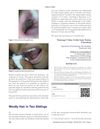 January 2012 in “International Journal of Trichology”
 Two siblings have a rare genetic condition causing curly, coarse hair.
 38 citations
,
October 2011 in “Analytical biochemistry”
38 citations
,
October 2011 in “Analytical biochemistry” Hair proteins have weak spots in their α-helical segments.
October 2014 in “University of the Arts London Research Online (University of the Arts London)” Protein-derived ingredients can help strengthen bleached hair.
23 citations
,
May 2010 in “Surface and interface analysis” Chemical treatments and UV radiation severely damage the lipid layer on hair.
 September 2014 in “Springer eBooks”
 Aging causes hair to gray and thin, with the timing of graying varying by race, and factors like oxidative stress and genetics can lead to hair loss.
June 2025 in “British Journal of Dermatology” Segmented hair color changes can indicate active alopecia areata.
 12 citations
,
November 1987 in “Pediatric dermatology”
12 citations
,
November 1987 in “Pediatric dermatology” Four children had unmanageable pale blond hair due to uncombable-hair syndrome.
 29 citations
,
December 2011 in “British Journal of Dermatology”
29 citations
,
December 2011 in “British Journal of Dermatology” A new hair treatment with caffeine and other ingredients makes hair thicker and less likely to break.
4 citations
,
January 2017 in “International journal of trichology” Castor oil can cause severe hair matting.
1 citations
,
June 2016 in “Medicina” Monilethrix is a genetic disorder causing brittle hair, diagnosed using tricoscopy.
3 citations
,
August 1988 in “PubMed” 22 citations
,
January 1985 Water makes hair more flexible, especially the outer layer.
January 2013 in “Wool textile journal” 1 citations
,
June 2014 in “[Thesis]. Manchester, UK: The University of Manchester; 2014.” Chemical modifications can alter hair's stability and flexibility, with hydrophobic interactions helping maintain structure in humid conditions.