January 1981 in “Purdue e-Pubs (Purdue University)” Pig skin is similar to human skin, with no major changes as they age.
14 citations
,
March 1987 in “Journal of Investigative Dermatology” 18 citations
,
June 2004 in “Mycoses” Two patients with a rare scalp fungus in Poland were successfully treated with griseofulvin and ciclopirox.
30 citations
,
May 1980 in “Journal of the American Academy of Dermatology” Alopecia areata can cause spotty white areas on nails.
August 1994 in “Journal of Dermatological Science” 1 citations
,
August 2019 in “Chinese Medical Journal” A man developed facial skin lesions after a stem cell transplant, which improved with specific treatments.
46 citations
,
January 1991 in “Tissue and Cell” The male silkmoth's antenna develops olfactory structures over 21 days, with full hair formation by day 15.
1 citations
,
September 2022 in “Journal of the Egyptian Womenʼs Dermatologic Society” A rare scalp infection in a 66-year-old woman was successfully treated, leading to full hair regrowth.
 17 citations
,
August 2018 in “Journal der Deutschen Dermatologischen Gesellschaft”
17 citations
,
August 2018 in “Journal der Deutschen Dermatologischen Gesellschaft” Researchers found that dissecting folliculitis of the scalp is linked to obesity, severity increases with duration and number of nodules, and early treatment is important to prevent scarring.
16 citations
,
July 2021 in “American Journal of Medical Genetics Part A” Mutations in the LSS gene cause hair loss and may affect brain development, with varying severity.
 2 citations
,
February 2022 in “Research Square (Research Square)”
2 citations
,
February 2022 in “Research Square (Research Square)” The ethanolic root extract of Onosma dichroantha has strong antioxidant and antibacterial properties.
 13 citations
,
January 2019 in “Skin appendage disorders”
13 citations
,
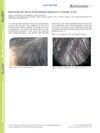
January 2019 in “Skin appendage disorders” FAPD is a possible diagnosis for hair loss in patients of color and requires multiple evaluations for accurate diagnosis.
 1 citations
,
January 2018 in “Acta dermato-venereologica”
1 citations
,
January 2018 in “Acta dermato-venereologica” A teenager's hair with alternating white and dark bands, known as Pili annulati, is a genetic condition that is usually harmless and often considered attractive.
 July 2025 in “Communications Biology”
 Rat vibrissae structure relates to their sensory function.
 June 2026 in “Indian Journal of Dermatology Venereology and Leprology”
 Scalp discoid lupus erythematosus shows two distinct patterns in skin of color.
4 citations
,
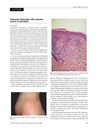
March 2016 in “Small ruminant research” Vicuña wool's quality is due to a high density of fine secondary hair follicles, and their skin glands may be used for communication.
 9 citations
,
July 2002 in “Journal of the European Academy of Dermatology and Venereology”
9 citations
,
July 2002 in “Journal of the European Academy of Dermatology and Venereology” The document concludes that fexofenadine reduces inflammation in chronic hives, cholestyramine helps half of pregnant women with itchy rashes, and relaxing incisions are a good alternative in facial surgery for the elderly.
150 citations
,
May 1993 in “The journal of cell biology/The Journal of cell biology” Mouse Notch is important for determining cell roles in hair follicles.
3 citations
,
January 2023 in “International journal of molecular sciences” Certain miRNAs play a key role in the growth of cashmere by affecting hair follicle development and regeneration.
 January 2026 in “DOAJ (DOAJ: Directory of Open Access Journals)”
 Early biopsy and targeting inflammation can improve treatment for hair loss in androgenetic alopecia.
 64 citations
,
June 2014 in “Journal of The American Academy of Dermatology”
64 citations
,
June 2014 in “Journal of The American Academy of Dermatology” Researchers found a white halo around hair in most patients with a specific type of hair loss, which helps in early diagnosis and treatment.
April 2019 in “Journal of Investigative Dermatology” Frontal Fibrosing Alopecia involves disrupted cholesterol pathways, fibrosis, and increased mast cells.
19 citations
,
November 1985 in “Archives of Dermatology” The newborn's skin blisters healed without scarring, leaving some light spots, and stopped forming after four months.
34 citations
,
September 2007 in “Experimental Dermatology” The outer layer of Merino wool is rich in sulfur proteins, making it resistant to damage.
Diagnosing scalp fungal infections is difficult due to similar symptoms with other conditions, requiring careful examination and specific tests.
September 2025 in “Indian Journal of Dermatology” A Turkish woman has a hair condition caused by a LIPH gene mutation.
 19 citations
,
December 2008 in “Journal of The American Academy of Dermatology”
19 citations
,
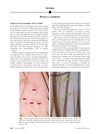
December 2008 in “Journal of The American Academy of Dermatology” The authors suggest that a new type of hair loss exists, which is different from alopecia areata.
35 citations
,
January 2020 in “Journal of the American Academy of Dermatology” Avoiding certain allergens in personal care products may improve symptoms for some patients with lichen planopilaris or frontal fibrosing alopecia.
 January 2004 in “Enshou saisei”
 Follistatin is important for hair growth and could help treat hair loss.
2 citations
,
January 2017 in “Indian dermatology online journal” A woman had a rare infection of both white piedra and head lice, which improved after 10 weeks of antifungal treatment.