April 2025 in “Journal of Diabetes & Metabolic Disorders” Monitoring TGF-β and linc-PINT expression may help identify and treat high-risk heart arrhythmia patients.
19 citations
,
September 2019 in “British Journal of Dermatology” FOL-005 peptide can reduce human hair growth by lowering FGF7 levels.
3 citations
,
October 2025 in “Cancer” PROTACs offer a new, precise way to treat cancer by breaking down harmful proteins.
July 2024 in “Journal of Investigative Dermatology” PH-762 shows promise in treating skin cancer by effectively targeting and silencing PD-1 in tumors with minimal side effects.
14 citations
,
January 2020 in “Evidence-based Complementary and Alternative Medicine” A peptide from fermented Trapa japonica fruit may help reduce skin aging.
3 citations
,
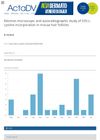
January 2017 in “Acta Dermato Venereologica” Lipid-antigen stimulation may play a role in folliculotropic mycosis fungoides.
45 citations
,
February 2011 in “IOP Conference Series Materials Science and Engineering” The sensor accurately measures thallium ions in solutions with high selectivity.
 10 citations
,
July 2022 in “Journal of Medicinal Chemistry”
10 citations
,
July 2022 in “Journal of Medicinal Chemistry” Adding a second method to PROTACs could improve cancer treatment.
 9 citations
,
August 2018 in “Biomedical dermatology”
9 citations
,
August 2018 in “Biomedical dermatology” A peptide called DPS-1 helps human scalp cells grow and stimulates hair growth in mice.
October 1984 in “Immunology Today” August 2025 in “International Journal of Molecular Sciences” AVT is highly conserved and may have antimicrobial properties.
The study identified a key protein involved in producing underarm odor and found ways to inhibit it.
14 citations
,
August 2015 in “Endocrinology” The antibody 005-C04 blocks prolactin receptors, causing reversible infertility, impaired lactation, and hair regrowth in female mice.
 December 2025 in “PubMed”
 Fish collagen peptide may boost hair growth and health.
January 2016 in “Institutional Repositories DataBase (IRDB)” Sebaceous glands help study fatty acid transporters and binding proteins.
May 2005 in “Molecular Carcinogenesis” mrp/plf-mRNA can indicate tumor-promoting effects in skin.
 1 citations
,
May 2001 in “Journal of Labelled Compounds and Radiopharmaceuticals”
1 citations
,
May 2001 in “Journal of Labelled Compounds and Radiopharmaceuticals” Scientists at the University of Michigan Medical School successfully created a special compound that can be used to improve imaging of prostate cancer.
1 citations
,
January 2022  2 citations
,
December 2022 in “PNAS nexus”
2 citations
,
December 2022 in “PNAS nexus” SCD-153 shows promise as an effective topical treatment for alopecia areata.
21 citations
,
September 2019 in “International Journal of Nanomedicine” RADA16-I can effectively deliver and release mangiferin, improving its solubility and bioavailability.
![Verification of the Major Metabolic Oxidation Path for the Naphthoyl Group in Chemoattractant Receptor-Homologous Molecule Expressed on Th2 Cells (CRTh2) Antagonist 2-(2-(1-Naphthoyl)-8-fluoro-3,4-dihydro-1H-pyrido[4,3-b]indol-5(2H)-yl)acetic Acid (Setipiprant/ACT-129968)](/images/assets/d743d32f-3115-48ff-9697-2f2d56130701/small/14175.jpg) 6 citations
,
September 2015 in “Journal of Medicinal Chemistry”
6 citations
,
September 2015 in “Journal of Medicinal Chemistry” The document confirms the structures of major metabolites of the CRTh2 antagonist Setipiprant and identifies minor metabolites.
 1 citations
,
January 1971 in “Acta dermato-venereologica”
1 citations
,
January 1971 in “Acta dermato-venereologica” Mice hair follicles take in the amino acid cystine.
 15 citations
,
November 2020 in “Pharmaceutics”
15 citations
,
November 2020 in “Pharmaceutics” Tofacitinib nanoparticles can safely and effectively treat alopecia areata by targeting hair follicles.
January 2019 in “Florida International University Digital Commons (Florida International University)” TOF-SIMS improved chemical mapping in cells, confirming gunshot residue, tracking anti-tumor drugs, and identifying molecules in mosquitoes and wounds.
October 2012 in “Faculty Opinions – Post-Publication Peer Review of the Biomedical Literature” Thymic peptides can either promote or inhibit human hair growth.
July 2024 in “Journal of Controlled Release” Nanostructured lipid carriers effectively deliver tofacitinib to hair follicles, reversing hair loss in alopecia areata.
November 2019 in “British Journal of Dermatology” FOL-005 peptide may help treat excessive hair growth safely.
March 2022 in “Oncology Times” Tebentafusp-tebn improves survival rates in uveal melanoma patients but has common side effects like rash and fatigue.
 June 2026 in “Acta Pharmacologica Sinica”
 Improving PROTAC delivery systems can enhance their effectiveness and speed up their use in medicine.
March 2026 in “Drug Testing and Analysis” PTeCA is a reliable marker for detecting oxidative hair treatments.