 January 2020 in “Mastology”
 Flow cytometry was effective in diagnosing metastatic breast cancer in a bone marrow sample.
 January 2020 in “Medical Journal of Clinical Trials & Case Studies”
 Topical minoxidil effectively prevents tissue death in certain surgeries.
 May 2019 in “The Journal of Sexual Medicine”
 Drinking alcohol before taking flibanserin does not increase the risk of severe low blood pressure or fainting.
 May 2019 in “The Journal of Sexual Medicine”
 Flibanserin's effectiveness for low sexual desire in premenopausal women may vary based on hormone levels, with normal hormone levels showing better responses.
 April 2019 in “Archives of aesthetic plastic surgery”
 Higher fluences in 808-nm diode laser treatments are more effective for axillary hair removal.
January 2019 in “INTAS POLIVET” The dog fully recovered and regrew hair after treatment.
 July 2018 in “Journal of Oral and Maxillofacial Surgery”
 Oral and maxillofacial surgery has advanced with fluoride reducing tooth decay and high-speed handpieces aiding in more aesthetic procedures, leading to changes in practice and training.
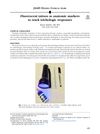 July 2018 in “Journal of The American Academy of Dermatology”
 Fluorescent tattoos are a good way to mark the scalp for hair treatments because they're accurate, invisible in normal light, and have low risk.
 April 2018 in “Journal of Investigative Dermatology”
 BLZ-100 is safe for use in skin cancer surgery and may help identify cancerous tissue.
January 2018 in “Haydarpaşa Numune Hastanesi tıp dergisi” Tamsulosin's sulfonamide group may contribute to floppy iris syndrome.
November 2017 in “DOAJ (DOAJ: Directory of Open Access Journals)” Certain medications and smaller pupil size increase the risk of intraoperative floppy iris syndrome during eye surgery.
 April 2017 in “Journal of Dermatological Science”
 Certain flavonoids can improve the growth of pigmented hair in mice.
June 2016 in “Indian Journal of Pharmacy Practice” Stopping fluvoxamine can reverse hair loss caused by the drug.
July 2014 in “Zenodo (CERN European Organization for Nuclear Research)” Imbalances in magnesium and calcium are linked to health and behavior issues.
March 2014 in “Oxford University Press eBooks” Fludalanine failed as an effective oral antibiotic despite efforts.
Eating flaxseed made rabbit hair longer and thicker and improved their weight and blood sugar and cholesterol levels.
 December 2013 in “Iranian Journal of Applied Animal Science”
 Adding bentonite clays to goat diets increased milk yield, periwinkle shell improved chicken egg production, and vaccination increased muscle area and carcass yield in calves.
A hair growth ointment improved hair length in a family with a genetic hair growth condition.
 September 2012 in “The Egyptian Journal of Histology”
 Flutamide caused damage to male rat reproductive organs and may affect fertility.
 January 2012 in “The Japanese Journal of Veterinary Dermatology”
 The dog's hair loss healed on its own without treatment.
 January 2011 in “Journal of The American Academy of Dermatology”
 A man developed a painful skin condition after multiple heart procedures involving radiation.

Scalp flaps in hair restoration surgery provide immediate results, prevent temporal hair loss, offer great density, and allow for large hair re-allocation, making them a popular choice, especially in Asian countries.
 August 2009 in “Reactions Weekly”
 Finasteride caused breast enlargement in two men, which improved after stopping the medication.
May 2008 in “10th European Congress of Endocrinology” Flutamide alone is as effective as the combination with finasteride for treating hirsutism.
January 2007 in “Chinese journal of plastic surgery” Sodium fluoride increases cell death in hair follicles, but sodium selenite can reduce this effect.
April 2005 in “World Journal of Pharmaceutical and life sciences” Fluconazole-loaded hair gel may offer a longer-lasting dandruff treatment.
January 2005 in “The Chinese Journal of Dermatovenereology” High fluoride increases damage in hair follicles, but low selenium can reduce this damage at lower fluoride levels.
January 2004 in “Chinese Journal of Aesthetic Medicine” High levels of sodium fluoride harm hair growth, but sodium selenite can reduce this harm.
Melatonin affects cell growth differently based on its concentration.