86 citations
,
January 1990 in “The Journal of Pediatrics” Children with partial biotinidase deficiency are healthy at birth but may develop symptoms that improve with biotin therapy.
 January 2017 in “Open Journal of Endocrine and Metabolic Diseases”
 The document concludes that managing Dunnigan-Type Familial Partial Lipodystrophy involves treating associated health issues and using medications like metformin and leptin replacement.
 May 2024 in “Medicine today”
 Older age, family history, and low iron levels increase the risk of female hair loss.
 3 citations
,
January 2017 in “Indian journal of health sciences and biomedical research KLEU”
3 citations
,
January 2017 in “Indian journal of health sciences and biomedical research KLEU” Low iron levels are significantly linked to hair loss in women.
October 2020 in “The American Journal of Gastroenterology” Early diagnosis and treatment of hereditary hemochromatosis can prevent serious complications.
17 citations
,
September 2009 in “British Journal of Dermatology” Fragile hair in children is rarely linked to trichothiodystrophy (TTD).
January 1994 in “中医杂志:英文版” Hair trace element levels can guide new treatments for aplastic anemia.
 5 citations
,
December 1964 in “Australasian journal of dermatology”
5 citations
,
December 1964 in “Australasian journal of dermatology” Congenital atrichia is a rare condition where children are born without hair, and treatment is often ineffective.
3 citations
,
April 2020 in “American Journal of Case Reports” A new mutation in the HJV gene was found in a young woman with juvenile hemochromatosis, causing unusual symptoms like secondary hypothyroidism.
 January 2011 in “Journal of Human Genetics”
 A Japanese patient with a rare genetic disorder had a less severe case than others, suggesting other factors may affect symptoms.
15 citations
,
June 2012 in “British Journal of Dermatology” A new mutation in the KRT86 gene causes a hair disorder with variable expression.
 1 citations
,
April 2017 in “Journal of Investigative Dermatology”
1 citations
,
April 2017 in “Journal of Investigative Dermatology” D-OCT shows increased blood vessel growth in response to tissue damage in Frontal Fibrosing Alopecia and is useful for diagnosis and monitoring.
January 2011 in “Journal of Diagnosis and Therapy on Dermato-venereology” Genetics, low estrogen, and low iron levels contribute to female hair loss, with specific scalp signs indicating severity.
 18 citations
,
June 1998 in “Circulation”
18 citations
,
June 1998 in “Circulation” Mild essential fatty acid deficiency can cause health issues and is worsened by low-fat diets.
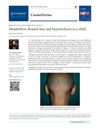 January 2026 in “Cosmoderma”
 A 9-year-old girl has a rare hair disorder causing beaded, sparse hair.
 6 citations
,
June 2011 in “Journal of The American Academy of Dermatology”
6 citations
,
June 2011 in “Journal of The American Academy of Dermatology” Iron deficiency might be linked to hair loss, but more research is needed.
26 citations
,
April 2011 in “British Journal of Dermatology” New mutations in the DSG4 gene cause a rare hair condition.
 15 citations
,
July 2020 in “Dermatologic Therapy”
15 citations
,
July 2020 in “Dermatologic Therapy” FPHL is common in women, influenced by genetics and hormones, and can be treated with medications, laser therapy, or hair transplantation.
January 1962 in “Archives of Dermatology” A 5-year-old girl has lipoid proteinosis, causing voice issues, hair thinning, skin lesions, and tongue movement problems.
47 citations
,
September 2002 in “Journal of Bone and Mineral Research” A mutation in the vitamin D receptor causes severe resistance to vitamin D, affecting bone health but not hair growth.
5 citations
,
January 2015 in “Case reports in medicine” A baby was diagnosed with IFAP syndrome due to a new genetic mutation, showing severe skin and developmental issues.

Lack of Fgf21 slows hair growth by affecting gene interactions.
January 2011 in “Linchuang pifuke zazhi” 47 citations
,
July 1998 in “Journal of Investigative Dermatology” A new mutation, Glu402Lys, in hair keratin is linked to variable symptoms of monilethrix.
February 2024 in “Pediatric Dermatology” A 5-year-old girl with a rare genetic disorder, lipoid proteinosis, showed reduced new lesions but persistent scars after avoiding skin trauma.
 99 citations
,
July 2012 in “PLoS Genetics”
99 citations
,
July 2012 in “PLoS Genetics” A mutation in the KRT75 gene causes frizzle feathers in chickens.
1 citations
,
May 2007 in “PubMed” Early diagnosis and treatment of haemochromatosis are crucial for reversing organ damage and improving fertility.
Nutritional deficiencies can cause hair loss, but it can be reversed with a normal diet and less stress.
 November 2022 in “bioRxiv (Cold Spring Harbor Laboratory)”
 MOF controls skin development by regulating genes for mitochondria and cilia.
3 citations
,
August 2017 in “Clinical case reports” A rare skin condition causes red and dark patches on the face and limbs.