3 citations
,
March 2010 in “International Journal of Cosmetic Science” Functionalized silicones improve hair appearance, combing, and manageability.
 149 citations
,
July 2017 in “PLoS Biology”
149 citations
,
July 2017 in “PLoS Biology” Hair follicle patterns form through a mix of self-organization and signaling interactions.
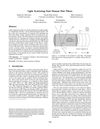 161 citations
,
July 2003 in “ACM Transactions on Graphics”
161 citations
,
July 2003 in “ACM Transactions on Graphics” Researchers developed a new model for more realistic computer graphics rendering of hair by considering how light scatters on hair fibers.
The EMG-to-force model accurately predicts hip muscle forces during walking.
 13 citations
,
September 2021 in “Communications Biology”
13 citations
,
September 2021 in “Communications Biology” Co5M offers a new way to observe and understand wound healing without labels.
Fgf20 is crucial for hair follicle formation by influencing cell movement and growth.

Proper niche formation in Drosophila requires Slit-Robo signaling for cell migration.
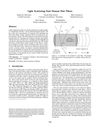
Researchers developed a new model for more realistic computer graphics of hair by considering how light scatters on hair fibers.
February 2026 in “Biophysical Journal”  3 citations
,
July 2018 in “International Journal of Research -GRANTHAALAYAH”
3 citations
,
July 2018 in “International Journal of Research -GRANTHAALAYAH” Human hair and mouse whiskers emit similar biomagnetic fields.
 7 citations
,
November 2018 in “International Journal of Research -GRANTHAALAYAH”
7 citations
,
November 2018 in “International Journal of Research -GRANTHAALAYAH” Human hair's biomagnetic fields can affect blood cell clumping and coagulation.
 June 2020 in “Journal of Investigative Dermatology”
 The technique effectively shows how human skin and hair cells form into ball-like structures.
1 citations
,
January 2013 in “PubMed” Permanent wave treatment with thioglycolic acid changes hair structure by altering disulfide bonds.
79 citations
,
November 2010 in “Journal of Neuroscience” Hair clipping can trigger axon growth and changes in the skin.
 February 2026 in “Journal of the Korean Society of Cosmetology”
 Silicone oil viscosity affects hair curling and damage during treatments.
 July 2025 in “The Journal of Physiology”
 C-tactile afferents are linked to emotional touch and social bonding through hair movement.
 April 2017 in “Plastic and Reconstructive Surgery – Global Open”
 Different levels of shear stress affect where cells move and gather in a 3D-printed model, helping to better understand cell behavior in blood vessels.
January 2005 in “日本機械学會論文集. C編” Minoxidil sulfate and pinacidil promote hair growth likely by increasing blood flow, not by activating K channels.
June 2026 in “Journal of Experimental Botany” Root hair growth is influenced by cell wall dynamics and various cellular factors.
 35 citations
,
July 2009 in “Optics express”
35 citations
,
July 2009 in “Optics express” Researchers created a new light source that improves chemical imaging by removing background noise.
 1 citations
,
July 2021 in “Chemical & pharmaceutical bulletin/Chemical and pharmaceutical bulletin”
1 citations
,
July 2021 in “Chemical & pharmaceutical bulletin/Chemical and pharmaceutical bulletin” Rubbing skin increases absorption of water-soluble drugs from lotions and creams, but not oil-soluble drugs.
1 citations
,
January 2020 in “bioRxiv (Cold Spring Harbor Laboratory)” Weak cell junctions disrupt hair follicle stem cell rest.
100 citations
,
November 2017 in “EMBO Reports” Metabolic signals and cell shape influence how cells develop and change.
13 citations
,
January 2025 in “Lab on a Chip” Capillary microfluidic wearables are promising for non-invasive health monitoring through sweat and saliva.
January 1981 in “Elsevier eBooks”  December 2023 in “Biological & pharmaceutical bulletin”
 IPM enhances skin penetration of hydrophilic drugs.
12 citations
,
March 2022 in “Development” Mechanical forces are crucial in shaping our sensory organs during development.
 September 2017 in “Journal of Investigative Dermatology”
 Fermented mackerel oil was found to promote hair growth by activating certain cell signals and increasing cell growth.
Mechanical stress causes ligament thickening through WISP-1 and Hedgehog signaling.
September 2022 in “Zenodo (CERN European Organization for Nuclear Research)”