 January 2026 in “Preprints.org”
 Mimicking fetal wound environments may enable scarless healing in adults.
 June 2023 in “British journal of dermatology/British journal of dermatology, Supplement”
 Two sisters with lipoedematous scalp suggest a genetic influence in the condition.
June 2025 in “Stem Cells and Cloning Advances and Applications” CFx-δ2 from stem cells helps heal burn wounds faster.
December 2009 in “Cancer Research” Over-expression of Sp2 can lead to cancer by preventing proper stem cell differentiation.
 173 citations
,
January 2014 in “Nature Cell Biology”
173 citations
,
January 2014 in “Nature Cell Biology” Wnt signaling controls whether hair follicle stem cells stay inactive or regenerate hair.
January 2011 in “Anhui nongye kexue” The vector successfully directed specific gene expression in hair follicles.
 4 citations
,
May 2021 in “The journal of investigative dermatology/Journal of investigative dermatology”
4 citations
,
May 2021 in “The journal of investigative dermatology/Journal of investigative dermatology” ELL is crucial for gene transcription related to skin cell growth.
11 citations
,
January 1992 in “PubMed” TGF-beta 1 and IGF-II mRNA have specific patterns in pig subcutaneous tissue, affecting fat and muscle development.
April 2018 in “Journal of Investigative Dermatology” Key signals for hair follicle formation were identified.
47 citations
,
June 2017 in “The FEBS journal” Disabling the FGF5 gene in sheep leads to longer wool.
 11 citations
,
August 2019 in “Journal of Molecular Histology”
11 citations
,
August 2019 in “Journal of Molecular Histology” NFIC helps rat dental cells grow and turn into bone-like cells.
3 citations
,
June 2024 in “iScience” Axolotl spinal cord regeneration may be controlled by a specific signal affecting cell sensitivity and diffusion.
2 citations
,
August 2023 in “Development Genes and Evolution” May 2013 in “Faculty Opinions – Post-Publication Peer Review of the Biomedical Literature” A balance between BMP and Wnt signals is crucial for hair follicle stem cell function and hair growth.
 December 2024 in “Livers”
 Recognizing rare causes of MASLD is crucial for effective treatment and preventing complications.
The transgenic safflower oil with oleosin-rhFGF9 improved hair growth and wound healing in mice.
26 citations
,
May 2007 in “Differentiation” Foxn1 helps skin cells mature by controlling a specific protein's activity.
114 citations
,
January 2016 in “Current topics in developmental biology/Current Topics in Developmental Biology” Frizzled receptors are essential for various body development processes and maintaining certain body functions.
 February 2024 in “Scientific reports”
 Four genes are potential markers for hair loss condition alopecia areata, linked to a specific type of cell death.
12 citations
,
December 2021 in “Fundamental Research” Blebbistatin can reduce fibrosis by targeting myofibroblast contraction.
 5 citations
,
November 2022 in “Genetics selection evolution”
5 citations
,
November 2022 in “Genetics selection evolution” Low-coverage sequencing is a cost-effective way to find genetic factors affecting rabbit wool traits.
2 citations
,
April 2012 in “American Journal of Dermatopathology” Accurate diagnosis of NLS with dilated hair follicles is crucial to distinguish it from other conditions.
20 citations
,
January 2017 in “Experimental Dermatology” Igf1r helps regulate hair growth cycles.
 39 citations
,
July 2015 in “British Journal of Dermatology”
39 citations
,
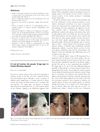
July 2015 in “British Journal of Dermatology” The pseudo 'fringe sign' can also appear in frontal fibrosing alopecia, not just in traction alopecia, showing that this condition may be more common than thought.
July 2025 in “Human Genomics” New LSS gene variants help understand congenital hypotrichosis 14 better.
 February 2022 in “Research Square (Research Square)”
 LGR5 is a marker found in hair follicle stem cells in various species and is important for hair growth and skin repair.
14 citations
,
December 2018 in “The American journal of pathology” Activating Nrf2 in skin cells speeds up wound healing by increasing the growth of certain stem cells.
 January 2019 in “Proceedings for Annual Meeting of The Japanese Pharmacological Society”
 Nε-(carboxymethyl) lysine delays hair growth by blocking a key protein.
 February 2025 in “Journal of Clinical Investigation”
 RNase L hinders hair growth by altering immune signals.