 December 2024 in “Kırıkkale Üniversitesi Tıp Fakültesi Dergisi”
 Chromosomal microarray analysis is important for diagnosing rare genetic variations and guiding treatment.
1 citations
,
December 2012 in “Journal of dermatological science” Combining ficlatuzumab and gefitinib can cause severe scarring hair loss.
October 2025 in “Animals” miR-200a reduces goose fibroblast growth by targeting PITX2 in the Wnt pathway.
68 citations
,
August 2009 in “American Journal of Medical Genetics Part A” A new classification for trichothiodystrophy helps identify genetic causes and potential treatments.
23 citations
,
July 2022 in “Nature Cell Biology” Targeting THY1 can improve skin repair and healing.
 7 citations
,
April 2013 in “Journal of Cellular Biochemistry”
7 citations
,
April 2013 in “Journal of Cellular Biochemistry” CD61 is important for mouse tooth cell growth and works through Lgr5.
1 citations
,
January 2019 in “British Poultry Science” VEGF and VEGFR-2 genes influence feather maturity, and specific genetic markers can improve chicken breeding.
 October 2023 in “Pediatric blood & cancer”
 Thymic LCH may be underdiagnosed, so thymic ultrasound should be considered in infants with cutaneous LCH.
1 citations
,
December 2023 in “International journal of molecular sciences” miR-199a-3p controls hair growth and is linked to alopecia areata.
14 citations
,
July 2021 in “Bioscience Reports” Activating Tgr5 may help treat hair loss and bone loss.
 14 citations
,
May 2013 in “American Journal of Physiology-endocrinology and Metabolism”
14 citations
,
May 2013 in “American Journal of Physiology-endocrinology and Metabolism” Removing myelin protein zero-like 3 in mice leads to better metabolism and resistance to obesity.
 5 citations
,
January 2022 in “PloS one”
5 citations
,
January 2022 in “PloS one” Deleting the p63 gene in certain cells causes problems in thymus development and severe hair loss in mice.
May 2019 in “CINECA IRIS Institutial Research Information System (University of Genoa)” MITF+ melanoma patients are more likely to have multiple melanomas and unique skin patterns.
39 citations
,
December 1998 in “Journal of Cell Science” The LEF-1 binding site enhances gene expression in hair follicles, with other proteins aiding specific regulation.
172 citations
,
July 2007 in “Journal of Dermatological Science” Stat3 helps skin heal but can also cause skin diseases if overactive.
 April 2023 in “Journal of Investigative Dermatology”
 Defective T cell metabolism can cause early skin aging and poor hair follicle stem cell function.
April 2012 in “Neuropediatrics” Trichothiodystrophy is a rare genetic disorder causing hair issues and sometimes linked to DNA repair defects.
 January 2024 in “Wiadomości Lekarskie”
 AI can help diagnose Follicular Lymphoma by accurately identifying specific cell types.
 9 citations
,
January 2017 in “Virchows Archiv”
9 citations
,
January 2017 in “Virchows Archiv” LGR5 and LGR6 are expressed differently in various skin tumors, which may offer clues about their origins.
 April 2026 in “Human Genome Variation”
 The MBTPS2 gene variant c.970+5G>A is a common mutation causing IFAP syndrome.
 10 citations
,
January 2008 in “Biological and Pharmaceutical Bulletin”
10 citations
,
January 2008 in “Biological and Pharmaceutical Bulletin” t-Flavanone may help hair growth by reducing a specific protein's activity in skin cells.
28 citations
,
June 2023 in “Tissue Engineering and Regenerative Medicine” 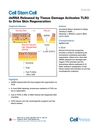 128 citations
,
August 2015 in “Cell Stem Cell”
128 citations
,
August 2015 in “Cell Stem Cell” Damage to skin releases dsRNA, which activates TLR3 and helps in skin and hair follicle regeneration.
 April 2018 in “The journal of investigative dermatology/Journal of investigative dermatology”
 Li2CO3 improved skin disease in a mouse model of Focal Dermal Hypoplasia without toxicity.
 7 citations
,
July 2008 in “Experimental Dermatology”
7 citations
,
July 2008 in “Experimental Dermatology” The study concluded that a protein important for hair strength is regulated by certain molecular processes and is affected by growth phases.
 36 citations
,
March 2011 in “Nature Communications”
36 citations
,
March 2011 in “Nature Communications” Cells from a skin condition can create new hair follicles and similar growths in mice, and a specific treatment can reduce these effects.
 44 citations
,
October 2017 in “Scientific Reports”
44 citations
,
October 2017 in “Scientific Reports” Far-infrared radiation improves stem cell growth and movement, helping heart therapy.
1 citations
,
January 2024 in “Pharmaceuticals” A new carrier improves skin delivery of tofacitinib for treating inflammatory skin diseases.
 October 2022 in “The American journal of gastroenterology”
 Thymoma-associated multiorgan autoimmunity can cause liver damage and affects multiple organs, with limited treatment options and a generally poor prognosis.
S1PR1 helps control inflammation in blood vessel cells by affecting gene activity differently in various cell types and locations.