 13 citations
,
January 2019 in “Skin appendage disorders”
13 citations
,
January 2019 in “Skin appendage disorders” FAPD is a possible diagnosis for hair loss in patients of color and requires multiple evaluations for accurate diagnosis.
 30 citations
,
December 2017 in “Journal of The American Academy of Dermatology”
30 citations
,
December 2017 in “Journal of The American Academy of Dermatology” New criteria for diagnosing frontal fibrosing alopecia include specific scalp and eyebrow hair loss as major factors and other hair loss areas and hair analysis as minor factors.
45 citations
,
May 2022 in “Biomedicines” Analyzing follicular fluid can help predict and improve outcomes for women with PCOS undergoing fertility treatments.
2 citations
,
June 2024 in “Skin Appendage Disorders” Trichoscopy helps diagnose frontal fibrosing alopecia in Caucasians, but more research is needed.
July 2025 in “Journal of Investigative Dermatology” Resident memory T cells and necroptosis may drive fibrosis in eosinophilic fasciitis and morphea.
 98 citations
,
January 2013 in “Journal of The American Academy of Dermatology”
98 citations
,
January 2013 in “Journal of The American Academy of Dermatology” Dutasteride may help stabilize Frontal Fibrosing Alopecia, but more research is needed.
24 citations
,
July 2018 in “British Journal of Dermatology” Contact allergies might contribute to frontal fibrosing alopecia.
August 2025 in “Biomolecules” Fibroblast growth factors could be a better, safer treatment for hair loss than current options.
 March 2024 in “Current materials science”
 Fisetin, found in fruits and vegetables, may help treat various health conditions like inflammation, diabetes, heart issues, cancer, and hair loss.
11 citations
,
January 1999 in “Dermatology”  53 citations
,
August 2019 in “Journal of The American Academy of Dermatology”
53 citations
,
August 2019 in “Journal of The American Academy of Dermatology” Oral minoxidil and topical minoxidil 5% both effectively improve female-pattern hair loss with safe side effects.
58 citations
,
April 1993 in “Developmental Biology” bFGF delays hair growth in mice.
 1 citations
,
August 2022 in “International journal of women’s dermatology”
1 citations
,
August 2022 in “International journal of women’s dermatology” Botox injections may be a safe and effective way to treat severe, itchy skin disease when other treatments fail.
 5 citations
,
January 2018 in “Annals of Dermatology”
5 citations
,
January 2018 in “Annals of Dermatology” A 308 nm excimer laser successfully treated a boy with a rare skin condition after about a year of weekly sessions.
December 2024 in “Skin Appendage Disorders” Accurate diagnosis and treatment improved symptoms in a patient with alopecia linked to mycosis fungoides.
2 citations
,
January 2010 in “PubMed” Current treatments for postmenopausal frontal fibrosing alopecia stop hair loss but don't regrow hair.
 July 2022 in “Research Square (Research Square)”
 Lower PPARγ levels and specific gene variations are linked to more severe Frontal Fibrosing Alopecia.
 July 2020 in “CRS 2020 Virtual Annual Meeting”
 Researchers developed a new skin patch that delivers more finasteride into the skin, potentially improving treatment for hair loss and prostate issues.
July 2024 in “Journal of Investigative Dermatology” Linalool in fragrances may harm hair follicles and contribute to hair loss.
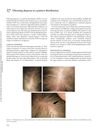 April 2012 in “Informa Healthcare eBooks”
 Fibrosing alopecia in a pattern distribution is a unique hair loss condition with inflammation and scarring, resembling but distinct from common balding.
The congress successfully enhanced health education and professional practices.
1 citations
,
January 2001 in “Acta Archaeologica Academiae Scientiarum Hungaricae” FUE is a less invasive hair restoration method that avoids visible scars and reduces recovery time.
 3 citations
,
January 2022 in “Journal of The American Academy of Dermatology”
3 citations
,
January 2022 in “Journal of The American Academy of Dermatology” Using sunscreen and moisturizers may increase the chance of developing Frontal fibrosing alopecia (FFA), but the exact reason why is still unclear.
 1 citations
,
June 2013 in “Science-business Exchange”
1 citations
,
June 2013 in “Science-business Exchange” Increasing the levels of a protein called FGF9 can promote hair growth, but humans may not respond the same way due to a lack of certain cells.
5 citations
,
May 2009 in “American Journal of Dermatopathology” A rare hair follicle tumor showed unusual high levels of mucin.
 33 citations
,
August 2013 in “British Journal of Dermatology”
33 citations
,
August 2013 in “British Journal of Dermatology” Lack of small, fine hair on the front hairline is a key sign of frontal fibrosing alopecia.
 November 2022 in “Research Square (Research Square)”
 The research provides insights into hair follicle growth in forest musk deer by identifying key genes and pathways involved.
31 citations
,
January 2016 in “Skin Appendage Disorders” Frontal fibrosing alopecia and vitiligo might be linked, not just coincidental.
 15 citations
,
December 2017 in “Journal of The European Academy of Dermatology and Venereology”
15 citations
,
December 2017 in “Journal of The European Academy of Dermatology and Venereology” Frontal fibrosing alopecia and androgenetic alopecia may be related, with a possible shared cause.
 May 2026 in “Frontiers in Cell and Developmental Biology”
 Hair follicle organoids can help study hair biology and disorders but need improvements for wider use.