 1 citations
,
January 2022 in “European Journal of Pharmacology”
1 citations
,
January 2022 in “European Journal of Pharmacology” Riboflavin 5′-phosphate (FMN) shows potential for treating androgen-related conditions but may be limited in treating prostate cancer.
30 citations
,
February 2015 in “Anais Brasileiros de Dermatologia” Trichoscopy is useful for diagnosing Netherton syndrome in children with skin issues.
 October 2007 in “Clinical Biochemistry”
 New genotype linked to non-classical congenital adrenal hyperplasia found in Italian siblings.
October 2025 in “Journal of the Endocrine Society” Low estrogen due to poor nutrition can lead to non-alcoholic fatty liver disease.
3 citations
,
June 2016 in “JEADV. Journal of the European Academy of Dermatology and Venereology/Journal of the European Academy of Dermatology and Venereology” A patient with hair loss condition grew excessive hair in areas covered by a cast.
15 citations
,
August 2013 in “Gene” The MTHFR C677T mutation may increase the risk of alopecia areata in the Turkish population.
 June 2020 in “bioRxiv (Cold Spring Harbor Laboratory)”
 Activating β-catenin increases melanocytes and decreases Schwann cells.
 1 citations
,
June 2013 in “Science-business Exchange”
1 citations
,
June 2013 in “Science-business Exchange” Increasing the levels of a protein called FGF9 can promote hair growth, but humans may not respond the same way due to a lack of certain cells.
 May 2024 in “World Journal Of Advanced Research and Reviews”
 Low iron levels are strongly linked to chronic hair loss in women.
 5 citations
,
December 1964 in “Australasian journal of dermatology”
5 citations
,
December 1964 in “Australasian journal of dermatology” Congenital atrichia is a rare condition where children are born without hair, and treatment is often ineffective.
 8 citations
,
March 2014 in “American Journal of Pathology”
8 citations
,
March 2014 in “American Journal of Pathology” Damaged hair follicles make mice more prone to skin inflammation and skin cancer after UV exposure.
Defective protein folding due to a mutation is key in ANE syndrome.
 April 2017 in “Journal of Dermatological Science”
 B cells can both help and hinder the body's defense against melanoma.
 6 citations
,
August 2012 in “The Journal of Pediatrics”
6 citations
,
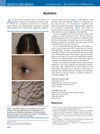
August 2012 in “The Journal of Pediatrics” A 12-year-old girl was diagnosed with monilethrix, a genetic condition causing fragile, beaded hair that breaks easily, with no effective treatment available.
8 citations
,
September 1987 in “Acta Dermato Venereologica” Recessive X-linked ichthyosis involves a less efficient enzyme in hair follicles, suggesting two distinct enzymes.
 1 citations
,
September 2023 in “British journal of dermatology/British journal of dermatology, Supplement”
1 citations
,
September 2023 in “British journal of dermatology/British journal of dermatology, Supplement” WNT10A gene mutations cause short anagen hair syndrome.
46 citations
,
December 1992 in “The Journal of Steroid Biochemistry and Molecular Biology” Affected males are born with ambiguous genitalia, raised as females, but develop male traits at puberty due to enzyme deficiency.
113 citations
,
June 2010 in “Biological Chemistry” Cathepsin L deficiency causes large, abnormal cell structures and health issues in mice.
 December 2013 in “대한피부과학회지”
 Korean women with female pattern hair loss have higher levels of ferritin, testosterone, and vitamin D than average.
 April 2018 in “Journal of Investigative Dermatology”
 DNMT3A is crucial for healthy skin and hair growth.
September 2024 in “Journal of the American Academy of Dermatology” Lighter skin types respond better to narrowband UVB therapy for cutaneous T-cell lymphoma than darker skin types.
December 2025 in “Animals” TGFBR1 slows down cell growth in fine-wool sheep hair follicles.
4 citations
,
October 2021 in “Journal of Clinical Medicine” Carriers of a specific gene mutation have subtle skin changes without visible symptoms.
March 2023 in “Archives of Physical Medicine and Rehabilitation” Testosterone plus finasteride increases bone density in men with spinal cord injuries.
June 2025 in “British Journal of Dermatology” Topical minoxidil may help improve hair growth in rare congenital hypotrichosis.
 May 2015 in “Journal of the American Academy of Dermatology”
 Certain drugs and supplements may contribute to hair loss in the frontal hairline in older women.
 July 2022 in “Journal of Investigative Dermatology”
 Lef1 is essential for normal skin, hair growth, and healing wounds in mice.
2 citations
,
October 2023 in “PubMed” Scientists created a cell model to study and find treatments for a skin disease called RDEB.
4 citations
,
February 2008 in “Cell stem cell” NFATc1 is crucial for keeping hair follicle stem cells inactive.
15 citations
,
August 2019 in “F1000Research” CMG2 and TEM8 receptors have distinct roles in skin and growth disorders, affecting collagen breakdown and growth.