December 2020 in “Journal of Face Aesthetics” Trichoscopy effectively helps diagnose different types of hair loss in women.
 December 2019 in “Journal of pediatrics & neonatology”
 A 13-year-old boy had a rare, stable type of hair loss with little chance of regrowth, but treatment is available for looks.
 4 citations
,
March 2021 in “JAMA”
4 citations
,
March 2021 in “JAMA” Primary care in 2021 focused on identifying nonscarring hair loss and managing common types based on the pattern of hair loss.
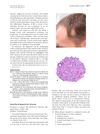
The man has Temporal Triangular Alopecia, a stable, non-scarring hair loss condition best treated with hair transplantation.
 September 2024 in “PubMed”
 Hair loss can be treated based on its type and cause, improving quality of life.
 6 citations
,
January 2011 in “PubMed”
6 citations
,
January 2011 in “PubMed” The document concludes that most patients with endocrine disorders experience diffuse, non-scarring hair loss, with scarring hair loss being rare.
 January 2015 in “Вестник дерматологии и венерологии”
 Patients with non-scarring hair loss often have emotional disorders.
Scalp involvement in primary cutaneous lymphomas is common and can be aggressive, requiring careful attention.
December 2025 in “Cosmetics” Gut bacteria differences could help diagnose and treat alopecia areata.
 March 2012 in “Journal of The American Academy of Dermatology”
 Dermoscopy helps diagnose different hair loss conditions, and characteristics vary among ethnicities and individual cases.

Hair loss can be caused by hormones, illness, autoimmune disorders, or vitamin deficiencies, and treatments vary depending on the type.
 16 citations
,
May 2003 in “International Journal of Dermatology”
16 citations
,
May 2003 in “International Journal of Dermatology” Trichotillomania, a disorder where people compulsively pull out their own hair, often starts around age 12, is more common in adult females, and can be treated with behavior therapy and medication.
 11 citations
,
January 2012 in “Archives of Dermatology”
11 citations
,
January 2012 in “Archives of Dermatology” Polarized microscopy is a quick and free method to correctly identify types of hair loss.
 November 2025 in “International Journal of Research in Medical Sciences”
 Diffuse alopecia in females is often linked to certain medications, diseases, and low hemoglobin, while female pattern hair loss is linked to age, duration, and family history.
 April 2026 in “Research Square”
 Trichoscopy is reliable for diagnosing different types of frontal non-scarring hair loss.
 January 2025 in “International Journal of Dermatology Research”
 Tailored combination therapy improves non-scarring alopecia outcomes.
 30 citations
,
October 2013 in “Lupus”
30 citations
,
October 2013 in “Lupus” Hair loss in lupus is different from hair loss in alopecia areata and may indicate lupus activity.
 122 citations
,
April 1995 in “Journal of Cutaneous Pathology”
122 citations
,
April 1995 in “Journal of Cutaneous Pathology” The document describes how to tell different types of non-scarring hair loss apart by looking at hair and scalp tissue under a microscope.
 13 citations
,
February 2015 in “Actas Dermo-Sifiliográficas”
13 citations
,
February 2015 in “Actas Dermo-Sifiliográficas” The document concludes that recognizing specific histological features of different nonscarring alopecias is crucial for accurate diagnosis and understanding hair loss progression.
 54 citations
,
January 2009 in “British Journal of Dermatology”
54 citations
,
January 2009 in “British Journal of Dermatology” Scarring alopecia affects different hair follicle stem cells than nonscarring alopecia, and the infundibular region could be a new treatment target.
 7 citations
,
January 2018 in “Medicinski arhiv”
7 citations
,
January 2018 in “Medicinski arhiv” A herbal extract may help treat certain types of hair loss by reducing a specific gene's activity.
 13 citations
,
July 2004 in “Skinmed”
13 citations
,
July 2004 in “Skinmed” Common types of non-scarring hair loss have various causes and treatments, but more effective solutions are needed.
 January 2020 in “Medpulse International Journal of General Medicine”
 Trichoscopy helps diagnose and monitor hair loss, showing different signs at various stages of hair thinning.
 15 citations
,
December 2011 in “Journal of the European Academy of Dermatology and Venereology”
15 citations
,
December 2011 in “Journal of the European Academy of Dermatology and Venereology” Hair loss in systemic lupus erythematosus patients is unique and improves with treatment.
 17 citations
,
September 2012 in “Dermatologic Clinics”
17 citations
,
September 2012 in “Dermatologic Clinics” The conclusion is that accurate diagnosis of different types of hair loss requires careful examination of tissue samples and understanding of clinical symptoms.
 3 citations
,
January 2018 in “Dermatology”
3 citations
,
January 2018 in “Dermatology” Scalp biopsies help tell apart androgenetic alopecia and alopecia areata.
 2 citations
,
January 2018 in “DOAJ (DOAJ: Directory of Open Access Journals)”
2 citations
,
January 2018 in “DOAJ (DOAJ: Directory of Open Access Journals)” The most effective way to diagnose non-scarring hair loss is by transverse sectioning, and some cases, particularly in males with inflammation around hair follicles, might be curable.
 17 citations
,
January 2020 in “Skin appendage disorders”
17 citations
,
January 2020 in “Skin appendage disorders” Certain diets may help with hair growth in people with different types of hair loss.
 2 citations
,
May 2021 in “Scientific Reports”
2 citations
,
May 2021 in “Scientific Reports” Stress is likely causing hair loss in Formosan macaques.
 3 citations
,
January 2013 in “Journal of the European Academy of Dermatology and Venereology”
3 citations
,
January 2013 in “Journal of the European Academy of Dermatology and Venereology” The document suggests that severe hair loss in SLE patients may be an early sign of scalp DLE, treatable with immunosuppressive therapy.