 2 citations
,
May 2018 in “Australasian Journal of Dermatology”
2 citations
,
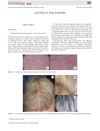
May 2018 in “Australasian Journal of Dermatology” Some patients' hair grew back black and white after chemotherapy.
3 citations
,
September 2016 in “Dermatologic Therapy” Doxycycline helps prevent skin issues from erlotinib in lung cancer patients.
 93 citations
,
May 2010 in “European Journal of Cancer”
93 citations
,
May 2010 in “European Journal of Cancer” BI 2536 had limited effectiveness against several advanced cancers and caused significant side effects.
21 citations
,
September 2015 in “International journal of gynaecology and obstetrics” Chemotherapy is crucial for treating gynecological cancers but requires careful management due to severe side effects.
 29 citations
,
August 2007 in “Annals of Oncology”
29 citations
,
August 2007 in “Annals of Oncology” Docetaxel and oxaliplatin are effective and have manageable side effects for recurrent platinum-sensitive ovarian cancer.
 September 2025 in “BULLETIN OF STOMATOLOGY AND MAXILLOFACIAL SURGERY”
 Better supportive care is needed to manage chemotherapy side effects.
 November 2021 in “World Family Medicine Journal /Middle East Journal of Family Medicine”
 COVID-19 affects patients on chemotherapy for gynecological cancer negatively.
1 citations
,
January 2009 in “The Open Dermatology Journal” Chemotherapy caused nail grooves and separation, but they healed after treatment stopped.
1 citations
,
September 2001 in “PubMed” ONO-3403 effectively reduces mouse skin tumor growth without side effects.
 June 2021 in “Research Square (Research Square)”
 Adverse events in lung cancer treatments increase fear, anxiety, and depression, with newer therapies causing fewer side effects.
 December 2023 in “Frontiers in oncology”
 Older ovarian cancer patients live longer and tolerate weekly chemotherapy better than three-weekly treatments.
 August 2021 in “Acta Haematologica Polonica”
 Folliculotropic mycosis fungoides has a worse prognosis than other types, with survival rates varying significantly based on subtype and organ involvement.
 3 citations
,
July 2019 in “Supportive Care in Cancer”
3 citations
,
July 2019 in “Supportive Care in Cancer” The lotion CG428 did not show effectiveness in treating permanent hair loss in breast cancer survivors.
2 citations
,
January 2016 in “SANGYO EISEIGAKU ZASSHI” Nurses are exposed to chemotherapy drugs, risking health issues like hair loss, so protective gear and monitoring are needed.
 44 citations
,
August 1996 in “Drugs & Aging”
44 citations
,
August 1996 in “Drugs & Aging” Mitoxantrone is effective for treating acute leukemia, especially in older patients, with a lower risk of heart damage.
8 citations
,
January 1977 in “Acta Haematologica” The treatment was effective for advanced non-Hodgkin's lymphomas.
 14 citations
,
January 2001 in “Current Treatment Options in Oncology”
14 citations
,
January 2001 in “Current Treatment Options in Oncology” Treat limited stage small cell lung cancer with chemotherapy and radiation, and consider preventive brain radiation for better survival chances.
February 2024 in “Frontiers in Cell and Developmental Biology” Eribulin-based chemotherapy is more effective and has fewer side effects for advanced triple-negative breast cancer.
12 citations
,
May 2015 in “Journal of the National Comprehensive Cancer Network” Doctors should actively prevent and treat skin side effects in cancer patients to keep them on the best medication and reduce discomfort.
3 citations
,
April 2020 in “PubMed” Combining DEB-BACE with chemotherapy is more effective and has fewer side effects than chemotherapy alone for treating unresectable lung squamous cell carcinoma.
52 citations
,
May 1993 in “Southern Medical Journal” Imuvert can prevent some chemotherapy-induced hair loss.
28 citations
,
December 2001 in “European Journal of Pharmacology” M50054 may help treat hepatitis and hair loss from chemotherapy.
39 citations
,
August 2022 in “Pharmaceutics” Combining letrozole and quercetin in spanlastics may improve breast cancer treatment.
6 citations
,
August 2020 in “Oncology nursing forum” Minocycline reduces acne rash, pyridoxine lowers hand-foot syndrome risk, and scalp cooling lessens hair loss from cancer treatments.
33 citations
,
May 2017 in “Journal of Clinical Oncology” ETC-159 was safe up to 30 mg, but no tumor shrinkage was seen.
3 citations
,
January 1990 in “Cancer chemotherapy and pharmacology” Topical thiols may prevent hair loss caused by certain chemotherapy drugs.
September 2002 in “Oncology Times” Promising cancer treatments were found, but the manufacturer closed.
New cancer drugs can cause skin side effects like rashes, dry skin, hair changes, and nail problems.
January 2026 in “Cutaneous and Ocular Toxicology” Yangxuebushen Decoction helps prevent hair loss from chemotherapy.
 23 citations
,
July 2018 in “Journal of Cosmetic Dermatology”
23 citations
,
July 2018 in “Journal of Cosmetic Dermatology” Chemotherapy caused hair loss with specific patterns, but most patients had hair regrowth after treatment, while some had lasting hair loss.