 August 2025 in “Journal of Investigative Dermatology”
 Elevated luteinizing hormone contributes to female-pattern hair loss, and blocking certain channels may help prevent it.
June 2025 in “British Journal of Dermatology” Standardized forms and digital tools can improve alopecia biopsy diagnosis.
 May 2025 in “Journal of Clinical Images and Medical Case Reports”
 Hair transplants can trigger a rare scarring hair loss that is hard to treat.
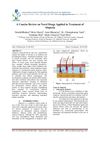
New therapies like JAK inhibitors, PRP, and stem cell treatments show promise for better alopecia management.
Autologous Regenerative Therapy may improve hair restoration by using stem cells from fat.
 January 2024 in “Advances in Cosmetic Surgery”
 Robotic hair restoration is a safe, efficient alternative to manual hair transplant, best for men with dark, thick hair and skin, requiring sufficient donor hair and postoperative care.
 December 2023 in “International Journal of Medical Arts”
 Transplanted hair follicles show significant changes after FUE, needing more research.
 September 2019 in “Journal of Investigative Dermatology”
 Researchers successfully used nude mice to study human hair growth, which could help with future hair research.

Consciousness Energy Healing Treatment may significantly increase hair cell growth.
 September 2018 in “International Journal of Dermatology”
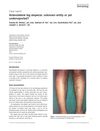
 Anterolateral leg alopecia is a benign, nonprogressive hair loss condition on the lower legs that is not well understood and may resolve on its own.
 January 2018 in “Journal of Cosmetics, Dermatological Sciences and Applications”
 Hair transplant surgery can successfully treat hair loss at the back of the neck.
 May 2015 in “Journal of the American Academy of Dermatology”
 Certain drugs and supplements may contribute to hair loss in the frontal hairline in older women.
 November 2014 in “PubMed”
 A robotic device could improve surgical hair restoration, but it needs more testing to confirm its effectiveness compared to current methods.
 January 2013 in “프로그램북(구 초록집)”
 Hair restoration surgery is improving, with less painful techniques like FUE and robotic systems, but they can be costly and require training.

Recent discoveries have improved our understanding of hair loss, but challenges in treatment and knowledge among specialists still exist.
 November 2005 in “Journal of Investigative Dermatology Symposium Proceedings”
 The 2004 hair research meeting presented new findings on hair cell differentiation, genetic factors in hair loss, hair pigmentation, and potential targeted therapies.
June 2021 in “Cosmoderma” Hair transplantation techniques have improved, making the process safer and more effective with less visible scarring.
 October 2020 in “Journal of Aesthetic Nursing”
 Platelet-rich plasma (PRP) injections effectively treat hair loss and thinning in both men and women, with high satisfaction and no major side effects.
 December 2016 in “Paleontological Journal”
 Hair growth can be induced by transplanting certain cells, but these cells lose their properties during culturing. The best cell interaction happens in a liquid medium under gravity, and using collagen doesn't help. Future research could focus on using growth factors to stimulate these cells.
 1 citations
,
January 2006 in “Elsevier eBooks”
1 citations
,
January 2006 in “Elsevier eBooks” The conclusion is that different types of hair loss in dogs and cats can be cosmetic or serious, and affected animals should not be bred.
 66 citations
,
November 2011 in “Journal of The American Academy of Dermatology”
66 citations
,
November 2011 in “Journal of The American Academy of Dermatology” A handheld dermatoscope helps diagnose different types of hair loss effectively.
24 citations
,
August 2023 in “Journal of the American Academy of Dermatology” Trichoscopy helps diagnose and manage different types of hair loss effectively.
August 2024 in “Indian Dermatology Online Journal” DCPA commonly affects males' lower legs, showing follicular pustules and white areas.
 41 citations
,
January 2014 in “Annals of Dermatology”
41 citations
,
January 2014 in “Annals of Dermatology” Dermoscopic examination helps diagnose different types of hair loss conditions by showing specific patterns.
 13 citations
,
September 2015 in “Aesthetic Surgery Journal”
13 citations
,
September 2015 in “Aesthetic Surgery Journal” Transplanting hair from the nape and around the ear to the hairline and temples generally satisfies patients and looks natural.
3 citations
,
November 2021 in “Clinical, Cosmetic and Investigational Dermatology” Autologous cellular micrografts improve hair density and thickness in the short term for androgenetic alopecia.
 2 citations
,
January 2019 in “PubMed”
2 citations
,
January 2019 in “PubMed” The study concluded that certain areas of the scalp and beard are safe for hair transplant donor sites in Indian men.
 1 citations
,
September 2015 in “Aesthetic Surgery Journal”
1 citations
,
September 2015 in “Aesthetic Surgery Journal” Dr. Umar successfully used softer hair from the nape and around the ear for natural-looking hairlines in 128 patients, with some concerns about hair loss over time.
 January 2017 in “Journal of Investigative Dermatology Symposium Proceedings”
 The 2015 Hair Research Congress concluded that stem cells, maraviroc, and simvastatin could potentially treat Alopecia Areata, topical minoxidil, finasteride, and steroids could treat Frontal Fibrosing Alopecia, and PTGDR2 antagonists could also treat alopecia. They also found that low-level light therapy could help with hair loss, a robotic device could assist in hair extraction, and nutrition could aid hair growth. They suggested that Alopecia Areata is an inflammatory disorder, not a single disease, indicating a need for personalized treatments.
 June 2026 in “Current Opinion in Pediatrics”
 Early, tailored assessment and treatment are crucial for adolescent hair loss, with promising new diagnostic and treatment options.