
Steatocystomas are harmless skin cysts that can vary in size and may sometimes cause itching or pain.
 July 2025 in “International Journal of Dermatology Venereology and Leprosy Sciences”
 Higher stress levels may worsen alopecia areata, suggesting stress management is important for treatment.
 May 2025 in “International Journal of Clinical Obstetrics and Gynaecology”
 A holistic approach, including lifestyle changes and surgery, is recommended for better long-term PCOS management.
 January 2025 in “Advances in Dermatology and Allergology”
 A holistic approach, including medical treatments, lifestyle changes, and mental health support, is crucial for managing hirsutism in women.

Good nutrition may help prevent premature hair graying.
 January 2024 in “GeroScience”
 Using radiation to make mice's hair turn gray helps study and find ways to prevent or reverse hair graying.
 December 2023 in “EPRA international journal of multidisciplinary research”
 Alopecia areata causes sudden hair loss, has genetic links, and can be managed but not cured.
 January 2022 in “Dermatology Review”
 Higher IL-31 levels are linked to worse itching in chronic kidney disease patients.
 December 2021 in “Turkderm”
 The COVID-19 pandemic led to fewer dermatology patients, more stress-related skin conditions during the crisis, and a rise in contact dermatitis after, with ongoing concerns for public health and treatment delays.

Researchers found a genetic link for hereditary hair loss but need more analysis to identify the exact gene.
 July 2021 in “Journal of dermatology research and therapy”
 Using combined treatments can help manage acne by targeting the bacteria and skin changes that cause it.
 January 2020 in “Medical journal of clinical trials & case studies”
 A 37-year-old male with severe skin and internal issues has a rare inherited skin condition called dystrophic epidermolysis bullosa.

The document is a detailed guide on skin conditions and treatments for dermatologists.
 January 2019 in “Springer eBooks”
 Transplanting skin cells is a safe, effective, and affordable treatment for vitiligo.
 January 2018 in “Elsevier eBooks”
 The document concludes that alopecia has various forms, each with specific treatments, but no definitive cure for certain types like CCCA has been proven.
 April 2017 in “The journal of investigative dermatology/Journal of investigative dermatology”
 Astrotactin2 affects hair follicle orientation and skin cell polarity.
 March 2017 in “InTech eBooks”
 Acne vulgaris is a common skin condition that can cause low self-esteem and depression, and early treatment is important to prevent scarring.
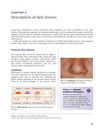
The document explains different types of skin lesions and their characteristics, causes, and related conditions.
 January 2016 in “Georg Thieme Verlag eBooks”
 The document recommends personalized, culturally sensitive treatments to rejuvenate the aging Asian face, focusing on natural results and specific techniques for skin, hair, and facial features.
Different connective tissue disorders have unique symptoms and treatments, with varying outcomes and often require ongoing care from a specialist.
 March 2014 in “Journal of The American Academy of Dermatology”
 The document lists various dermatology topics, treatments, and diagnostic methods.
 November 2013 in “Dalhousie Medical Journal”
 Cutaneous lupus erythematosus is a common skin condition in lupus, affecting mostly young adult females.
 March 2012 in “Journal of The American Academy of Dermatology”
 Dermoscopy helps diagnose different hair loss conditions, and characteristics vary among ethnicities and individual cases.
 March 2012 in “Journal of The American Academy of Dermatology”
 A 7-year-old boy's unusual hair loss was caused by a herpes infection and healed after treatment.
 January 2008 in “Springer eBooks”
 Thyroid disease can cause hair loss and treating thyroid problems might help with hair disorders.
 September 2006 in “Plastic and Reconstructive Surgery”
 Hair transplant surgeries can be improved by preserving follicles in a special solution, and surgeries done at outpatient facilities are more profitable than those at hospitals.
 September 2006 in “Plastic and Reconstructive Surgery”
 Outpatient aesthetic and reconstructive surgeries are about equally profitable in Academic Health Centers and Ambulatory Surgery Centers when time is considered, but dedicated surgery centers are generally more profitable.
 September 2006 in “Plastic and Reconstructive Surgery”
 The SGAP flap effectively treats large sacral pressure sores with good results and minimal complications.
 June 2006 in “The American Journal of Cosmetic Surgery”
 Advancements in cosmetic and reconstructive surgery improve techniques and patient satisfaction.
 May 2006 in “Women's Health Medicine”
 Excessive hair growth in women, often from high androgen levels, is usually caused by PCOS, and can be treated with hair removal, medication, and possibly weight loss.