 69 citations
,
April 2019 in “Biomedicines”
69 citations
,
April 2019 in “Biomedicines” PRP and HF-MSCs treatment improves hair growth, thickness, and density in androgenetic alopecia.
 66 citations
,
August 2001 in “Experimental Dermatology”
66 citations
,
August 2001 in “Experimental Dermatology” Human hair follicle cells can grow hair when put into mouse skin if they stay in contact with mouse cells.
 55 citations
,
September 2017 in “Journal of Cosmetic Dermatology”
55 citations
,
September 2017 in “Journal of Cosmetic Dermatology” Platelet-rich plasma, taken from a person's own blood, can help rejuvenate skin, stimulate hair growth, and treat hair loss, but more research is needed to confirm its safety and effectiveness.
 47 citations
,
November 2012 in “Pharmaceutical research”
47 citations
,
November 2012 in “Pharmaceutical research” Surface-modified nanoparticles mainly use non-follicular pathways to enhance skin permeation of ibuprofen and could improve treatment for inflammatory skin diseases.
 46 citations
,
January 2010 in “The journal of investigative dermatology/Journal of investigative dermatology”
46 citations
,
January 2010 in “The journal of investigative dermatology/Journal of investigative dermatology” Mice lacking Insig proteins had hair growth problems due to cholesterol buildup, but this was fixed by the drug simvastatin.
 38 citations
,
February 2012 in “Supportive Care in Cancer”
38 citations
,
February 2012 in “Supportive Care in Cancer” Skin problems like acne, dry skin, and nail and hair changes are common in patients taking EGFR inhibitors.
 34 citations
,
May 2012 in “International Journal of Molecular Sciences”
34 citations
,
May 2012 in “International Journal of Molecular Sciences” Dieckol from Ecklonia cava may help hair growth and could be a potential hair loss treatment.
 32 citations
,
April 2016 in “Journal of Investigative Dermatology”
32 citations
,
April 2016 in “Journal of Investigative Dermatology” STAT5 activation is crucial for starting the hair growth phase.
 26 citations
,
March 1986 in “Clinical and Experimental Dermatology”
26 citations
,
March 1986 in “Clinical and Experimental Dermatology” Scalp hair grows at 0.37 mm/day, forearm hair at 0.18 mm/day, and thigh hair at 0.30 mm/day, with no significant differences found in people with certain hair conditions.
 25 citations
,
September 2018 in “Scientific Reports”
25 citations
,
September 2018 in “Scientific Reports” Morroniside may help hair grow and stay in its growth phase by affecting certain cell signals.
 23 citations
,
February 2015 in “International Journal of Molecular Sciences”
23 citations
,
February 2015 in “International Journal of Molecular Sciences” Colchicine can inhibit hair growth by affecting cell activity and protein expression in hair follicles.
 22 citations
,
January 2014 in “Biological & Pharmaceutical Bulletin”
22 citations
,
January 2014 in “Biological & Pharmaceutical Bulletin” Ginsenoside F2 may help prevent hair loss and promote hair growth better than finasteride.
 22 citations
,
August 2009 in “Evidence-based Complementary and Alternative Medicine”
22 citations
,
August 2009 in “Evidence-based Complementary and Alternative Medicine” The composition with carnitine, thioctic acid, and saw palmetto extract may effectively reduce inflammation in hair follicle cells.
 22 citations
,
August 1999 in “Experimental Dermatology”
22 citations
,
August 1999 in “Experimental Dermatology” Certain drugs can cause early hair growth in mice by affecting the nerves.
 19 citations
,
October 2017 in “The FASEB Journal”
19 citations
,
October 2017 in “The FASEB Journal” Male hormones cause different growth in identical human hair follicles due to their unique epigenetic characteristics.
 19 citations
,
June 2008 in “Journal of Investigative Dermatology”
19 citations
,
June 2008 in “Journal of Investigative Dermatology” HPV genes in mice improve ear tissue healing by speeding up skin growth and repair.
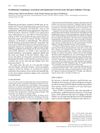 17 citations
,
January 2010 in “Acta Dermato Venereologica”
17 citations
,
January 2010 in “Acta Dermato Venereologica” EGFR inhibitors can cause yellowish skin eruptions.
 14 citations
,
September 2018 in “International Journal of Molecular Sciences”
14 citations
,
September 2018 in “International Journal of Molecular Sciences” Mackerel-derived fermented fish oil helps hair grow by activating growth pathways and increasing cell proliferation.
 12 citations
,
May 2014 in “International Journal of Molecular Medicine”
12 citations
,
May 2014 in “International Journal of Molecular Medicine” Chrysanthemum zawadskii extract helps hair grow by stimulating hair cells.
 9 citations
,
August 2018 in “Biomedical dermatology”
9 citations
,
August 2018 in “Biomedical dermatology” A peptide called DPS-1 helps human scalp cells grow and stimulates hair growth in mice.
 7 citations
,
November 2022 in “Communications biology”
7 citations
,
November 2022 in “Communications biology” Keratin injections can promote hair growth by affecting hair-forming cells and tissue development.
 3 citations
,
June 2006 in “Expert Review of Dermatology”
3 citations
,
June 2006 in “Expert Review of Dermatology” The document concludes that hair loss is complex, affects many people, has limited treatments, and requires more research on its causes and psychological impact.
 2 citations
,
January 2014 in “Hair therapy & transplantation”
2 citations
,
January 2014 in “Hair therapy & transplantation” New treatments for hair growth disorders are needed due to limited current options and complex hair follicle biology.
 1 citations
,
February 2018 in “Madridge journal of dermatology & research”
1 citations
,
February 2018 in “Madridge journal of dermatology & research” The plant extract remedy Satura® Rosta promotes hair growth and regrowth without negative effects.
 1 citations
,
January 2015 in “Genetics and Molecular Research”
1 citations
,
January 2015 in “Genetics and Molecular Research” Stopping S100A3 activity slows down hair growth in mice.
 March 2026 in “Frontiers in Pharmacology”
 New treatments for hair loss show promise but need more testing for effectiveness and safety.
 January 2025 in “Institutional Repositories DataBase (IRDB)”
 Maslinic acid from olive extracts promotes hair growth like minoxidil.
 March 2024 in “Medical lasers”
 Multiple-wavelength radiation helps hair grow by boosting early hair follicle development.
 November 2023 in “Linköping University medical dissertations”
 Keratinocytes and adipose-derived stem cells can effectively heal difficult skin wounds.
 January 2021 in “Journal of cosmetology & trichology”
 L-(+)-Tartaric Acid may help increase certain hair growth genes without harming cells.