 March 2026 in “Journal of Drug Delivery and Therapeutics”
 Aloe vera is effective and safe for skin and hair care.
 February 2026 in “International Journal of Homoeopathic Sciences”
 Plica Polonica is a rare hair disorder causing severe matting, managed by detangling or cutting, and prevented with regular hair care.
 December 2025 in “Clinical Cosmetic and Investigational Dermatology”
 A rare lupus case on the chin was successfully treated with steroids and immunomodulators after accurate diagnosis using advanced imaging techniques.

A woman with a rare hair loss condition developed skin cancer in the bald area.
 June 2025 in “SAS Journal of Medicine”
 Early diagnosis of tufted hair is crucial for managing folliculitis decalvans, a chronic scalp condition.
 April 2025 in “International Journal of Homoeopathic Sciences”
 Homeopathy helped regrow hair and improve emotional health in alopecia areata.
 July 2024 in “Plastic and Aesthetic Research”
 Careful planning and accurate diagnosis are crucial for successful hair restoration surgery.
 May 2024 in “Clinical, cosmetic and investigational dermatology”
 5% topical minoxidil effectively treated a boy's congenital triangular alopecia without side effects.
 April 2024 in “International Journal of Research in Medical Sciences”
 Demographic and lifestyle factors significantly influence scalp diseases.
 November 2023 in “International journal of biology, pharmacy and allied sciences”
 Herbal treatments can help with hair problems, but more research is needed.

A rare case of a woman having both lichen planus pigmentosus and classic lichen planopilaris at the same time.
 May 2023 in “Archives of dermatological research”
 Some factors like thyroid disease, diabetes treatment, hair dryers, natural hairstyles, and scalp conditions can affect the treatment results for a hair loss condition called CCCA.
 January 2023 in “Asian Journal of Pediatric Research”
 Trichoscopy is crucial for diagnosing and assessing alopecia areata in children.
 February 2020 in “International Journal of Research in Dermatology”
 EPDS is a rare, chronic scalp condition that's hard to treat and needs better awareness for improved outcomes.
 December 2019 in “Journal of pediatrics & neonatology”
 A 13-year-old boy had a rare, stable type of hair loss with little chance of regrowth, but treatment is available for looks.
 August 2016 in “Journal of Dermatology”
 A chemical called 5-Bromo-2′-deoxyuridine caused rapid hair loss in mice by killing certain skin cells through a specific cell death pathway.

Female hair loss is often hereditary and can be treated with medication, hair transplants, and lasers.
 November 2015 in “European Journal of Inflammation”
 Cicatricial alopecia, a permanent hair loss condition, is mainly caused by damage to specific hair follicle stem cells and abnormal immune responses, with gene regulator PPAR-y and lipid metabolism disorders playing significant roles.
 November 2014 in “Prescriber”
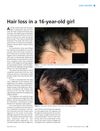
 The 16-year-old girl with hair loss was successfully treated for alopecia areata, leading to significant hair regrowth.
 March 2012 in “Journal of The American Academy of Dermatology”
 Temporal triangular alopecia usually starts in early childhood and treatment with Minoxidil has limited effectiveness.
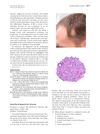
The man has Temporal Triangular Alopecia, a stable, non-scarring hair loss condition best treated with hair transplantation.
 May 2007 in “Dermatologic Therapy”
 Hair care practices like using relaxers and tight braiding can lead to permanent hair loss in black women.
 June 2001 in “Journal of The American Academy of Dermatology”
 The exam tested knowledge on various skin-related topics for CME credit.
 April 2019 in “Journal of the Dermatology Nurses’ Association”
 A 37-year-old man with hair loss and skin issues was successfully treated with oral antibiotics, highlighting the need for early treatment. Long-term care includes low-dose antibiotics and avoiding caps and wigs.
Hair loss in African American women, caused by hair care, genetics, and environment, needs more research for better treatment.
 March 2012 in “Journal of The American Academy of Dermatology”
 White females have higher hair density, while Asian females have thicker hair in hair loss cases.
 91 citations
,
May 2003 in “American Journal of Pathology”
91 citations
,
May 2003 in “American Journal of Pathology” Prolactin affects hair growth cycles and can cause early hair follicle regression.
 58 citations
,
January 2006 in “Skin Pharmacology and Physiology”
58 citations
,
January 2006 in “Skin Pharmacology and Physiology” High levels of testosterone and 5α-DHT can lead to cell death in cells important for hair growth.
 40 citations
,
August 2018 in “Skin appendage disorders”
40 citations
,
August 2018 in “Skin appendage disorders” Some alternative treatments for hair loss might work, but more research is needed.
 26 citations
,
October 2007 in “Experimental Dermatology”
26 citations
,
October 2007 in “Experimental Dermatology” L-Carnitine-L-tartrate may help hair grow and prevent hair loss.