 June 2023 in “Facial Plastic Surgery Clinics of North America”
 Hair transplantation is important for transgender patients to enhance their masculine or feminine appearance.
 April 2023 in “Research Square (Research Square)”
 The follicular unit extraction technique is a successful treatment for male hair loss with over 90% hair survival rate and less than 6% complications.
October 2022 in “Hair Transplantation” Beard hair can be effectively used for hair transplants when scalp hair is insufficient.
October 2022 in “Hair Transplantation” Digital imaging tools help accurately assess hair transplant candidates.
October 2022 in “Hair Transplantation” Improper hair transplant techniques can lead to unnatural results, but practical solutions exist to fix them.
 July 2022 in “Journal of Cosmetic Dermatology”
 Adding platelet rich plasma to follicular unit extraction doesn't significantly improve hair graft survival in cicatricial alopecia treatment.
 June 2022 in “Ain Shams medical journal”
 Adding platelet rich plasma to hair transplant surgery leads to better results and more patient satisfaction.
 January 2022 in “Cellular and Molecular Biology”
 Adding Triamcinolone to the anesthetic can reduce swelling after hair transplants, and using Platelet-Rich Plasma can improve hair thickness and patient satisfaction. The SRD5A2 gene also plays a key role in the success of hair transplants.
 August 2021 in “Al-Azhar International Medical Journal (Print)”
 Hair transplantation is effective for treating cicatricial alopecia with fewer anesthesia risks, scars, and recovery time.

The document is a guide for practitioners to successfully perform hair transplants using the FUE method.
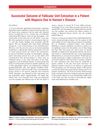 January 2021 in “Journal of Cutaneous and Aesthetic Surgery”
 Follicular unit extraction successfully restored hair growth in a leprosy patient without disease relapse.
January 2021 in “Hair therapy & transplantation” New hair transplant methods now look more natural.

Different types of hair loss can be caused by hormones, stress, autoimmune disorders, illness, or nutritional deficiencies, and can be treated with medication, nutritional supplements, or hair transplantation.
Hair loss is caused by hormonal changes that shorten hair growth phases and shrink hair follicles.

The robotic system for hair restoration surgery works well, giving similar results to manual techniques after 9 months.
 November 2018 in “Springer eBooks”
 The document concludes that hair transplant clinics should focus on effective marketing, online presence, and quality patient care, while the industry should promote high standards and education through organizations like FUE Europe.
 November 2018 in “Springer eBooks”
 The document concludes that specialized hair transplant techniques can be effective, with varying success rates depending on the donor area and patient factors.
 January 2018 in “Journal of Cosmetics, Dermatological Sciences and Applications”
 Hair transplant surgery can successfully treat hair loss at the back of the neck.
 March 2015 in “Aesthetic Surgery Journal”
 The book is a valuable, comprehensive guide on hair transplantation, recommended for surgeons and students, with minor areas for improvement.
The document concludes that current hair loss treatments have limitations and suggests researching new treatments targeting different factors of hair loss.
 January 2014 in “Journal of the turkish academy of dermatology”
 Hair transplantation is safe and effective for permanent hair loss due to scarring, with high patient satisfaction.
Preserving intact follicular units improves hair transplant success.
January 2009 in “Journal of Tissue Engineering and Reconstructive Surgery” Combining hair transplantation with minoxidil is effective and easy for treating hair loss.
October 2008 in “DOAJ (DOAJ: Directory of Open Access Journals)” By 2008, hair transplants looked more natural due to improved techniques.
 November 2006 in “Dermatologic Surgery”
 Cutting hair follicles into pieces for transplantation results in poor growth and thinner hair, and the technique is more invasive than previously thought.
 May 2005 in “Seminars in Plastic Surgery”
 The document concludes that using small hair grafts has improved facial and scalp hair restoration.
March 2017 in “Hair transplant forum international” Asian men have varying hair densities, important for hair transplant success.
 83 citations
,
April 1999 in “Dermatologic Surgery”
83 citations
,
April 1999 in “Dermatologic Surgery” The research found that for a typical hair density, about 11 square centimeters of donor scalp is needed to get 800 hair grafts for transplantation.
 3 citations
,
February 2000 in “Dermatologic Surgery”
3 citations
,
February 2000 in “Dermatologic Surgery” The document concludes that hair restoration has improved with follicular unit transplantation, making it more scientific and precise.
 2 citations
,
November 2007 in “Hair transplant forum international”
2 citations
,
November 2007 in “Hair transplant forum international” The conclusion is that hair transplant surgery should use microscopically dissected natural hair groupings and some new terms were suggested for clarity.