 28 citations
,
August 2013 in “Facial Plastic Surgery Clinics of North America”
28 citations
,
August 2013 in “Facial Plastic Surgery Clinics of North America” Body and beard hair can be used for hair restoration in severely bald patients, but the technique is complex and costly.
 25 citations
,
May 2011 in “Annals of Plastic Surgery”
25 citations
,
May 2011 in “Annals of Plastic Surgery” Nonhead hair transplantation is effective for patients with limited head donor hair, but more research is needed.
 19 citations
,
February 2008 in “Facial Plastic Surgery”
19 citations
,
February 2008 in “Facial Plastic Surgery” The article concludes that microvascular free flaps, especially the latissimus dorsi flap, are recommended for large scalp reconstructions, and hair transplantation offers high survival rates and excellent aesthetic results.
 15 citations
,
March 2000 in “Dermatologic Surgery”
15 citations
,
March 2000 in “Dermatologic Surgery” Hair transplantation has evolved since 1822, with significant advancements by key figures and widespread international growth.
 14 citations
,
September 2010 in “Annals of Plastic Surgery”
14 citations
,
September 2010 in “Annals of Plastic Surgery” Hair restoration has evolved from surgery to drugs to potential gene therapy, with improved results and ongoing research driven by high demand.
 12 citations
,
June 2018 in “Journal of Cosmetic Dermatology”
12 citations
,
June 2018 in “Journal of Cosmetic Dermatology” PRP is effective for hair loss and might work better with other treatments, but more research is needed.
 9 citations
,
February 2013 in “Plastic and Reconstructive Surgery”
9 citations
,
February 2013 in “Plastic and Reconstructive Surgery” The article explains how to rebuild parts of the head and face and how to transplant hair to cover scars, highlighting the need for careful planning and choosing the right method for each patient.
 8 citations
,
January 2015 in “Scars, burns & healing”
8 citations
,
January 2015 in “Scars, burns & healing” Hair transplantation effectively treats burn scar alopecia, improving self-esteem and confidence.
 6 citations
,
October 2021 in “Indian Journal of Plastic Surgery”
6 citations
,
October 2021 in “Indian Journal of Plastic Surgery” Eyebrow restoration using FUE is effective with careful planning and technique.
 6 citations
,
March 2003 in “Dermatologic Surgery”
6 citations
,
March 2003 in “Dermatologic Surgery” Dr. Dominic A. Brandy developed successful techniques to fix unnatural looks caused by old hair restoration methods, and using oral finasteride and topical minoxidil can help control hair loss in most men.
 4 citations
,
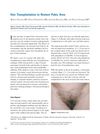
February 2008 in “Dermatologic Surgery”
4 citations
,
February 2008 in “Dermatologic Surgery” Hair transplant surgery successfully restored a woman's pubic hair, improving her appearance and satisfaction.
 3 citations
,
December 2008 in “The American Journal of Cosmetic Surgery”
3 citations
,
December 2008 in “The American Journal of Cosmetic Surgery” Hair transplantation has evolved to refined techniques like FUE and FUT, with Finasteride and Minoxidil as the only other proven treatments for hair loss.
3 citations
,
June 2023 in “Plastic & Reconstructive Surgery” The 2-step surgery effectively treats stable follicular vitiligo with high patient satisfaction and no major complications.
 2 citations
,
May 2015 in “Journal of Cosmetic and Laser Therapy”
2 citations
,
May 2015 in “Journal of Cosmetic and Laser Therapy” Hair follicles can survive for a few days before transplant but are less viable over time.
 2 citations
,
September 2013 in “Journal of Cosmetic Dermatology”
2 citations
,
September 2013 in “Journal of Cosmetic Dermatology” Hair restoration combines drugs and follicular unit grafting for natural, long-lasting results.
 2 citations
,
June 2012 in “Journal of Cosmetic Dermatology”
2 citations
,
June 2012 in “Journal of Cosmetic Dermatology” Hair transplant using beard hair made acne scars on cheeks less visible with minimal scarring in the donor area.
 1 citations
,
July 2023 in “Advances in therapy”
1 citations
,
July 2023 in “Advances in therapy” Hair transplantation is safe and effective for children with scar-related hair loss.
 1 citations
,
November 1992 in “Indian Dermatology Online Journal”
1 citations
,
November 1992 in “Indian Dermatology Online Journal” FUE is a popular hair restoration method that uses body hair and leaves no scars.
 1 citations
,
December 2015 in “Journal of the Medical Sciences (Berkala Ilmu Kedokteran)”
1 citations
,
December 2015 in “Journal of the Medical Sciences (Berkala Ilmu Kedokteran)” Transplanting melanocyte stem cells from hair follicles can effectively treat vitiligo.
 1 citations
,
January 2006 in “Dermatologic Surgery”
1 citations
,
January 2006 in “Dermatologic Surgery” The SAFE System may reduce hair transplant transection rates but has been critiqued for not being as minimally invasive as claimed.
 January 2026 in “Avicenna Bulletin”
 Aligning hair implants with natural growth patterns improves hair transplant results.
 June 2024 in “Archives of Plastic Surgery”
 Hair transplantation on a reconstructed scalp can effectively improve hair growth and appearance.
 June 2022 in “Al-Azhar International Medical Journal /Al-Azhar International Medical Journal”
 Adding nano fat to hair transplants improves results for scar-related hair loss.
 May 2013 in “Trends in Urology & Men's Health”
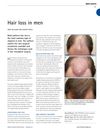
 Male-pattern hair loss is normal, often involves hormone effects on hair follicles, and can be treated with medication or surgery, but new treatments are being researched.
 April 2021 in “Advances in Cosmetic Surgery”
 Hair restoration can be achieved through non-surgical treatments like minoxidil, antiandrogens, phototherapy, and PRP procedures, or through surgical methods like hair transplantation. Continued treatment is needed to maintain results, and full results are visible after 12-18 months.

Modern hair restoration techniques can effectively treat hair loss and provide natural-looking results.
 June 2005 in “British Journal of Oral & Maxillofacial Surgery”
 Advancements in aesthetic surgery from 2002-2003 include improved skin resurfacing, effective migraine surgery, satisfying hair transplants, alternative treatments for skin nevi, successful endoscopic midface enhancement, and safe techniques for facial rejuvenation.
 March 2003 in “Dermatologic Surgery”
 Dr. Dominic A. Brandy shared methods to fix aesthetic problems from old hair restoration techniques, using methods like follicular unit grafting and scalp removal, which helped patients look more natural after surgery. He also suggested using oral finasteride and topical minoxidil to control hair loss in most men with baldness, especially those who had flap surgery.
 July 2021 in “Medical journal, Armed Forces India”
 Using platelet-rich plasma in hair restoration surgery significantly improves hair density after 6 months and is safe to use.
 December 2002 in “Operative Techniques in Otolaryngology-head and Neck Surgery”
 Manage hair loss from trauma with scalp expansion, advancement flaps, and hair transplantation.